
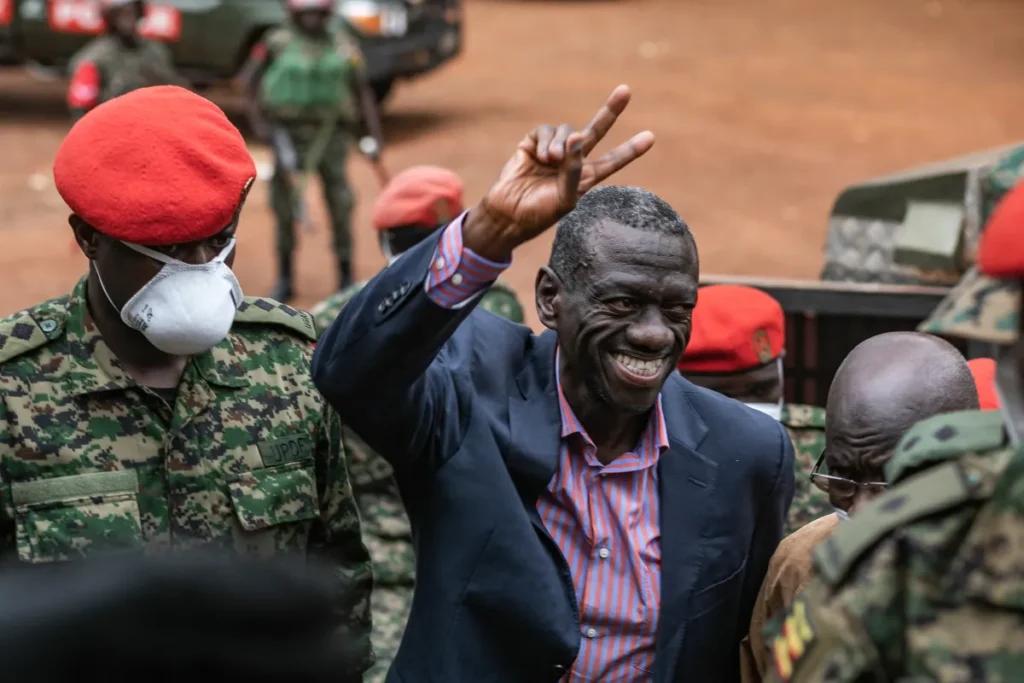
Uganda’s political environment is facing renewed pressure as opposition leader Dr Kizza Besigye remains at the centre of a legal battle that has intensified debate over democracy, political freedoms and the treatment of opposition figures in the country.
Besigye, one of President Yoweri Museveni’s longest standing political challengers, is facing serious charges that his supporters describe as politically motivated, while the government maintains that the case is being handled through the country’s judicial system.
A Veteran Opposition Figure Under Pressure
Dr Kizza Besigye has spent more than two decades challenging Museveni’s leadership. A former military officer who became one of Uganda’s most prominent opposition voices, he has contested several presidential elections and remained a leading critic of the ruling National Resistance Movement (NRM) government.
His latest legal troubles have renewed concerns among opposition supporters who argue that Uganda’s political space has become increasingly difficult for critics of the government.

Besigye’s supporters say his continued detention reflects a wider pattern of pressure against opposition politicians, activists and civil society groups.
Government Defends the Legal Process
The Ugandan government has rejected accusations that Besigye is being targeted because of his political views.
Officials argue that all citizens, regardless of their political position, must answer allegations through the courts and that the judiciary should be allowed to operate independently.
President Yoweri Museveni, who has ruled Uganda since 1986, has repeatedly defended his government’s record on security and stability while accusing some opposition groups of attempting to create unrest.
Health Concerns Increase Pressure
The situation has attracted additional attention following concerns about Besigye’s health during court proceedings.
His family and supporters, including his wife Winnie Byanyima, who is the Executive Director of UNAIDS, have raised concerns about his wellbeing and called for proper medical attention.
The government has maintained that legal procedures are being followed and that Besigye’s rights are being respected.
A Bigger Debate About Democracy in Uganda
Besigye’s case comes at a sensitive time for Uganda as the country continues debates about political reforms, elections and the future of leadership.
Uganda remains one of East Africa’s most strategically important nations, playing a major role in regional security, trade and peacekeeping operations. However, critics argue that political competition remains uneven because of restrictions faced by opposition parties.
The country is preparing for another major political period as President Museveni’s long rule continues to shape national politics. Uganda is scheduled to hold general elections in 2026, a contest expected to attract significant attention across Africa.
Why This Matters Beyond Uganda
The situation surrounding Kizza Besigye reflects a wider African debate about the balance between national stability and democratic competition.
Supporters of governments across the continent often argue that strong security measures are necessary to protect peace and prevent instability. Opposition groups and rights organisations, however, argue that democracy requires space for criticism, peaceful protests and genuine political competition.
For Uganda, the challenge is not only about one opposition leader. It is about whether the country can build institutions strong enough to manage political disagreements without creating deeper divisions.
As the legal case continues, Uganda’s government faces growing pressure to demonstrate that justice is applied fairly, while the opposition faces the challenge of maintaining public support within a highly competitive political environment.

Comments (0)
No comments yet — be the first to share your thoughts.