

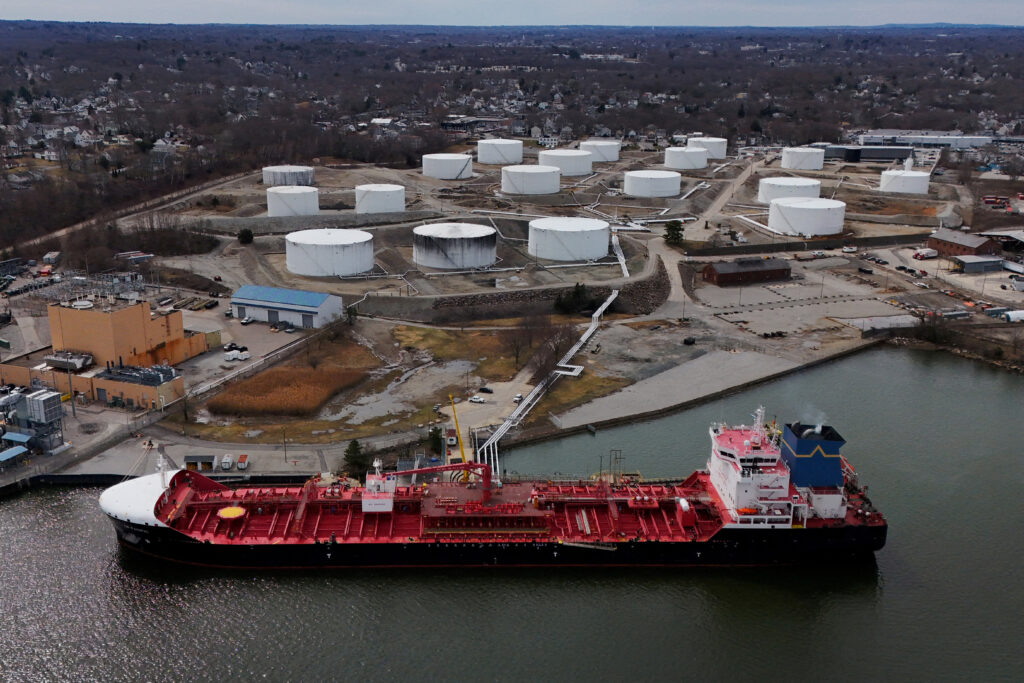
Tullow Oil has returned to positive free cash flow after a difficult previous year, with stronger production from its Ghanaian oil fields and higher realised oil prices driving a significant improvement in its first-half financial performance.
The London-listed West Africa-focused producer reported $4 million in free cash flow for the six months ended June 30, compared with a negative $188 million during the same period last year. Revenue also increased from $411 million to $496 million.
Ghana Becomes Central to the Turnaround.
Ghana is increasingly at the centre of Tullow Oil’s strategy. The company said its Ghana operations performed ahead of expectations, helped by successful drilling results and strong production uptime.
Tullow recorded average working-interest production of 43.7 thousand barrels of oil equivalent per day during the first half of 2026. That figure was above the company’s full-year guidance range of 34,000 to 42,000 barrels per day, putting it on track to finish the year toward the upper end of its production target.

The company’s stronger performance comes largely from its Jubilee and TEN fields offshore Ghana, which have become increasingly important as Tullow reshapes its portfolio around its West African operations.
Higher Oil Prices Boost Revenue.
Production was not the only factor behind the improvement. Tullow’s realised oil price before hedging increased to $95 per barrel, compared with $71.40 per barrel a year earlier.
The increase helped the company generate significantly more revenue from its production, although the higher oil prices have also been influenced by disruptions and uncertainty in global energy markets.
Tullow said it expects full-year production to remain at the upper end of its existing guidance range.
Tullow Is Becoming More Ghana-Focused.
The latest results reflect a broader restructuring of Tullow’s business.
Over the past year, the company has sold non-core assets in Gabon and Kenya, refinanced its debt and secured extensions for the licences covering its flagship Ghanaian fields. The Jubilee and TEN licences have been extended until 2040.
That makes Ghana particularly important to Tullow’s long-term production and cash-generation strategy.
The company has also been working to improve its balance sheet after years of debt pressure and operational challenges across its African portfolio.
What the Numbers Mean for Ghana.
Tullow’s improved performance is significant for Ghana because the company’s offshore operations are part of the country’s broader oil and gas industry, generating production, government revenues and economic activity.
The stronger production numbers also come at a time when Ghana is seeking to maximise value from its petroleum resources while dealing with broader fiscal and energy-sector pressures.
For Tullow, however, the immediate challenge is sustaining production and converting stronger operational performance into enough cash to reduce financial pressure.
The company’s latest results show a substantial improvement from a year earlier, but they also underline how heavily its financial performance depends on Ghanaian production, oil prices and the continued performance of its offshore fields.
Freshness check: Reuters published the underlying report on September 28, 2026 at 6:44 a.m. UTC, making this a same-day story within the requested 24-hour window.

Comments (0)
No comments yet — be the first to share your thoughts.