
Stablecoins are emerging as one of Africa’s most closely watched financial technologies as regulators, fintech companies and banking executives explore their potential to transform cross-border payments across the continent.
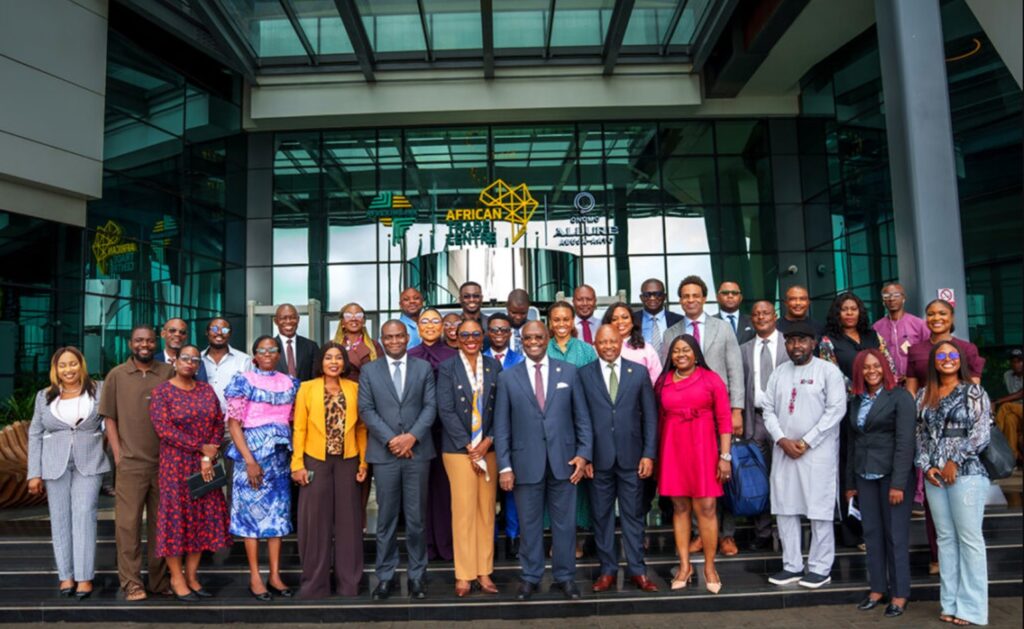
The growing interest was evident at the Accra Stablecoin Conference 2026 in Ghana, where policymakers, financial institutions and digital asset companies discussed how stablecoins could improve payment systems, lower transaction costs and expand financial inclusion while ensuring strong regulatory oversight.
As businesses increasingly trade across African borders under the African Continental Free Trade Area (AfCFTA), many industry leaders believe stablecoins could help address some of the continent’s long-standing payment challenges.
A New Approach to Cross-Border Payments
Cross-border transactions in Africa remain among the most expensive and time-consuming in the world.

Many payments pass through multiple international banks before reaching their destination, resulting in high fees, currency conversion costs and delays that can take several days.
Stablecoins, which are digital assets designed to maintain a stable value by being linked to traditional currencies such as the US dollar, offer an alternative that allows transactions to be completed almost instantly.
For businesses involved in regional trade, this could significantly improve cash flow while reducing operational costs.
Regulators Take a Closer Look
One of the key themes at the conference was regulation.
Rather than resisting the technology, many African regulators are now exploring how stablecoins can be integrated safely into existing financial systems.
Sharon-Rose Lithur, Head of the Innovation and Cross-Border Office at the Bank of Ghana, said stablecoins are already being used to transfer value across borders, making it increasingly important for regulators to develop frameworks that encourage innovation while protecting consumers and maintaining financial stability.
Her remarks reflected a broader shift across Africa, where central banks are becoming more engaged in discussions around digital assets and payment innovation.
Supporting Trade Across Africa
The launch of the African Continental Free Trade Area has increased demand for more efficient payment systems.
Although AfCFTA aims to boost trade between African countries, businesses continue to face barriers created by fragmented financial systems and multiple currency conversions.
Industry experts believe stablecoin-powered payment networks could simplify transactions between African businesses by allowing payments to move directly across borders without relying heavily on correspondent banking systems.
Lower transaction costs would particularly benefit small and medium-sized enterprises that often struggle with expensive international payment services.
Financial Inclusion and Innovation
Beyond business transactions, stablecoins also have the potential to improve financial inclusion.
Millions of Africans continue to rely on remittances from family members working abroad, but international money transfers often attract high fees.
Stablecoins could make these transfers faster and more affordable while expanding access to digital financial services for people without traditional bank accounts.
Fintech companies are also exploring how stablecoins can support savings products, merchant payments and online commerce, particularly in countries with rapidly growing digital economies.
Challenges Remain
Despite growing enthusiasm, several obstacles must still be addressed before stablecoins achieve widespread adoption across Africa.
Clear regulatory frameworks, consumer protection measures and effective anti-money laundering controls will be essential for maintaining confidence in digital payment systems.
Interoperability between payment platforms and financial institutions also remains a priority, ensuring stablecoin transactions can integrate seamlessly with existing banking infrastructure.
Industry leaders emphasise that innovation must be accompanied by strong governance to minimise financial crime and protect users.
Africa’s Digital Payment Future
Africa has become one of the world’s fastest-growing digital payments markets, driven by mobile money, fintech innovation and increasing smartphone adoption.
Stablecoins are now being viewed as the next step in that evolution.
If governments, regulators and private companies can establish trusted frameworks, the technology could help connect Africa’s fragmented payment markets while supporting regional trade and economic integration.
The discussions in Accra demonstrated that the conversation has moved beyond speculation.
The focus is now on building practical financial infrastructure that enables businesses and consumers to move money more efficiently across borders.
As digital finance continues to evolve, stablecoins could become an important part of Africa’s efforts to build a faster, cheaper and more connected payment ecosystem.

Comments (0)
No comments yet — be the first to share your thoughts.