
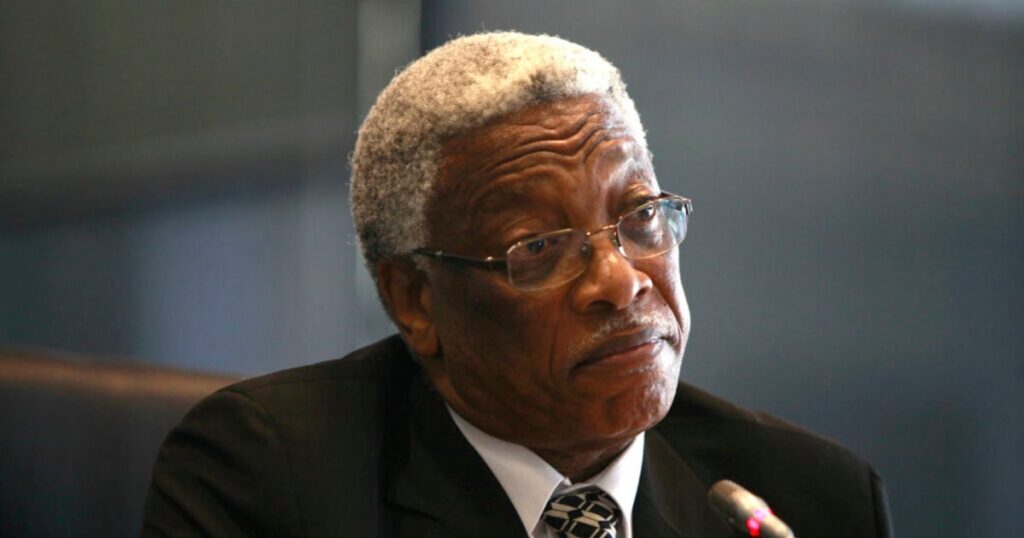
South Africa’s judicial system is facing renewed public attention after the Judicial Service Commission (JSC) recommended the suspension of Judge President Selby Mbenenge of the Eastern Cape Division of the High Court following allegations of sexual harassment.
The recommendation follows an investigation into a complaint submitted by a former court employee, who accused the judge of sending inappropriate messages and making unwanted advances. Judge Mbenenge has denied the allegations, but the JSC said the matter raised serious concerns that required further examination through the appropriate legal and disciplinary processes.
The case has placed renewed focus on the importance of accountability within South Africa’s justice system and the responsibility of senior judicial officers to maintain the highest ethical standards.
Suspension Aims to Protect Judicial Integrity
The recommended suspension is not a declaration of guilt.

Instead, the move is intended to protect the credibility of the judicial process while further investigations continue. The JSC has argued that maintaining public confidence in the courts is essential, particularly when allegations involve individuals holding positions of significant authority.
A judiciary depends not only on legal expertise but also on public trust. Judges are expected to represent fairness, independence and integrity, meaning allegations against senior judicial figures require careful and transparent handling.
JSC spokesperson Advocate Sesi Baloyi emphasised the importance of accountability, stating that “the judiciary must be accountable and must be seen to uphold the highest standards of integrity.”
A Challenge for South Africa’s Legal Institutions
The case comes at a time when South Africa continues to focus on strengthening confidence in public institutions.
The judiciary remains one of the country’s most respected democratic institutions, playing a key role in protecting constitutional rights and ensuring that government and individuals are subject to the rule of law.
However, institutions gain legitimacy not only through their authority but also through their willingness to address difficult issues within their own structures.
How the matter is handled will therefore be closely watched by legal professionals, civil society groups and the wider public.
A Wider African Conversation on Accountability
The allegations against Judge Mbenenge have significance beyond South Africa.
Across Africa, questions around accountability within public institutions remain central to conversations about governance, justice and democracy.
Citizens often judge the strength of institutions by how they respond when powerful individuals face serious allegations. A justice system that demands accountability from ordinary citizens must also demonstrate that those in positions of authority are subject to the same standards.
For many Africans, the issue is not only about one judge or one case. It is about whether institutions designed to protect society are also willing to examine themselves.
Protecting Trust in the Justice System
Maintaining trust in the judiciary requires transparency, fairness and consistency.
While allegations must be investigated carefully and the rights of all parties respected, institutions must also show that they take complaints seriously and are prepared to act when necessary.
The handling of the Mbenenge matter will therefore serve as an important test of South Africa’s commitment to judicial accountability.
A strong justice system is not one where its leaders are beyond scrutiny. It is one where every individual, regardless of position, is held to the same principles of fairness and responsibility.
The Road Ahead
As investigations continue, the focus will remain on ensuring that due process is followed while protecting the reputation of South Africa’s courts.
For Judge Selby Mbenenge, the process will determine the outcome of the allegations against him. For South Africa’s judiciary, the case represents a broader test of whether its institutions can uphold the values they are expected to defend.
The credibility of justice depends not only on the decisions made inside courtrooms but also on the willingness of the system to hold itself accountable.

Comments (0)
No comments yet — be the first to share your thoughts.