

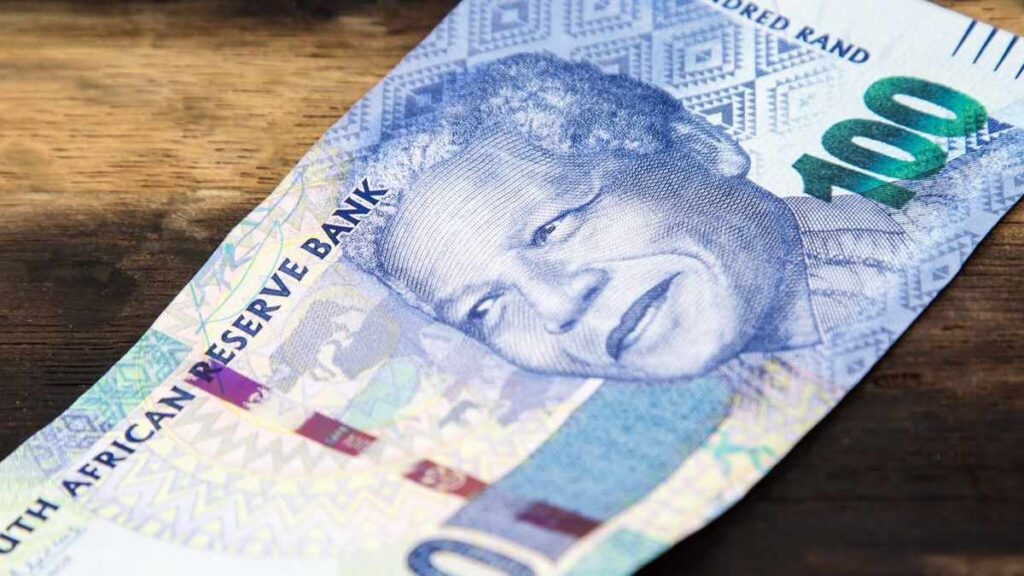
The South African rand weakened against the US dollar on Monday as renewed uncertainty surrounding the US-Iran conflict pushed international oil prices higher and increased pressure on currencies in economies that rely heavily on imported fuel.
At 0734 GMT, the rand was trading at around 16.40 to the US dollar, approximately 0.5% weaker than its previous close. At the same time, Brent crude futures climbed more than 3%, moving above $107 a barrel.
Higher Oil Prices Put Pressure on South Africa.
The movement is particularly important for South Africa because the country imports most of the fuel consumed by its economy. A sustained increase in crude prices can therefore raise the cost of energy imports and place additional pressure on businesses, consumers and the country’s external accounts.
The latest oil-price increase followed developments in the US-Iran conflict and uncertainty over efforts to reopen the Strait of Hormuz, a major global oil-shipping route. Reuters reported that oil prices rose after US President Donald Trump rejected an Iranian proposal aimed at resolving the conflict and reopening the waterway.

Johannesburg Stocks Also Fall.
The pressure extended beyond the currency market. South Africa’s Top-40 share index fell 1.7% in early trading on Monday, while the yield on the country’s benchmark 2035 government bond rose by 5.5 basis points to 8.855%.
Gold Fields was among the major decliners, falling about 13% after Australia’s Northern Star Resources rejected an unsolicited A$38.7 billion, or approximately $27.1 billion, takeover proposal.
The combination of a weaker rand, higher oil prices and falling equities illustrates how quickly international geopolitical developments can affect South Africa’s financial markets.
Markets Face a Volatile Week.
The rand could remain sensitive to developments outside South Africa as investors monitor both the Middle East situation and a busy week of US economic data.
Andre Cilliers of TreasuryONE told Reuters that rand volatility could remain elevated, with the US employment report due later in the week among the indicators investors will be watching.
For South Africa, the immediate economic concern is the relationship between oil prices, the rand and inflation. A weaker currency makes imported fuel more expensive in local-currency terms, while higher crude prices can add another layer of pressure.
The September 28 movement therefore reflects more than a daily currency fluctuation. It shows how South Africa’s financial markets remain exposed to global energy prices and geopolitical developments far beyond the continent.
Freshness check: The underlying Reuters report was published and updated on September 28, 2026, so it falls within the 24-hour window you requested.

Comments (0)
No comments yet — be the first to share your thoughts.