

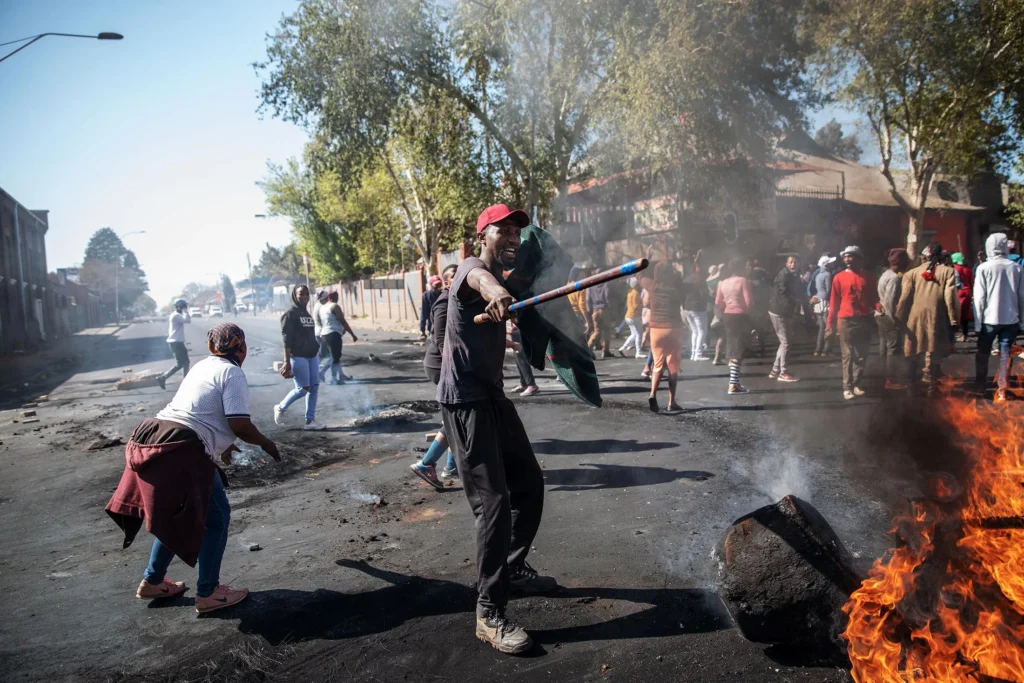
South Africa’s government has stepped up efforts to restore order and reassure neighboring countries as anti-immigrant protests continue to spread across parts of the country, raising fears of renewed xenophobic violence and straining diplomatic relations across Africa.
The latest developments come after weeks of demonstrations targeting undocumented migrants, with some protesters carrying out illegal door-to-door searches in townships and demanding that foreign nationals leave their communities. Human rights organizations have warned that the unrest is creating fear among migrants, including many who are legally living and working in South Africa.
Government Tightens Immigration Enforcement
Justice and Constitutional Development Minister Mmamoloko Kubayi announced that more than 53,000 undocumented migrants have been deported or voluntarily repatriated as part of an intensified immigration enforcement campaign.
According to the government, the majority of those returned were from neighboring countries including Malawi, Zimbabwe, and Mozambique, while others came from Nigeria, Uganda, and Kenya. Authorities say the operation is aimed at enforcing immigration laws and improving border management rather than targeting any particular nationality.

Officials have also increased police deployments in areas affected by the protests and have arrested several individuals accused of public violence and carrying out unlawful immigration checks.
Vigilante Actions Raise Alarm
Despite the government’s assurances, reports from Johannesburg and other parts of Gauteng indicate that some protest groups have continued to take the law into their own hands.
In Alexandra township, groups of protesters were seen going from house to house demanding identification documents from suspected foreign nationals. Some migrants were reportedly forced from their homes before being handed over to police, while others fled the area fearing further attacks. Similar demonstrations have also been reported in Soweto and Durban.
President Cyril Ramaphosa has condemned these actions, insisting that immigration enforcement is the responsibility of the state and warning that no individual has the authority to stop people and demand proof of nationality or legal status.
Economic Impact Becoming More Visible
Beyond the humanitarian concerns, economists are warning that the protests could have serious consequences for South Africa’s economy.
Many industries, including construction, agriculture, transport, hospitality, and retail, rely heavily on migrant workers. Businesses have already reported disruptions as thousands of foreign nationals leave the country or avoid going to work because of safety concerns.
Industry experts caution that prolonged instability could lead to labour shortages, supply chain disruptions, and reduced economic activity at a time when South Africa is already facing slow growth and high unemployment. Studies have also shown that migrants make significant contributions to the country’s economy through entrepreneurship, employment, and consumer spending.
African Governments Voice Concern
The unfolding crisis has attracted growing attention from governments across the continent.
Several African countries have begun assisting citizens who wish to return home, while others have called on South Africa to ensure the safety of foreign nationals living within its borders. The situation has also prompted renewed discussions about migration, regional cooperation, and the protection of human rights within the Southern African Development Community (SADC).
Humanitarian organizations have warned that many migrants, including those with valid documentation, are being caught up in the unrest simply because they are perceived to be foreigners. Rights groups have urged communities to reject violence and allow law enforcement agencies to carry out their responsibilities.
Calls for Calm and Unity
The South African government has reiterated that while illegal immigration remains a legitimate policy issue, violence, intimidation, and vigilantism cannot be tolerated.
Officials have called on citizens to respect the rule of law and warned that anyone found engaging in attacks against migrants or conducting unlawful immigration checks will face criminal prosecution. Government leaders have also appealed for unity, emphasizing that South Africa’s Constitution protects the rights and dignity of everyone within its borders regardless of nationality.
As police continue to monitor affected communities, many across the continent are watching closely to see whether the government’s measures will be enough to restore calm and prevent further violence. The coming days are expected to be critical in determining whether tensions ease or continue to fuel one of South Africa’s most challenging social and diplomatic crises in recent years.

Comments (0)
No comments yet — be the first to share your thoughts.