

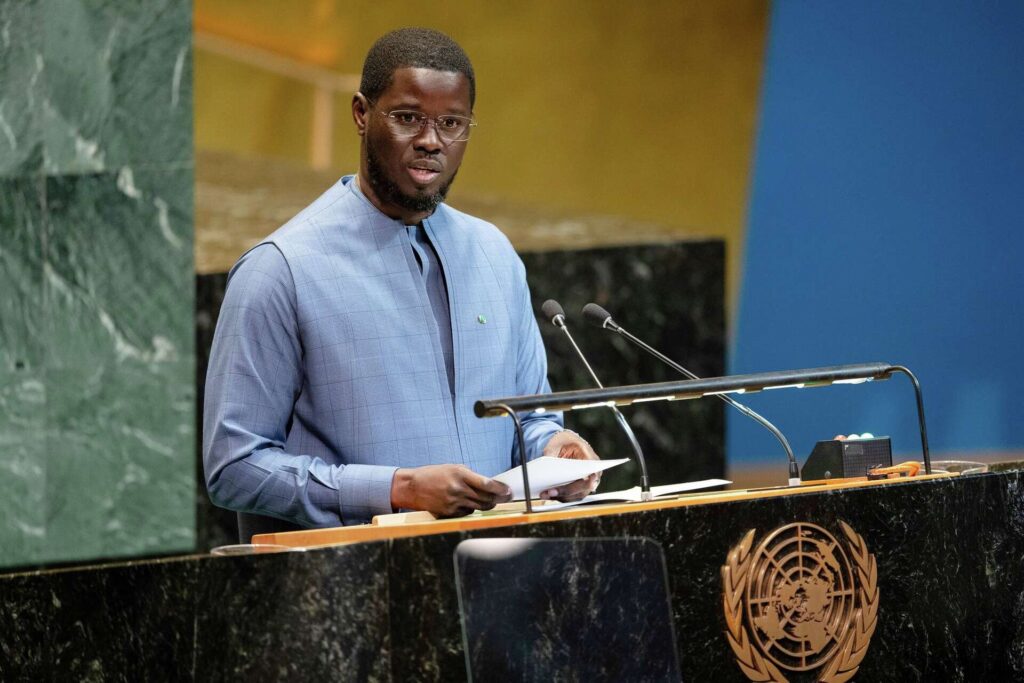
Senegal has entered a new political chapter after President Bassirou Diomaye Faye officially launched a new political party, formally ending his alliance with former Prime Minister Ousmane Sonko and the Pastef movement that swept them to power in the 2024 presidential election.
The new party, Kiiraay Republican Patriots, was unveiled during a gathering in Dakar on Saturday, July 25, with President Faye describing it as the country’s new majority political movement. The word “Kiiraay”, which means “shield” in the Wolof language, reflects the party’s stated commitment to protecting Senegal’s democratic institutions and advancing national development.
The announcement confirms months of speculation about growing tensions between two of Senegal’s most influential political figures and signals a major realignment in one of West Africa’s most stable democracies.
From Close Allies to Political Rivals
Bassirou Diomaye Faye and Ousmane Sonko were once inseparable figures in Senegal’s opposition movement.
Their partnership gained national attention after Sonko emerged as one of the country’s strongest opposition leaders, attracting widespread support from young people who demanded political reforms, economic accountability and an end to what they viewed as entrenched political elites.
When Sonko was barred from contesting the 2024 presidential election, the opposition rallied behind Faye, who secured a decisive victory and became Senegal’s youngest president.
Many observers expected the two leaders to continue governing together, with Sonko later appointed Prime Minister.
However, disagreements over governance and political direction gradually strained the relationship.
The tensions reached a turning point in May 2026, when President Faye dismissed Sonko from the position of Prime Minister. Sonko subsequently became President of the National Assembly, while continuing to lead Pastef, the party that still commands a significant majority in Parliament.
The launch of Kiiraay Republican Patriots now formalises what had already become an unmistakable political separation.
A Divided Ruling Camp
Although President Faye remains Head of State, the creation of his own political party introduces a new balance of power within Senegal’s government.
Pastef continues to hold considerable influence in Parliament through its large majority, meaning the President and the country’s dominant parliamentary force are no longer operating under the same political banner.
This situation could make legislative negotiations more complex, particularly on major reforms requiring parliamentary approval.
Political analysts believe the coming months will reveal whether both camps choose cooperation or political competition.
Much will depend on whether national interests outweigh party differences.
Economic Challenges Add to Political Pressure
The political split comes at a sensitive moment for Senegal’s economy.
The government has been working to address concerns following revelations about previously misreported public debt figures, an issue that has attracted the attention of international financial institutions and investors.
Restoring confidence in public finances remains one of the administration’s biggest priorities.
Senegal is also preparing to maximise the economic benefits of its growing oil and gas industry while addressing unemployment, rising living costs and infrastructure development.
Political stability will play an important role in determining how effectively the government can implement these priorities.
Can Kiiraay Become a Major Political Force?
The formation of Kiiraay Republican Patriots raises important questions about the future of Senegalese politics.
While President Faye enjoys the authority of the presidency, building a strong political organisation capable of competing with Pastef’s nationwide support network will require significant effort.
Pastef remains deeply rooted across the country, particularly among young voters who drove the opposition’s rise to power.
Whether Kiiraay can attract members from Pastef or build an independent political base will likely determine the strength of President Faye’s influence in future elections.
At the same time, Senegal’s political tradition has often been shaped by coalition-building, suggesting that cooperation between the two camps cannot be ruled out entirely.
A Defining Moment for Senegal’s Democracy
Despite the political uncertainty, Senegal continues to demonstrate the resilience of its democratic institutions.
The peaceful transition of power in 2024 was widely praised across Africa, reinforcing the country’s reputation as one of the continent’s most stable democracies.
The emergence of a new political party led by a sitting president reflects a changing political landscape rather than a constitutional crisis.
However, the coming months will be crucial.
If political rivalry overshadows governance, Senegal could face delays in implementing important economic and social reforms. If both camps find common ground, the country may continue to strengthen its democratic institutions while pursuing its development agenda.
Looking Ahead
The alliance between Bassirou Diomaye Faye and Ousmane Sonko was one of the most significant political partnerships in recent Senegalese history. Together, they inspired millions of voters seeking change and reshaped the country’s political direction.
Today, they lead separate political movements.
Whether this division leads to healthy democratic competition or prolonged political confrontation will shape Senegal’s future for years to come.
For now, the launch of Kiiraay Republican Patriots marks the beginning of a new era in Senegalese politics, one in which the country’s two most influential political figures are no longer standing on the same side of the political stage.

Comments (0)
No comments yet — be the first to share your thoughts.