

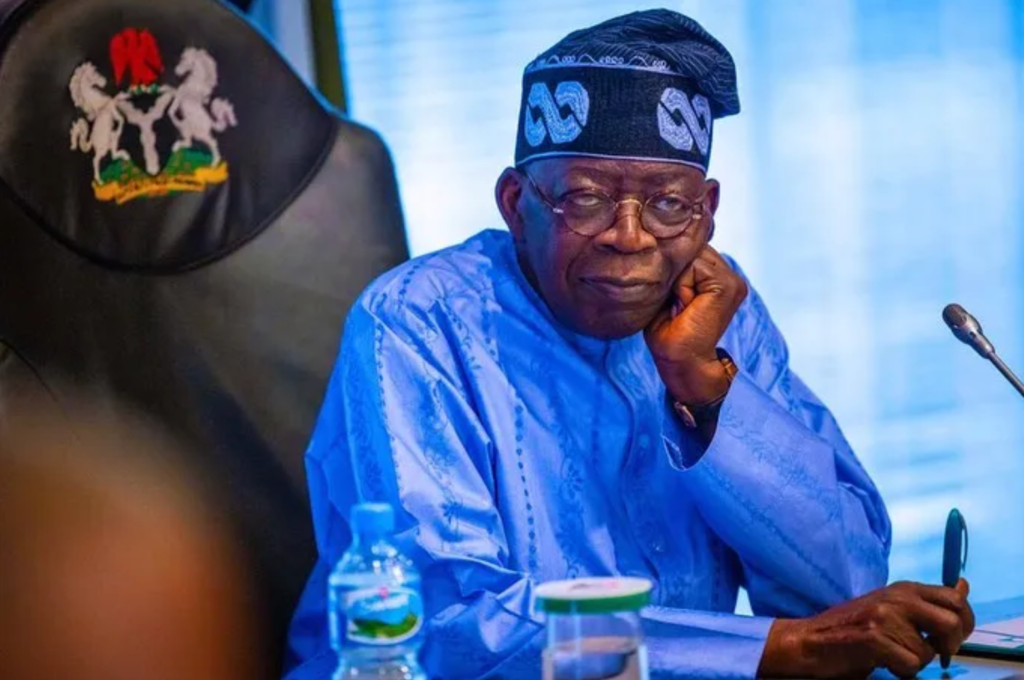
When President Bola Ahmed Tinubu announced the removal of Nigeria’s decades-old fuel subsidy during his inauguration speech on May 29, 2023, he delivered one of the most consequential economic decisions in the country’s modern history.
His message was direct:
“Fuel subsidy is gone.”
For supporters, it was a bold decision that previous administrations avoided for years because of political consequences.

For critics, it was a sudden shock that placed the burden of economic adjustment on ordinary Nigerians already struggling with rising living costs.
More than two years later, Nigeria remains divided over one fundamental question:
Are Tinubu’s economic reforms the painful beginning of recovery, or are they creating too much hardship for citizens who cannot afford the transition?
The answer will shape not only Nigeria’s economic future but also how other African countries approach difficult reforms.
The Economy Nigeria Inherited
Nigeria’s economic problems did not begin with Tinubu.
For years, Africa’s largest economy faced deep structural challenges:
- Heavy dependence on oil revenue.
- A costly fuel subsidy system.
- Foreign exchange shortages.
- Low industrial productivity.
- Rising public debt.
- High unemployment.
- Weak infrastructure.
Despite being Africa’s largest oil producer, Nigeria imported most of its refined petroleum products because domestic refining capacity was insufficient.
This created a paradox:
Nigeria produced crude oil but depended on foreign countries for fuel.
The fuel subsidy was designed to keep petrol affordable for citizens, but critics argued that it became increasingly expensive and vulnerable to corruption.
According to Nigeria’s government, fuel subsidies cost the country trillions of naira over the years, limiting funds available for infrastructure, healthcare and education.
Why Tinubu Chose Reform
President Tinubu argued that Nigeria could no longer sustain the subsidy system.
His administration maintained that subsidy payments benefited wealthier Nigerians who consumed more fuel while draining government resources.
The government redirected its economic strategy toward:
- Increasing government revenue.
- Attracting foreign investment.
- Improving fiscal stability.
- Encouraging private-sector growth.
The foreign exchange system was also reformed, with the Central Bank of Nigeria moving toward a more market-driven exchange rate.
The objective was to make the naira more realistic, reduce distortions and attract investors who had previously struggled to access foreign currency.
The argument from supporters was simple:
Nigeria needed structural change.
The country could not continue delaying difficult decisions.
The Immediate Cost: Inflation and Household Pressure
However, economic reforms have come with significant pain.
The removal of fuel subsidies caused petrol prices to rise dramatically, increasing transportation costs and affecting food prices.
Nigeria experienced one of its highest inflation periods in decades.
Food inflation became a major concern as households struggled with rising prices for basic goods.
For millions of Nigerians, the economic debate was not theoretical.
It was about daily survival.
A worker who previously spent a manageable amount commuting to work suddenly faced much higher transport expenses.
Small businesses using generators because of unreliable electricity saw their operating costs increase.
Families reduced spending because their income could no longer cover the same lifestyle.
This is where criticism of the reforms has been strongest.
The Government’s Argument: Pain Before Recovery
Supporters of the reforms argue that economic transformation requires difficult decisions.
They point to countries that experienced painful adjustment periods before achieving stronger growth.
Former World Bank and WTO officials have often argued that countries cannot achieve sustainable development by maintaining expensive policies that distort markets.
Nigeria’s government argues that removing subsidies creates opportunities for long-term investment.
Instead of spending billions subsidising fuel consumption, resources can be redirected toward:
- Infrastructure.
- Education.
- Healthcare.
- Industrial development.
The government has introduced programmes aimed at reducing the impact of reforms, including cash transfer initiatives and support programmes for vulnerable households.
However, critics argue that these measures have not been large enough compared with the scale of economic pressure facing citizens.
The Subsidy Debate: Protection or Problem?
The fuel subsidy debate has existed in Nigeria for decades.
Supporters of subsidies argue that cheap fuel protects ordinary citizens from global oil price shocks.
They argue that in a country where public transportation systems are weak and incomes are low, fuel subsidies serve as a social protection mechanism.
Critics counter that subsidies were inefficient and poorly targeted.
They argue that government spending benefited those who consumed more fuel, including wealthier households and businesses.
The challenge is that both arguments contain truth.
Nigeria needed reform.
But the question remains whether the reform process protected vulnerable citizens adequately.
The Naira Crisis
The currency reforms created another major debate.
Before Tinubu’s administration, Nigeria maintained multiple exchange rates, which critics said created corruption and discouraged investors.
The government moved toward a unified foreign exchange market to create transparency.
However, the naira lost significant value after the reforms, making imported goods more expensive.
Because Nigeria depends heavily on imported machinery, food products, medicines and industrial materials, currency depreciation immediately affected prices.
Supporters argue that the naira was artificially overvalued for years and that adjustment was unavoidable.
Critics argue that the speed of the reforms created unnecessary economic shock.
Business Leaders Welcome Change—With Caution
Many Nigerian business leaders have supported the direction of reforms while acknowledging the difficulties.
Entrepreneur and investor Tony Elumelu has repeatedly argued that Nigeria needs policies that encourage private-sector growth, entrepreneurship and investment.
The private sector has long complained about:
- Poor electricity supply.
- Multiple taxation.
- Currency uncertainty.
- Weak infrastructure.
Businesses want reforms.
But they also want a predictable environment where they can plan and invest.
Economists Are Divided
Economists remain divided over the pace and implementation of the reforms.
Supporters argue that Nigeria had reached a point where gradual reform was no longer realistic.
They believe delaying action would have created an even larger crisis.
Critics argue that economic reforms should have been accompanied by stronger social protection systems.
They point to the importance of sequencing.
In their view, governments should first strengthen transportation systems, support vulnerable households and improve productivity before removing major subsidies.
The disagreement is not necessarily about whether Nigeria needed reform.
It is about how reform should have been managed.
The IMF and Global Investors View Nigeria Differently
International financial institutions have generally welcomed Nigeria’s reform direction.
The International Monetary Fund (IMF) has described reforms as necessary steps toward improving economic stability, strengthening public finances and creating conditions for investment.
Foreign investors have also shown renewed interest in Nigeria’s large consumer market and economic potential.
However, investor confidence alone does not guarantee improved living standards.
A successful economy must benefit ordinary citizens, not only financial markets.
The Bigger Question: Can Nigeria Turn Reform Into Growth?
The success of Tinubu’s reforms will ultimately depend on what happens next.
Removing subsidies and changing currency policy are only the first steps.
Nigeria must now answer bigger questions:
Can it increase local manufacturing?
Can it improve electricity supply?
Can it create millions of jobs?
Can it reduce dependence on oil?
Can it make agriculture more productive?
Without these changes, reforms may only create short-term pain without long-term transformation.
Lessons for Africa
Nigeria’s experience matters beyond its borders.
Many African countries face similar challenges:
- Expensive subsidies.
- Weak currencies.
- Debt pressures.
- Low industrial capacity.
How Nigeria manages this transition will influence economic debates across the continent.
The lesson is not that reforms should be avoided.
The lesson is that reforms must be designed around citizens.
Economic transformation cannot only be measured by investor confidence or government savings.
It must be measured by whether ordinary people can live better lives.
The Verdict
Nigeria needed economic reform.
Few serious economists dispute that the country’s previous economic model was unsustainable.
But the success of reform will not be judged by policy announcements.
It will be judged by results.
If Nigeria emerges with stronger industries, more jobs, stable prices and increased investment, history may view Tinubu’s reforms as a necessary turning point.
If citizens continue suffering without seeing meaningful improvement, the reforms will be remembered differently.
The challenge facing Nigeria is not only changing policies.
It is convincing millions of Nigerians that the sacrifice they are making today will create a better tomorrow.
Economic medicine can be necessary.
But governments must remember one important truth:
Even the strongest medicine must be administered carefully, because people—not statistics—experience the side effects.

Comments (0)
No comments yet — be the first to share your thoughts.