

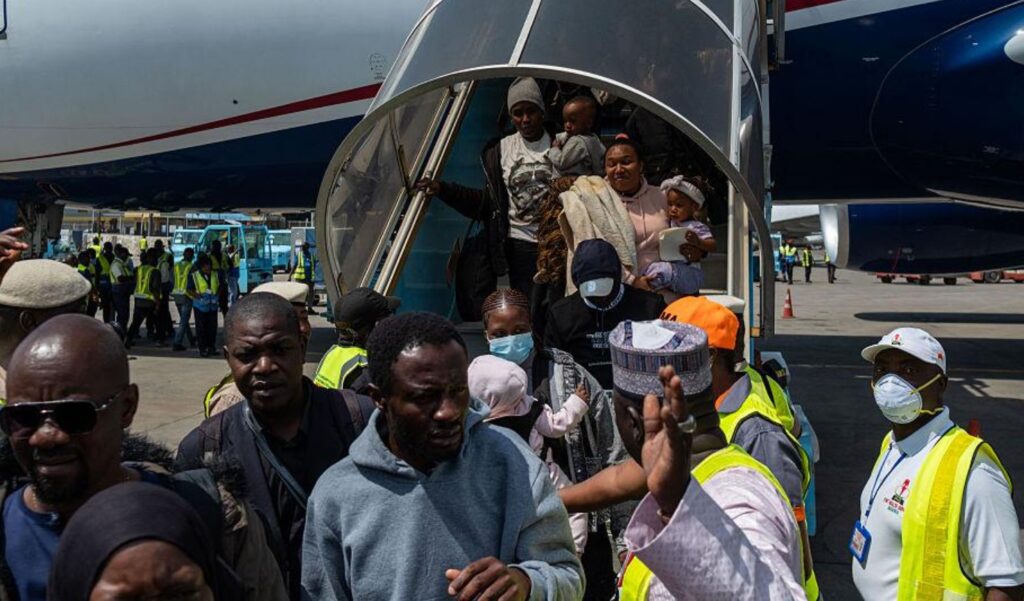
Nigeria has completed the voluntary evacuation of 1,490 of its citizens from South Africa following weeks of anti-immigrant violence and growing security concerns that prompted hundreds of Nigerians to seek government assistance to return home.
The final evacuation flight arrived at Murtala Muhammed International Airport in Lagos on 15 July, carrying 305 returnees and two Nigerian government officials who coordinated the operation. The flight marked the conclusion of a large-scale humanitarian effort launched after anti-migrant protests escalated in several parts of South Africa.
Five-Phase Evacuation Operation
The evacuation was carried out in five phases through a joint effort involving Nigeria’s Ministry of Foreign Affairs, the Nigerian High Commission in Pretoria, the Nigerians in Diaspora Commission (NiDCOM), the National Emergency Management Agency (NEMA), immigration authorities, airport officials, and airline partners.
Air Peace and South African Airways operated the evacuation flights, transporting Nigerians who had voluntarily registered to leave South Africa after expressing concerns about their safety.

According to the Ministry of Foreign Affairs, the operation demonstrates the government’s commitment to protecting Nigerians abroad during periods of crisis.
Rising Xenophobic Violence
The evacuation follows weeks of heightened anti-immigrant demonstrations in South Africa, where groups calling for stricter immigration enforcement organised protests in several towns and cities.
The movement, led in part by the anti-illegal immigration group March and March, accused undocumented migrants of contributing to crime, unemployment, and pressure on public services. Although many demonstrations remained peaceful, some incidents turned violent, with reports of foreign-owned businesses being attacked and migrants being threatened or forced to leave their homes.
Nigerian authorities said at least two Nigerian nationals died during the recent unrest. One was allegedly killed by criminals, while another died during a police interrogation in Pretoria. Nigerian officials have called for full investigations into both incidents and demanded accountability from South African authorities.
Diplomatic Efforts Behind the Operation
Before the evacuation began, Nigerian officials held discussions with the South African government to address the deteriorating security situation.
Foreign Ministry spokesperson Kimiebi Ebienfa said the repatriation programme was organised after consultations with South African authorities and was intended to provide a safe option for Nigerians who no longer wished to remain in the country.
Despite the tensions, Nigeria reaffirmed its commitment to maintaining strong diplomatic relations with South Africa while making it clear that violence against its citizens is unacceptable.
Returnees Begin New Lives
Many of the Nigerians who returned had lived and worked in South Africa for years in sectors including retail, hospitality, construction, transport, and small business.
Upon arrival in Lagos, government agencies registered the returnees and began providing initial support, including health screening, documentation, and assistance aimed at helping them reintegrate into Nigerian society.
Officials say additional programmes are being developed to help returnees rebuild their livelihoods through employment opportunities, vocational training, and entrepreneurship initiatives.
Xenophobia Remains a Regional Challenge
South Africa has experienced several waves of xenophobic violence over the past two decades, with foreign nationals from countries including Nigeria, Zimbabwe, Mozambique, Malawi, Ethiopia, and Somalia frequently becoming targets.
Analysts say the violence is driven by a combination of high unemployment, poverty, crime, and frustration over illegal immigration. However, human rights organisations have repeatedly warned that migrants are often unfairly blamed for broader socio-economic challenges.
The recent unrest has prompted concern from several African governments, many of which have urged South Africa to strengthen protections for foreign nationals while addressing immigration issues through lawful and peaceful means.
Looking Ahead
Although the evacuation programme has now concluded, Nigerian authorities say they will continue monitoring the situation in South Africa through their diplomatic missions.
Both Nigeria and South Africa remain two of Africa’s largest economies and have longstanding political and economic ties. Officials from both countries have expressed hope that continued dialogue will help address concerns over migrant safety while preserving the strong bilateral relationship that has existed for decades.
For the 1,490 Nigerians who have returned home, the government’s operation marks the end of a difficult chapter and the beginning of a new effort to rebuild their lives in their home country.

Comments (0)
No comments yet — be the first to share your thoughts.