

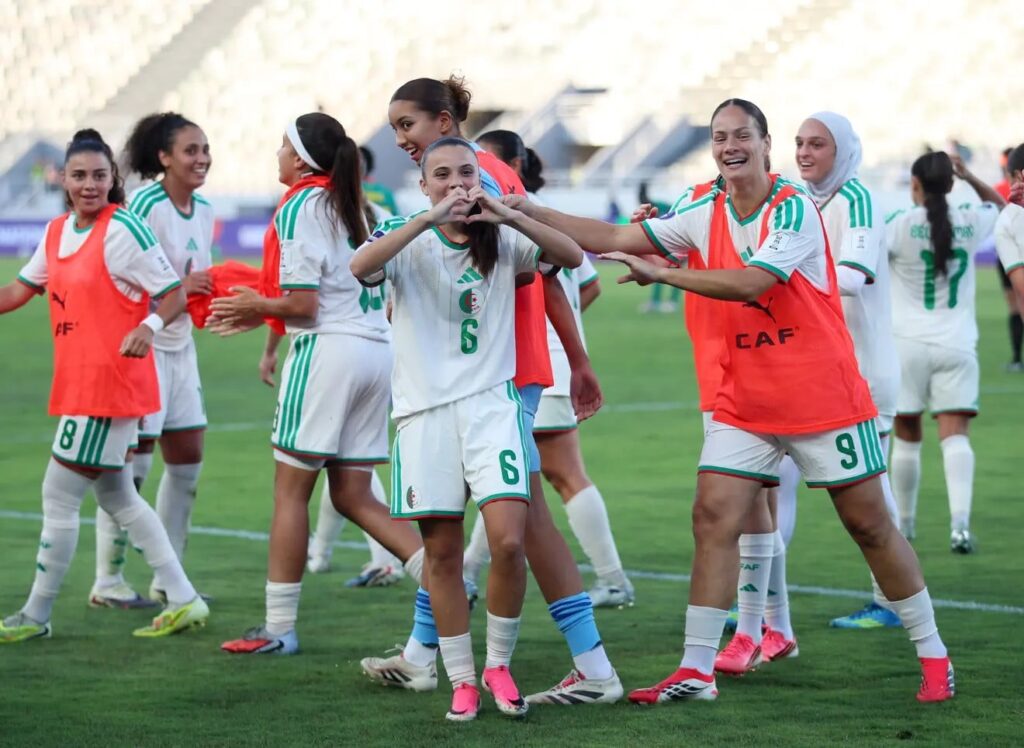
North African football continues to make a strong impression at the Women’s Africa Cup of Nations (WAFCON) as hosts Morocco and regional rivals Algeria secured their places in the quarterfinal stage of the competition.
The qualification of both teams highlights the growing strength of women’s football in North Africa, a region that has invested heavily in player development, professional leagues and national team programmes in recent years.
Morocco’s Golden Generation Continues Its Rise
Morocco entered the tournament with high expectations after becoming the first Arab and North African nation to reach the FIFA Women’s World Cup semifinals in 2023.
The Atlas Lionesses have continued building on that historic achievement, combining experienced players with a new generation of talents developed through Morocco’s expanding women’s football system.

Playing on home soil has provided an additional advantage, with strong support from Moroccan fans creating an electric atmosphere throughout the tournament.
The team’s progress reflects the country’s wider investment in football infrastructure, including women’s academies and increased opportunities for female players.
Algeria Returns to the Continental Spotlight
Algeria’s qualification marks an important moment for a team looking to re-establish itself among Africa’s top women’s football nations.
The Algerian women’s national team has historically produced talented players, but recent years have seen increased competition from countries such as Nigeria, South Africa, Morocco and Zambia.
Their progress at WAFCON demonstrates the impact of renewed focus on women’s football development and improved preparation at national level.
North Africa’s Growing Influence in Women’s Football
For many years, African women’s football was dominated by traditional powerhouses including Nigeria, Ghana and Cameroon.
However, the landscape is changing.
Morocco’s rise, Algeria’s improvement and Egypt’s continued development show that women’s football is expanding across more regions of the continent.
Investment from national federations, professional leagues and youth programmes is creating stronger competition and giving more female athletes opportunities to pursue football careers.
The Battle for African Supremacy Intensifies
The WAFCON quarterfinal stage promises tougher challenges as teams compete for continental glory and qualification opportunities linked to global competitions.
Traditional giants remain dangerous, but the emergence of new contenders has made African women’s football more competitive than ever.
Morocco will be aiming to go further than their previous WAFCON performances, while Algeria will look to continue their strong campaign against some of the continent’s best teams.
A New Era for African Women’s Football
The progress of Morocco and Algeria represents a wider transformation happening across African football.
Women’s football is attracting more investment, larger audiences and greater international attention.
As more countries develop professional structures and youth pathways, competitions like WAFCON are becoming platforms not only for sporting success but also for inspiring a new generation of African female athletes.
With Morocco and Algeria now through to the last eight, North Africa has sent a clear message: the future of African women’s football will be shaped by more than one region.

Comments (0)
No comments yet — be the first to share your thoughts.