
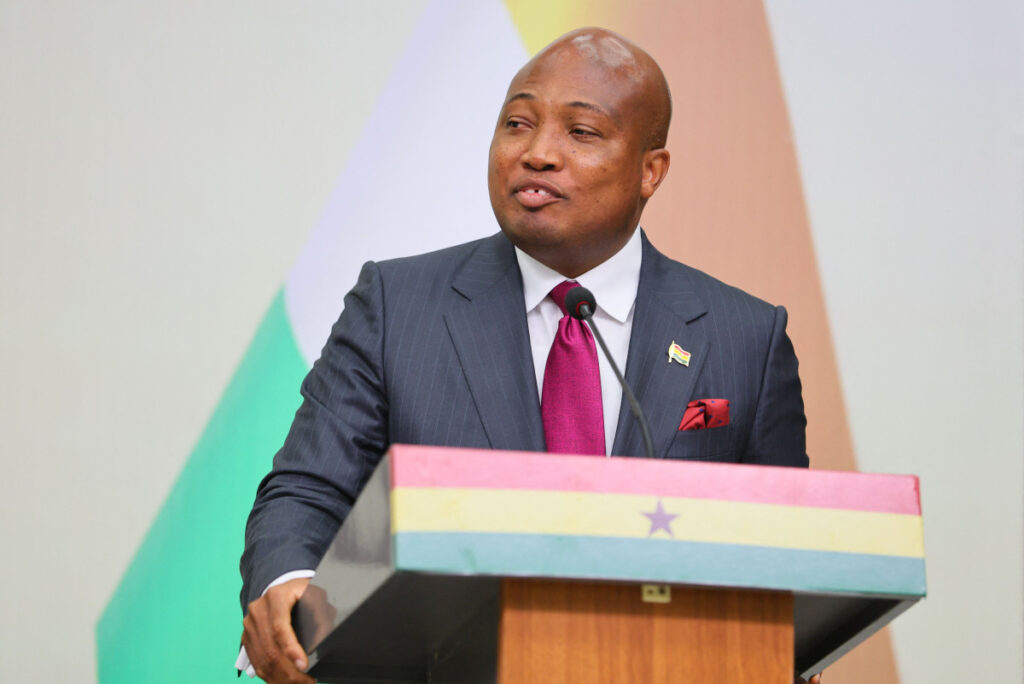
Ghana has taken another step toward closer engagement with BRICS after Parliament gave the government the green light to pursue the country’s application to join the expanding group of emerging economies.
The development marks an important moment in Ghana’s foreign and economic policy as Accra looks to broaden its international partnerships and strengthen access to investment, trade and alternative sources of development financing.
BRICS has grown considerably in recent years, expanding beyond its original members and positioning itself as an increasingly influential platform for countries in the Global South.
For Ghana, the decision comes at a time when the country is attempting to rebuild its economy after a severe period of debt, inflation and financial pressure.

Why Ghana wants BRICS.
Ghana’s interest in BRICS is closely connected to its search for wider economic opportunities.
The country needs substantial investment in infrastructure, energy, manufacturing, agriculture and other productive sectors. Stronger relationships with major emerging economies could provide additional opportunities for financing and trade.
Countries associated with BRICS include some of the world’s largest emerging markets, including China, India and Brazil. Their combined economic weight gives the grouping significant influence in global trade and investment discussions.
Ghana could potentially use stronger ties with these economies to attract capital, expand exports and deepen commercial relationships beyond its traditional partners.
A changing global economic order.
Ghana’s move also reflects a broader shift in African diplomacy.
African governments are increasingly seeking to operate in a more multipolar international system rather than depending overwhelmingly on one group of traditional partners.
China has become a major infrastructure and trading partner across Africa. India has expanded its commercial presence, while Gulf countries are increasing investment in logistics, energy, agriculture and real estate.
At the same time, Europe and the United States remain important sources of investment, trade and development finance.
For Ghana, closer engagement with BRICS does not necessarily mean abandoning its existing relationships.
Instead, it could represent an attempt to expand the country’s options.
What membership could mean for Ghana.
One potential benefit is greater access to investment.
Ghana has significant infrastructure requirements, including roads, electricity generation, transport networks and industrial facilities. Increased access to investors from BRICS countries could help finance some of these projects.
Trade is another potential area of opportunity.
Ghana already exports commodities such as cocoa, gold and oil, but policymakers have increasingly stressed the need to move toward greater value addition and manufacturing.
Access to larger markets could help Ghanaian businesses expand beyond raw commodity exports.
BRICS membership is not an economic solution by itself.
The decision to pursue membership does not automatically guarantee new investment or cheaper financing.
Ghana would still have to compete with other countries for capital and demonstrate that its investment environment is attractive.
Investors will continue to examine issues such as political stability, taxation, infrastructure, regulation, currency risks and the reliability of public institutions.
The country will also need to ensure that new partnerships contribute to productive economic activity rather than simply increasing imports or external debt.
This distinction will be particularly important after Ghana’s recent economic difficulties.
A strategic opportunity for Accra.
Ghana’s BRICS move comes at a time when the global economic system is being reshaped by competition among major powers.
For Accra, having stronger relationships with emerging economies could provide greater flexibility in negotiating trade and investment agreements.
It could also give Ghana a stronger voice in conversations about the future of international finance, development and global economic governance.
The challenge will be converting diplomatic alignment into tangible benefits for the Ghanaian economy.
If Ghana can attract productive investment, expand exports and develop stronger industrial partnerships, closer BRICS engagement could become an important part of its economic strategy.
If those opportunities are not converted into measurable economic gains, however, membership would remain largely symbolic.
For now, Ghana has signalled that it wants a seat at a broader table as the global balance of economic power continues to shift.

Comments (0)
No comments yet — be the first to share your thoughts.