

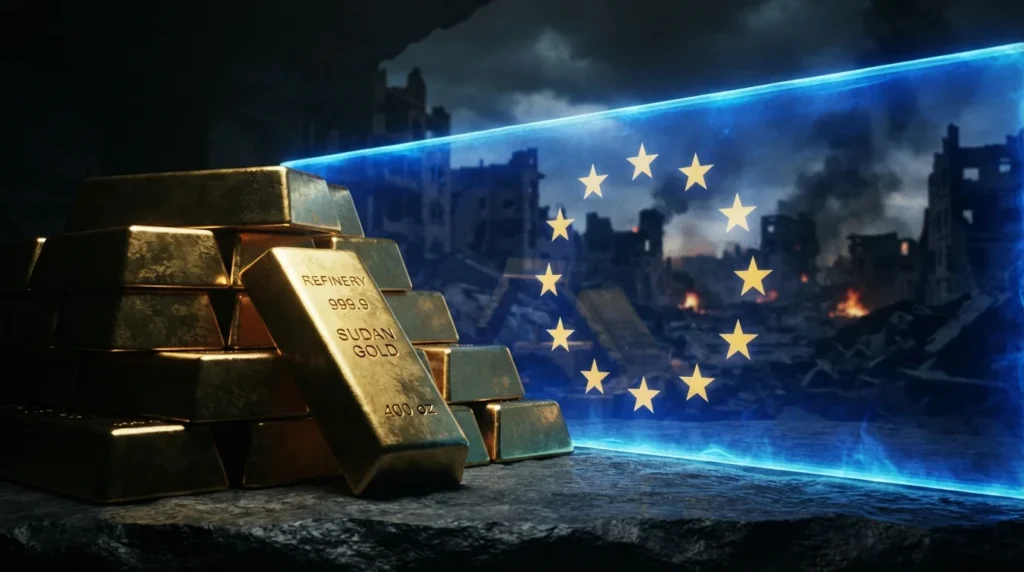
The European Union has announced sweeping new sanctions targeting Sudan’s gold industry in an effort to cut off one of the main sources of funding for the country’s ongoing civil war.
Under the new measures, the EU has banned the purchase, import, and transfer of gold originating from Sudan. It has also prohibited the export of mercury and cyanide to Sudan, two chemicals widely used in gold mining and extraction. European officials say the sanctions are designed to reduce the financial resources available to the warring parties and increase pressure for a peaceful resolution to the conflict.
Gold at the Center of Sudan’s Conflict
Since the outbreak of war in April 2023 between the Sudanese Armed Forces (SAF) and the paramilitary Rapid Support Forces (RSF), gold has become one of the country’s most valuable economic assets.
International observers say both sides have relied heavily on revenues from the gold sector to finance military operations, purchase weapons, and sustain the conflict. Sudan is one of Africa’s largest gold producers, and much of its production has continued despite the ongoing violence.

The EU believes disrupting this revenue stream could weaken the ability of armed groups to finance the war and encourage renewed diplomatic efforts toward a ceasefire.
New Restrictions on Mining Chemicals
In addition to the gold import ban, the European Union has restricted exports of mercury and cyanide to Sudan.
These chemicals play a critical role in gold extraction and processing. By limiting access to them, EU officials hope to reduce industrial-scale gold production that may be benefiting parties involved in the conflict.
The sanctions include limited exemptions for humanitarian purposes, public health emergencies, and disaster response to ensure that essential assistance can continue without interruption.
Humanitarian Crisis Continues to Worsen
The conflict in Sudan has created one of the world’s largest humanitarian emergencies.
Millions of people have been displaced from their homes, while widespread violence has devastated communities across the country. International agencies estimate that tens of millions of Sudanese are in need of humanitarian assistance, with many facing severe food insecurity and limited access to healthcare.
The European Union said the latest sanctions form part of a broader strategy to pressure all parties to end the fighting and allow greater humanitarian access to affected populations.
Mixed Reactions to the Sanctions
While European leaders describe the measures as a necessary step to weaken the war economy, analysts say their long-term impact will depend on effective enforcement and international cooperation.
Some experts argue that Sudan’s gold trade could continue through alternative markets outside Europe, reducing the overall effectiveness of the sanctions. Others believe the restrictions send a strong political message and may encourage additional action from other international partners.
Economic analysts also note that legitimate businesses and mining communities could face additional challenges as the sector adjusts to the new restrictions.
Pressure Mounts for Peace
The European Union has reiterated its call for an immediate ceasefire and renewed political dialogue to end the conflict.
Officials say economic sanctions alone will not resolve the crisis but can increase pressure on those responsible for prolonging the fighting. The EU also urged external actors to stop supporting the conflict and called for greater international cooperation to help restore stability in Sudan.
As the war enters another year, the latest sanctions underscore growing international concern over the humanitarian toll of the conflict and the urgent need for a lasting political solution.

Comments (0)
No comments yet — be the first to share your thoughts.