

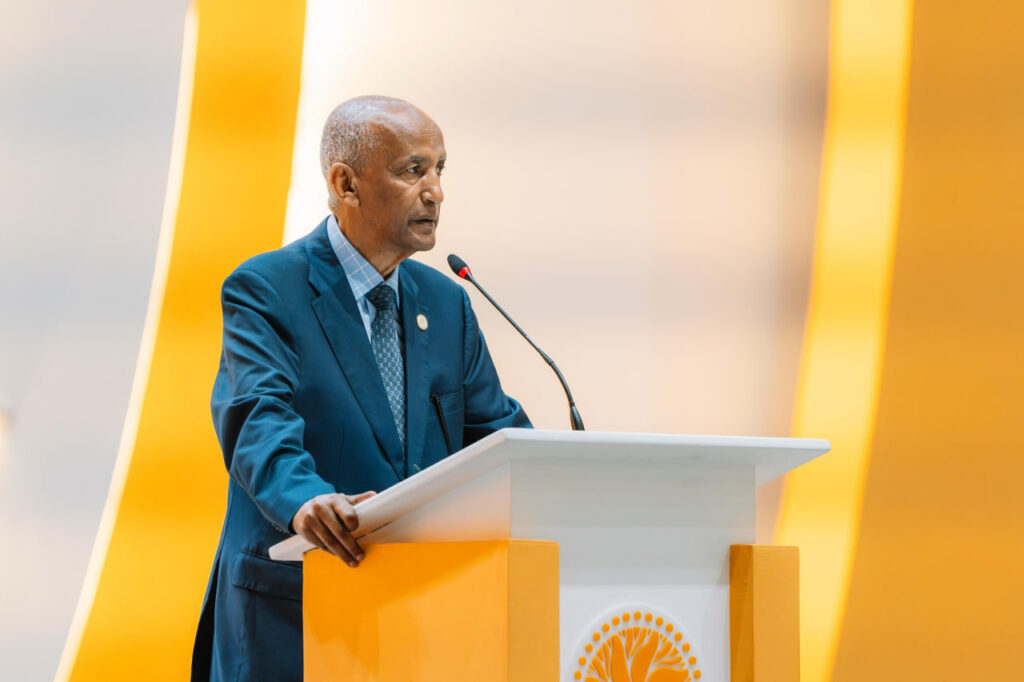
Ethiopia has entered a critical chapter in its efforts to address years of political division and conflict, as thousands of representatives from across the country gather in Addis Ababa for a historic National Dialogue Conference aimed at building consensus on the nation’s future. The conference, which officially opened on July 15, is widely viewed as one of the country’s most ambitious attempts to promote reconciliation through dialogue rather than confrontation.
The National Dialogue Conference brings together more than 4,000 delegates selected through a process led by the Ethiopian National Dialogue Commission (ENDC). According to the Commission, participants represent political parties, regional administrations, religious institutions, civil society organizations, traditional leaders, women, youth groups and community representatives from across Ethiopia’s diverse regions. The process follows several years of consultations conducted in more than 1,200 districts nationwide.
Prime Minister Abiy Ahmed, speaking during the opening ceremony, described the conference as an opportunity to replace decades of political confrontation with dialogue and compromise. His government argues that Ethiopia’s complex political, constitutional and security challenges cannot be resolved through force alone and require broad national consensus.
The dialogue comes after one of the most turbulent periods in Ethiopia’s modern history.

Over the past several years, Africa’s second-most populous country has experienced conflict in multiple regions, including the devastating war in Tigray, insecurity in Amhara, violence involving armed groups in Oromia, and recurring disputes over constitutional arrangements and ethnic federalism. While the 2022 Pretoria Agreement ended the large-scale conflict in Tigray, tensions in other parts of the country have continued to challenge stability.
Unlike previous political consultations, this conference has a much broader mandate. Delegates are expected to debate issues that have shaped Ethiopian politics for decades, including constitutional reform, the structure of federalism, national identity, resource sharing, governance, security, justice, reconciliation and mechanisms for peaceful political competition. Discussions are expected to continue over several weeks before recommendations are presented for further political consideration.
Support for the initiative has come from several continental institutions.
Bankole Adeoye, the African Union Commissioner for Political Affairs, Peace and Security, described Ethiopia’s National Dialogue as a landmark process that demonstrates the country’s commitment to pursuing peace through inclusive engagement. He said successful dialogue could strengthen long-term stability and contribute to regional peace in the Horn of Africa.
The dialogue has also featured prominently in Ethiopia’s recent diplomatic engagements. During meetings between Ethiopian officials and European Union representatives, Foreign Minister Gedion Timothewos described the process as a nationally led effort designed to resolve longstanding political differences through inclusive consultation, while reaffirming Ethiopia’s commitment to peaceful reform and international cooperation.
Despite the optimism surrounding the conference, not everyone is convinced it will resolve Ethiopia’s deep political divisions.
Some opposition groups, civil society actors and policy analysts have questioned whether the process is sufficiently inclusive. Critics argue that meaningful national reconciliation requires broader participation from all political stakeholders, including groups affected by ongoing conflicts, and greater confidence that recommendations emerging from the dialogue will ultimately influence government policy. Others have raised concerns about constitutional reform proposals and whether all communities feel adequately represented in discussions about Ethiopia’s future political system.
The Ethiopian National Dialogue Commission has defended its approach, saying the selection process followed years of nationwide consultations and was designed to ensure representation from every region and major sector of society. Parliament earlier this year extended the Commission’s mandate to allow it to complete outstanding consultations and oversee the national conference.
Political observers say the significance of the conference extends beyond Ethiopia.
As the headquarters of the African Union and one of the Horn of Africa’s most influential countries, Ethiopia plays a central role in regional diplomacy, peacekeeping and economic integration. A successful dialogue could improve investor confidence, strengthen regional stability and reinforce Ethiopia’s position as a key political and economic actor on the continent. Conversely, failure to build broad consensus could prolong uncertainty at a time when the country is also pursuing major economic reforms and infrastructure development.
For millions of Ethiopians, expectations remain cautious.
The country has witnessed numerous political transitions and reform efforts over the past decades, but many citizens believe lasting peace will depend on whether dialogue leads to practical reforms rather than symbolic agreements. Issues such as security, economic opportunity, constitutional governance and national unity remain at the centre of public debate.
As deliberations continue in Addis Ababa, the National Dialogue Conference represents one of Ethiopia’s most important political initiatives in recent years. Whether it succeeds will depend not only on the discussions taking place inside the conference hall, but also on the willingness of political leaders, institutions and communities to implement the compromises needed to build lasting peace and national cohesion.

Comments (0)
No comments yet — be the first to share your thoughts.