

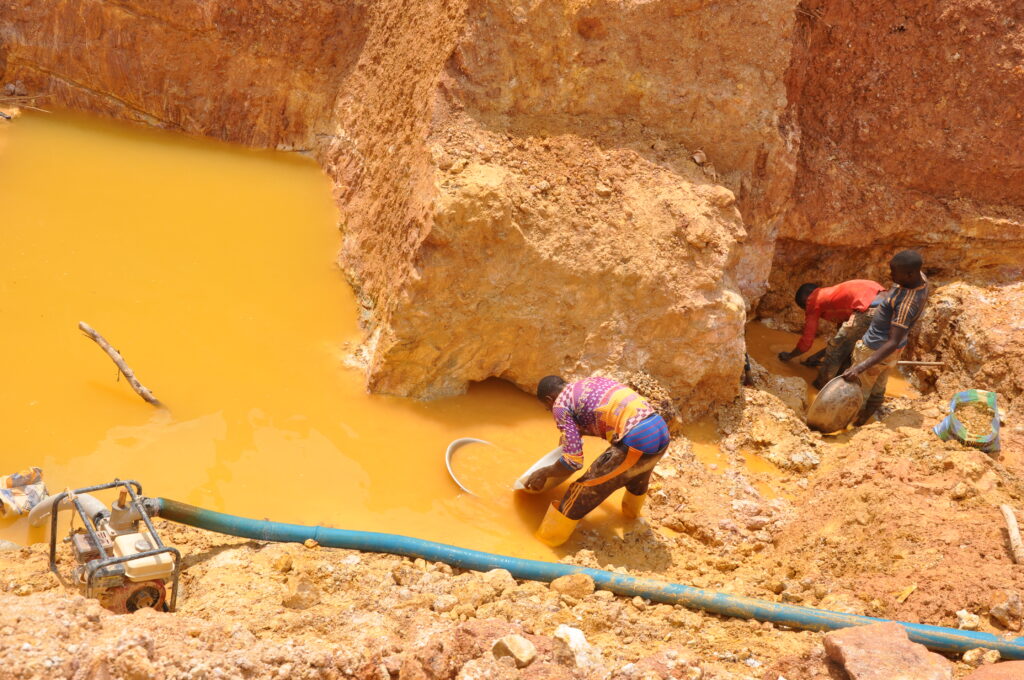
Cameroon has launched an ambitious nationwide operation to recover billions of CFA francs in unpaid taxes from the country’s gold mining industry, marking the latest step in the government’s efforts to bring the largely informal sector under tighter control.
Beginning 1 August 2026, authorities will carry out tax and customs inspections across major gold-producing regions, focusing on operators suspected of underreporting production, evading taxes, and bypassing official marketing channels. The government estimates the operation could recover 395 billion CFA francs (about US$680 million) in tax and customs revenue from gold produced in 2025 and 2026.
Government Moves to Recover Lost Revenue
The announcement was made by Minister of Mines, Industry and Technological Development Fuh Calistus Gentry, who said the operation forms part of a broader strategy to restore transparency and accountability in Cameroon’s mining sector.
According to the ministry, the government expects to recover 95 billion CFA francs from gold production recorded in 2025 and a further 300 billion CFA francs from projected production in 2026. Officials say the revenue will come from reassessing the Mining Synthetic Tax (ISML), customs duties, and other mandatory payments that were either underdeclared or not paid.

Most Gold Bypasses Official Channels
Authorities say the crackdown became necessary after discovering that between 80% and 90% of gold produced by semi-mechanised mining operations never entered official collection systems.
Instead, much of the gold is believed to have been sold through informal networks or smuggled out of the country, depriving the government of substantial tax revenue and foreign exchange earnings.
The East and Adamawa regions, which account for a significant share of Cameroon’s gold production, will be among the primary targets of the operation. Inspectors will verify production records, tax declarations, export documentation, and compliance with mining regulations.
Wider Crackdown on Illegal Mining
The tax recovery campaign is part of a much broader effort to reform Cameroon’s mining industry.
The government says it has identified more than 200 illegal mining operators, many of whom have been working without valid authorisations. Authorities have already referred 137 companies to court for alleged violations of mining laws and have suspended all semi-mechanised mining permits pending compliance reviews.
Officials are also introducing stricter production monitoring systems, minimum monthly gold delivery requirements, improved traceability measures, and tighter licensing controls to prevent future revenue losses.
Gold Smuggling Remains a Major Challenge
The latest measures follow growing concern over discrepancies between Cameroon’s official gold export figures and data reported by international trading partners.
Government investigations found that large quantities of Cameroonian gold had been exported through unofficial channels, particularly to the United Arab Emirates, without passing through the country’s official marketing and taxation systems.
Earlier this year, President Paul Biya ordered a high-level investigation into gold trafficking networks after reports suggested that illegal exports had deprived the country of billions of CFA francs in revenue over several years. The inquiry is examining the role of smuggling networks, weak oversight, and possible administrative failures within the mining sector.
Mining Takes Centre Stage
The gold sector reforms come as Cameroon accelerates efforts to make mining one of the country’s leading economic pillars.
Five major mining projects, including the Minim-Martap bauxite mine, Bipindi Grand-Zambi iron ore project, Kribi-Lobé iron ore project, Bidzar marble project, and Colomine gold mine, have entered production or commissioning. Several additional iron ore and gold projects are expected to advance during 2026.
The government recently announced that revenue from mining is expected to surpass oil revenue in the near future, reflecting its long-term strategy to diversify the economy and reduce dependence on crude exports.
Restoring Confidence in the Sector
Industry experts say the success of the tax recovery campaign will depend on consistent enforcement, transparent regulation, and stronger oversight of mining activities.
Formalising gold production could increase government revenue, improve investor confidence, and strengthen Cameroon’s foreign exchange reserves. However, analysts caution that tackling illegal mining will require sustained action against smuggling networks, stronger border controls, and continued cooperation between government agencies and mining operators.
If successfully implemented, the reforms could transform one of Cameroon’s most under-regulated industries into a major contributor to national economic growth while ensuring that the country’s mineral wealth delivers greater benefits to the state and its citizens.

Comments (0)
No comments yet — be the first to share your thoughts.