

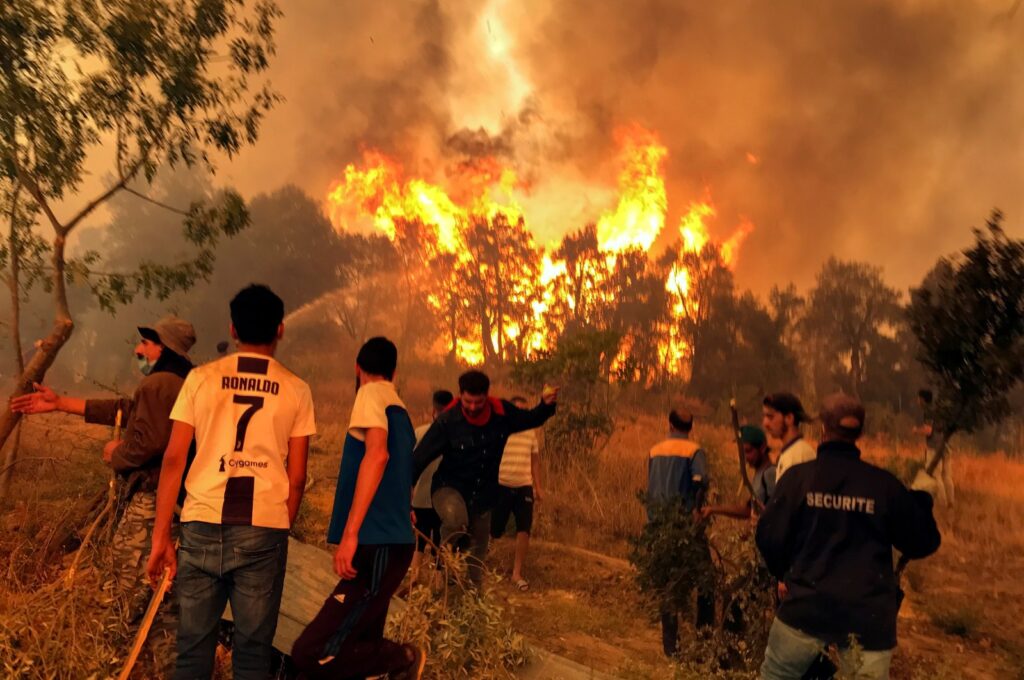
Algeria is battling a wave of deadly wildfires as soaring temperatures and dry conditions fuel blazes across several northern provinces, forcing evacuations, damaging homes, and stretching emergency services.
Civil Protection authorities have been working around the clock to contain the fires, which have spread through forests, farmland, and residential areas during an intense summer heatwave. Hundreds of firefighters, supported by military personnel and aerial firefighting units, have been deployed to prevent the flames from reaching more communities.
Heatwave Fuels the Crisis
The fires come as Algeria experiences exceptionally high temperatures, with many regions recording well above seasonal averages.
The prolonged heat, combined with strong winds and dry vegetation, has created ideal conditions for wildfires to spread rapidly. Authorities say the current weather pattern has significantly increased the risk of new outbreaks, particularly in the country’s mountainous northern regions.

According to Algeria’s General Directorate of Civil Protection, emergency teams have extinguished more than 900 fires nationwide since July 8, highlighting the scale of the crisis facing the country.
Firefighters Race to Protect Communities
Emergency responders have been deployed across multiple provinces, including Béjaïa, Sétif, Tizi Ouzou, Bouira, and Jijel, where some of the most severe fires have been reported.
Firefighters have been working to contain advancing flames while helping residents evacuate vulnerable areas. In several communities, fires have destroyed vegetation, damaged agricultural land, and threatened homes located near forested areas.
Authorities have praised the efforts of emergency crews, many of whom have been working continuously under difficult weather conditions to prevent further destruction.
Tragedy Strikes Near Algiers
As firefighters battled wildfires across the country, another tragedy unfolded near the capital.
A fire broke out at a children’s care facility in the Mohammadia district on the outskirts of Algiers, killing 11 people, including children, and injuring 19 others. Emergency services rescued several residents, including people with disabilities, while President Abdelmadjid Tebboune expressed condolences to the victims’ families and ordered support for those affected.
Authorities have launched an investigation into the cause of the orphanage fire, although no official explanation has yet been released.
Climate Challenges Intensify
Environmental experts warn that Algeria, like many Mediterranean countries, is experiencing longer and more intense wildfire seasons due to rising temperatures and prolonged drought conditions.
Climate change has increased the frequency of extreme heat events across North Africa, leaving forests drier and more susceptible to fire. Human activity, including accidental and deliberate fires, also remains a significant contributing factor.
The recurring wildfire seasons have raised concerns about the long-term impact on biodiversity, agriculture, water resources, and rural communities that depend heavily on forests for their livelihoods.
Government Calls for Vigilance
Authorities have urged residents to remain vigilant, avoid activities that could ignite fires, and immediately report any signs of smoke or flames.
Civil Protection teams remain on high alert as weather forecasts indicate that hot and dry conditions are likely to persist over the coming days. Additional firefighting resources have been positioned in high-risk areas to respond quickly to any new outbreaks.
Officials say protecting lives remains the government’s top priority while efforts continue to bring the fires under control.
Recovery Will Take Time
Although many of the fires have been contained, emergency officials caution that the danger is far from over.
The destruction caused by the blazes has once again highlighted Algeria’s vulnerability to increasingly severe wildfire seasons and the need for continued investment in fire prevention, emergency response, and climate resilience.
With temperatures expected to remain high, authorities are continuing to monitor affected regions closely, hoping to prevent further loss of life and limit additional damage to communities and the environment.

Comments (0)
No comments yet — be the first to share your thoughts.