

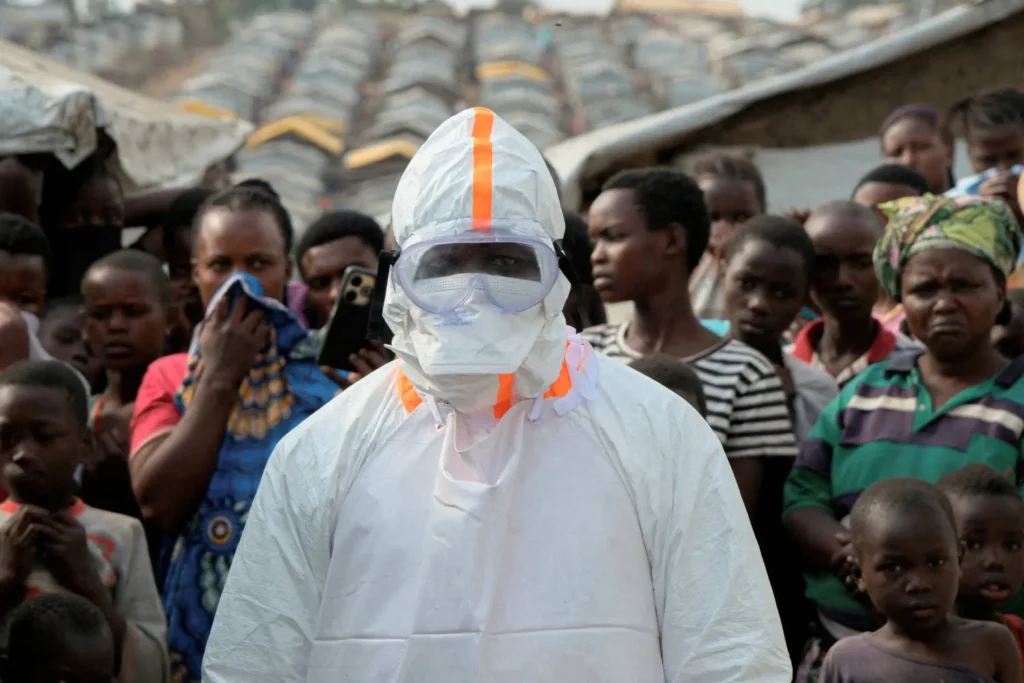
The World Health Organization (WHO) has warned that the ongoing Ebola outbreak in the Democratic Republic of the Congo (DRC) could be significantly larger than official figures suggest, raising fresh concerns about the scale of one of Africa’s most serious public health emergencies.
Health authorities say the outbreak, which began in May, has spread across several provinces, with thousands of suspected and confirmed cases reported. However, the WHO believes the true number of infections may be two to four times higher because many cases are going undetected due to insecurity, limited access to healthcare, and difficulties in monitoring affected communities.
The warning has prompted renewed calls for stronger international support as health workers race to contain the spread of the deadly virus.
Hidden Cases Fueling the Outbreak
According to the WHO, many newly confirmed Ebola infections cannot be linked to previously identified patients, making it increasingly difficult for health officials to trace how the virus is spreading.

Experts say this suggests that numerous infected people are either not seeking medical care or are dying before reaching treatment centres. As a result, health authorities are unable to identify all those who may have come into contact with infected individuals, allowing the virus to continue spreading unnoticed.
Contact tracing remains one of the most effective methods of controlling Ebola outbreaks, but officials say the current situation has made that task far more challenging.
Health Workers Face Growing Challenges
Frontline healthcare workers continue to operate under extremely difficult conditions.
In some of the worst-affected areas, medical personnel have threatened to suspend their work over delayed salaries, shortages of essential medical supplies, and the risks associated with treating Ebola patients.
Several healthcare workers have contracted the virus since the outbreak began, highlighting the dangers faced by doctors, nurses, laboratory technicians, and emergency response teams working to contain the epidemic.
Health organizations warn that any disruption to medical services could slow response efforts and allow the outbreak to spread further.
Conflict Continues to Hamper Response
Eastern Democratic Republic of the Congo has experienced years of armed conflict and instability, making it one of the most difficult environments in the world for emergency health operations.
Ongoing violence has displaced thousands of people and limited access to many communities where Ebola cases are suspected. In some areas, humanitarian teams are unable to travel safely, delaying testing, treatment, and surveillance activities.
Population movement between villages and across provincial borders has also increased the risk of the virus spreading into previously unaffected areas.
Health experts say restoring security and improving community engagement will be essential if the outbreak is to be brought under control.
No Approved Vaccine for the Current Strain
Unlike previous Ebola outbreaks caused by the Zaire strain of the virus, the current outbreak involves the Bundibugyo strain, for which there is currently no licensed vaccine.
Researchers are evaluating experimental vaccines and treatments, but public health officials say the most effective response remains early detection, rapid isolation of infected patients, and intensive contact tracing.
Healthcare workers are also educating communities about symptoms, safe burial practices, and the importance of seeking medical attention as soon as signs of illness appear.
International Partners Step Up Support
The WHO, Africa Centres for Disease Control and Prevention (Africa CDC), Médecins Sans Frontières, UNICEF, and several international partners have expanded their support for the Congolese government.
Additional medical personnel, laboratory equipment, protective gear, and emergency funding have been deployed to strengthen surveillance and improve treatment capacity in affected regions.
International health agencies have also intensified efforts to train local healthcare workers, strengthen laboratory testing, and improve communication with communities to counter misinformation surrounding the disease.
Officials say regional cooperation will remain essential to prevent cross-border transmission, particularly as neighbouring countries continue to strengthen surveillance at border crossings and health facilities.
Public Urged to Remain Vigilant
Health authorities continue to urge residents to report suspected Ebola symptoms immediately and to cooperate with medical teams conducting contact tracing and community education campaigns.
The WHO emphasized that while the situation is serious, outbreaks can be contained if cases are detected early and appropriate public health measures are implemented quickly.
As response teams continue their work, officials warn that the coming weeks will be critical. Strengthening surveillance, supporting healthcare workers, and maintaining international cooperation will determine how quickly the Democratic Republic of the Congo can bring the outbreak under control and prevent further loss of life.

Comments (0)
No comments yet — be the first to share your thoughts.