

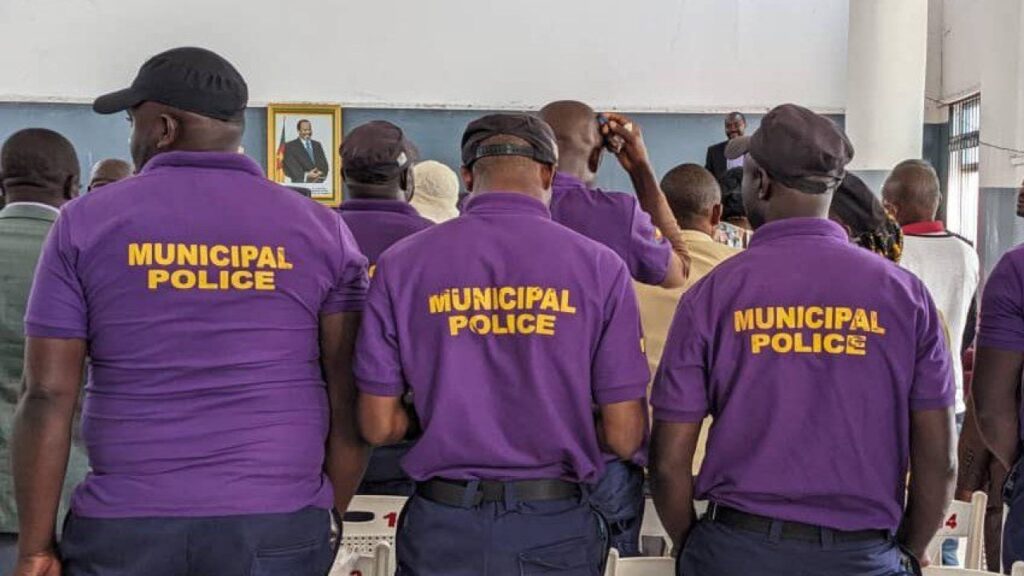
Cameroon’s Minister of Decentralisation and Local Development, Georges Elanga Obam, has warned municipal police officers against the excessive use of force and other abuses, ordering mayors to ensure their personnel operate within the law. The warning, contained in a circular dated October 21, 2026, follows concerns about disproportionate interventions by some municipal police officers and their impact on residents, road users and public safety.
The minister’s directive places renewed attention on the conduct of municipal police, whose responsibilities include maintaining public order, security, tranquillity, hygiene and sanitation within their respective council areas. While these officers play a role in local administration, the government has stressed that their duties do not give them unlimited authority to use force against citizens.
According to the minister, unlawful interventions have sometimes disrupted traffic and contributed to serious road accidents. They have also reportedly resulted in physical harm to members of the public. The circular calls on mayors to bring their municipal police teams under control and ensure that officers comply with the rules governing their work.
What the Law Says About Municipal Police.
Cameroon’s municipal police operate under Presidential Decree No. 2022/354 of August 9, 2022, which establishes the conditions for carrying out municipal policing. The decree defines their responsibilities and sets limits on how they may exercise their authority.

Under Article 5, municipal police officers cannot use force or exercise coercion against the population except in circumstances of legitimate self-defence. The framework is intended to distinguish their local administrative duties from those of the national police and gendarmerie, which have broader law-enforcement responsibilities.
Municipal police officers may help enforce regulations falling within the mayor’s authority, including matters related to public hygiene, sanitation and local order. However, those responsibilities must be exercised within the limits prescribed by law. They are not a licence to intimidate residents, inflict physical punishment or use force arbitrarily.
The legal framework also provides for disciplinary measures and legal proceedings against officers who violate their obligations. In cases involving widespread abuse or serious failures by a municipal police service, the service itself may face suspension under the applicable regulations.
Mayors Face Pressure to Enforce Discipline.
The minister’s warning puts mayors at the centre of efforts to address the problem because municipal police services operate under local council authority. Their responsibility goes beyond deploying officers to the streets; they must also ensure that personnel understand their legal limits and are held accountable when they cross them.
The circular calls for officers to wear the prescribed uniforms and for municipal executives to ensure compliance with the rules. It also indicates that the law will be applied against those who continue to violate the regulations. Where necessary, mayors are encouraged to seek support from the forces responsible for maintaining public order to ensure that municipal police services operate appropriately.
However, the effectiveness of the directive will depend on implementation. A ministerial warning can establish expectations, but meaningful change requires supervision, documented complaints, impartial investigations and appropriate sanctions when misconduct is established.
The circular does not identify individual officers or detail specific cases that triggered the latest intervention. Its impact will therefore be measured by what happens after the warning, including whether councils strengthen oversight and whether residents see a reduction in abusive conduct.
A Persistent Question of Accountability.
Concerns about municipal police conduct are not new in Cameroon. In April 2025, the human-rights organisation Nouveaux Droits de l’Homme presented a report examining alleged violations associated with municipal police, including confrontations with motorcycle-taxi operators and disputes linked to the immobilisation of vehicles. The report called for stronger training on human rights and respect for citizens.
Such incidents highlight the difficult balance between enforcing municipal regulations and protecting individual rights. Local authorities must be able to manage traffic, sanitation and public spaces, but enforcement loses legitimacy when residents believe they can be subjected to arbitrary treatment or violence.
For people who rely on motorcycle taxis, roadside businesses and informal trade, encounters with municipal police can directly affect their livelihoods. Disputes over parking, transport regulations, market spaces or local fees can escalate when officers lack appropriate training or when citizens do not understand the procedures available to challenge an enforcement decision.
Improving conduct therefore requires more than disciplinary threats. Clear operational guidelines, professional training, identifiable uniforms, accessible complaint channels and consistent consequences for proven misconduct can help reduce confrontations and build public confidence.
Will the Warning Lead to Lasting Change?
The minister’s intervention sends a clear message that municipal police officers are not above the law and that mayors have a responsibility to supervise their conduct. It also gives local authorities an opportunity to review how their services operate and address weaknesses before they lead to further harm.
The larger test is whether the directive produces visible results. Residents will want to know whether complaints are investigated, whether officers found responsible for misconduct face proportionate sanctions and whether councils are prepared to correct practices that encourage unnecessary confrontations.
Municipal police can contribute to safer, cleaner and better-organised communities when they operate professionally and respect the rights of the people they serve. But their authority depends on public trust, and that trust cannot be secured through uniforms or enforcement powers alone.
For Cameroon, the latest warning is therefore more than an administrative reminder. It is a test of whether local authorities can turn existing legal protections into everyday practice and ensure that maintaining public order does not come at the expense of citizens’ dignity and safety.

Comments (0)
No comments yet — be the first to share your thoughts.