

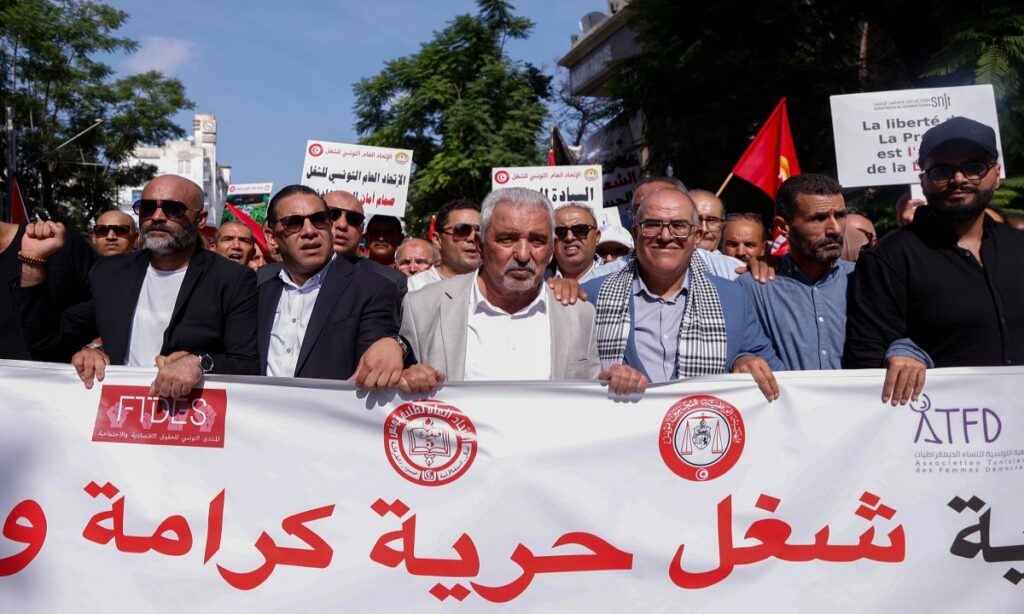
Tunisia’s political crisis has entered another tense phase after thousands of demonstrators reportedly took to the streets of Tunis to protest against President Kais Saied’s leadership, raising fresh questions about the future of democratic freedoms, economic stability and political opposition in the North African country.
The demonstrations reflect growing frustration among sections of the population over the concentration of presidential power, restrictions on political activity and persistent economic difficulties. For protesters, the dispute extends beyond the performance of one government: it concerns the direction Tunisia has taken since Saied’s extraordinary political intervention in 2021, when he suspended parliament, dismissed the prime minister and subsequently consolidated executive authority.
The latest mobilisation suggests that dissatisfaction with the country’s political trajectory remains significant. However, the scale and significance of the protests must be assessed against verified attendance figures, the organisers’ demands and the government’s response.
From Democratic Transition to Concentrated Presidential Power.
Tunisia emerged from the 2011 uprising that helped trigger the Arab Spring as one of the region’s most closely watched democratic experiments. The country adopted a new constitution, held competitive elections and developed political institutions that offered an alternative to the authoritarian systems governing much of the region.
That transition was never easy. Successive governments faced unemployment, regional inequality, public frustration with corruption and difficulties delivering economic improvements. Political fragmentation and frequent changes in government also weakened public confidence in the post-revolutionary system.
Saied, a former constitutional law professor, built his political appeal partly on promises to fight corruption and dismantle what he described as a failed political establishment. His election in 2019 attracted voters who wanted a decisive break from established parties.
The turning point came in July 2021, when he invoked emergency powers, suspended parliament and removed the prime minister. Supporters viewed the move as necessary to overcome political paralysis. Critics described it as a serious setback for constitutional government.
Since then, changes to the political system have strengthened the presidency, while opposition figures and civil society organisations have raised concerns about arrests, prosecutions and restrictions on dissent. The latest demonstrations must be understood within this longer struggle over political authority and the limits of presidential power.
Economic Frustration Adds to Political Anger.
Political freedoms are only part of Tunisia’s challenge. Economic conditions remain central to public dissatisfaction, particularly among young people and communities outside the more prosperous coastal areas.
Unemployment, the cost of living, weak purchasing power and limited economic opportunities have contributed to frustration with successive governments. For many Tunisians, the promises of the 2011 revolution included not only political rights but also jobs, dignity and a fairer distribution of national wealth.
Those expectations have proved difficult to meet. Public finances remain constrained, and the government faces competing demands for social spending, economic reform and debt management. Businesses also need a more predictable environment in which to invest, expand and create employment.
Economic hardship can intensify political tensions when citizens believe that leaders are failing to deliver tangible improvements or are prioritising the consolidation of power over everyday concerns. Conversely, the government can argue that political stability and stronger executive authority are necessary to implement reforms.
The central question is whether Saied’s political model can produce the economic recovery many Tunisians want. Political control alone cannot resolve structural problems such as weak investment, regional disparities and limited employment opportunities.
The Opposition Faces Its Own Test.
Large demonstrations can signal the depth of public dissatisfaction, but turning street mobilisation into lasting political change is more difficult. Tunisia’s opposition includes political parties, activists, trade unionists and civil society organisations whose priorities and strategies do not always align.
Some groups focus on defending democratic institutions and civil liberties, while others emphasise economic grievances or demand the release of detained political figures. Bringing these concerns together could increase pressure on the government, but disagreements over leadership and tactics may limit the movement’s effectiveness.
The authorities, meanwhile, face a choice in how they respond. Allowing peaceful demonstrations and engaging with critics could help reduce tensions. Heavy-handed restrictions or arrests linked to peaceful political activity could deepen mistrust and strengthen accusations that the country’s democratic gains are being reversed.
The conduct of security forces and the treatment of demonstrators are therefore important indicators of the political climate. Claims about arrests, injuries or the use of force should be assessed using independently verified information rather than relying solely on statements from either the government or opposition groups.
What the Protests Mean for Tunisia’s Future.
The latest demonstrations do not automatically signal an imminent change of government. Their longer-term significance will depend on whether mobilisation continues, whether different opposition groups can sustain cooperation and whether the authorities respond through dialogue or confrontation.
Tunisia also faces a broader regional dilemma. Governments across North Africa must balance demands for stability with citizens’ expectations of accountability, economic opportunity and political participation. Tunisia’s experience is particularly important because its post-2011 transition once offered evidence that competitive politics could emerge from an Arab Spring uprising.
A prolonged confrontation between the presidency and its opponents could further weaken public trust and divert attention from the economic reforms the country needs. A credible political process, by contrast, would require meaningful space for peaceful dissent, respect for legal protections and institutions capable of holding public officials accountable.
International partners are also watching the country’s trajectory, particularly where political developments intersect with migration, economic cooperation and regional security. External pressure alone is unlikely to resolve Tunisia’s internal divisions, but support for transparent institutions and fundamental rights remains relevant.
A Test of Leadership and Public Confidence.
For Kais Saied, the demonstrations present another test of whether his administration can maintain public support while addressing the political and economic problems that continue to trouble the country. His supporters may argue that strong presidential leadership is necessary to break with a discredited political establishment. His critics contend that the concentration of authority has weakened checks and balances without resolving the problems that fuelled public anger.
Both the political debate and the economic situation will shape what happens next. If unemployment and living costs remain pressing concerns while political freedoms are perceived to be narrowing, dissatisfaction could persist beyond a single protest.
The decisive question is whether Tunisia can find a path that combines effective government with accountable institutions and meaningful political participation. The latest demonstrations have brought that question back to the centre of national debate, but the answer will depend on what both the authorities and the opposition do after the crowds leave the streets.

Comments (0)
No comments yet — be the first to share your thoughts.