

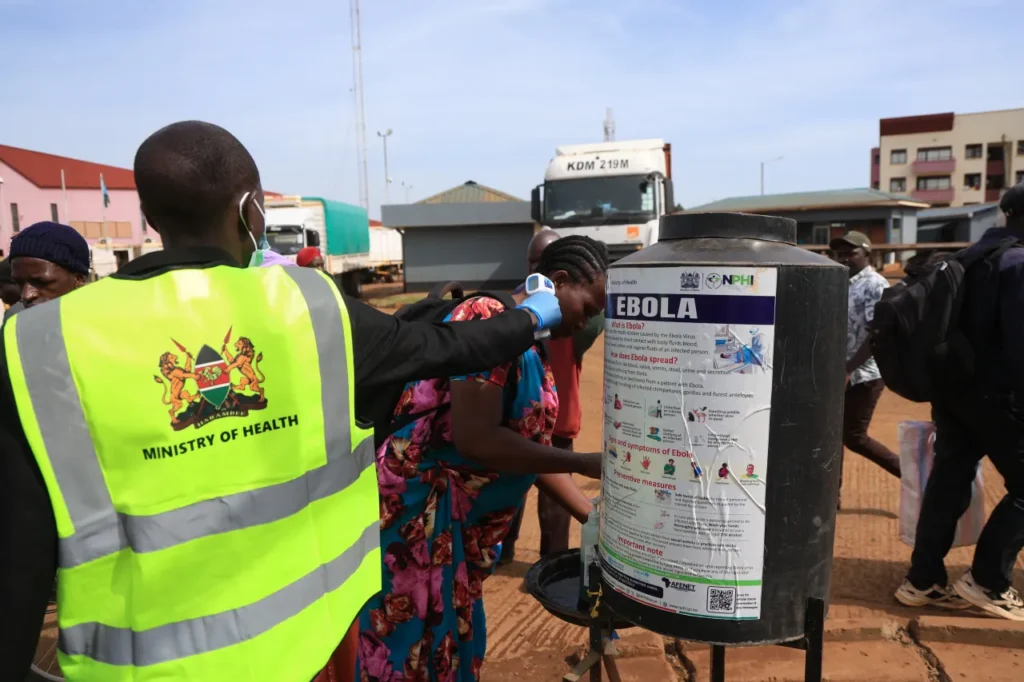
Kenya’s reported Ebola cases have raised fresh concerns about the country’s ability to contain a potentially dangerous public-health emergency while protecting communities, healthcare workers and neighbouring countries from further transmission. With reports indicating that the number of confirmed cases has reached eight, attention is turning to contact tracing, hospital preparedness and the speed at which health authorities can identify and isolate potential infections.
The situation also highlights the wider challenge facing East Africa as countries work to strengthen surveillance systems and coordinate responses to infectious diseases that can cross borders before authorities fully understand the scale of an outbreak. For Kenya, the immediate priority is to contain transmission, provide accurate public information and ensure that the health system can respond without disrupting essential medical services.
However, the reported figure requires careful interpretation. The precise outbreak location, date of the latest confirmation and the distinction between confirmed, suspected and recovered cases must be established through official health updates. Ebola developments can change quickly, and an accurate account depends on the latest information from Kenya’s Ministry of Health and the World Health Organization.
Why Early Detection Matters.
Ebola is a severe viral disease that can cause serious illness and death. Transmission generally occurs through direct contact with the blood or other bodily fluids of an infected person who is showing symptoms, or through contaminated materials. The risk can be particularly high for family members and healthcare workers who care for patients without adequate protective measures.

Early detection is therefore essential. Health authorities must identify suspected cases quickly, arrange safe testing and treatment, and trace people who may have been exposed. Contacts can then be monitored for symptoms during the relevant observation period, helping officials identify possible new infections before further transmission occurs.
These measures require coordination between hospitals, laboratories, community health workers and local authorities. If information moves slowly or people delay seeking medical attention because of fear or misinformation, the response becomes more difficult.
Public communication is equally important. Residents need clear guidance on symptoms, where to seek care and how to report potential exposure. Messages should be practical and consistent, avoiding unnecessary alarm while ensuring that people understand the seriousness of the disease.
Protecting Healthcare Workers and Hospitals.
Healthcare facilities can become high-risk environments during an Ebola outbreak if suspected patients are not identified promptly or protective procedures are not followed. Medical staff require appropriate protective equipment, infection-prevention training and clear protocols for handling suspected cases, collecting samples and managing patients safely.
Authorities must also ensure that hospitals can isolate suspected patients without compromising other essential services. Inadequate preparation can expose health workers, create fear among patients and disrupt routine treatment for unrelated illnesses.
A credible response requires more than emergency announcements. It depends on sufficient supplies, trained personnel, laboratory capacity and a clear chain of responsibility between national and local health authorities. Regular updates on these preparations can help the public understand what measures are in place and where additional support may be needed.
The Importance of Regional Coordination.
Kenya’s response must also be considered within the wider East African public-health environment. Travel, trade and cross-border family connections mean that infectious diseases can create concerns beyond the area where an initial case is identified.
Neighbouring countries may need to strengthen disease surveillance, share relevant information and prepare health facilities to recognise possible infections. Such cooperation should be guided by evidence and proportionate public-health measures rather than assumptions that travellers or particular communities pose a danger.
The World Health Organization and regional health institutions can support national authorities through technical guidance, surveillance coordination and assistance with outbreak investigation. Their role becomes especially important when countries need to assess whether cases are connected to a known outbreak or represent a separate chain of transmission.
Border screening alone, however, cannot replace effective surveillance within communities and healthcare facilities. People may develop symptoms after travelling, while some exposed individuals may not initially recognise that they need medical attention. A coordinated response must therefore combine public awareness, testing, contact tracing and reliable communication between countries.
The Economic and Social Consequences.
Public-health emergencies can affect economies even before restrictions are introduced. Fear of infection may discourage travel, reduce attendance at public events and interrupt normal commercial activity. If the situation worsens, businesses that depend on movement between towns or across borders could face additional uncertainty.
Communities may also experience stigma when individuals or locations become associated with an outbreak. This can discourage people from reporting symptoms or cooperating with health officials, ultimately making containment more difficult.
Authorities should therefore communicate openly about confirmed developments, avoid disclosing private patient information and explain why particular measures are necessary. Clear reporting can help prevent rumours from filling gaps left by limited official information.
At the same time, public-health measures should be proportionate to the evidence. Unnecessary restrictions can impose economic costs without delivering corresponding benefits, while delayed action can allow transmission to continue. The challenge is to respond quickly without creating avoidable disruption.
What Kenya Must Prioritise Next.
The effectiveness of Kenya’s response will depend on whether authorities can establish the full extent of the reported infections and prevent further transmission. That means confirming the status of each reported case, identifying contacts, strengthening infection-prevention procedures and ensuring that patients receive appropriate care.
The government should also provide regular, detailed updates covering confirmed and suspected cases, recoveries, fatalities where applicable, affected locations and the measures being taken to contain the outbreak. Such information would allow citizens, neighbouring countries and international health partners to assess the situation more accurately.
For now, the reported rise to eight cases should be treated as a serious development requiring verification against the latest official figures. It does not, by itself, establish that the outbreak is spreading uncontrollably or that neighbouring countries face the same level of risk.
The coming days will be important in determining whether early detection and coordinated public-health measures can bring the situation under control. Kenya’s response will also offer a broader lesson for the region: preparedness, transparent communication and rapid cooperation are essential when a disease outbreak threatens to cross from a local emergency into a wider public-health crisis.

Comments (0)
No comments yet — be the first to share your thoughts.