

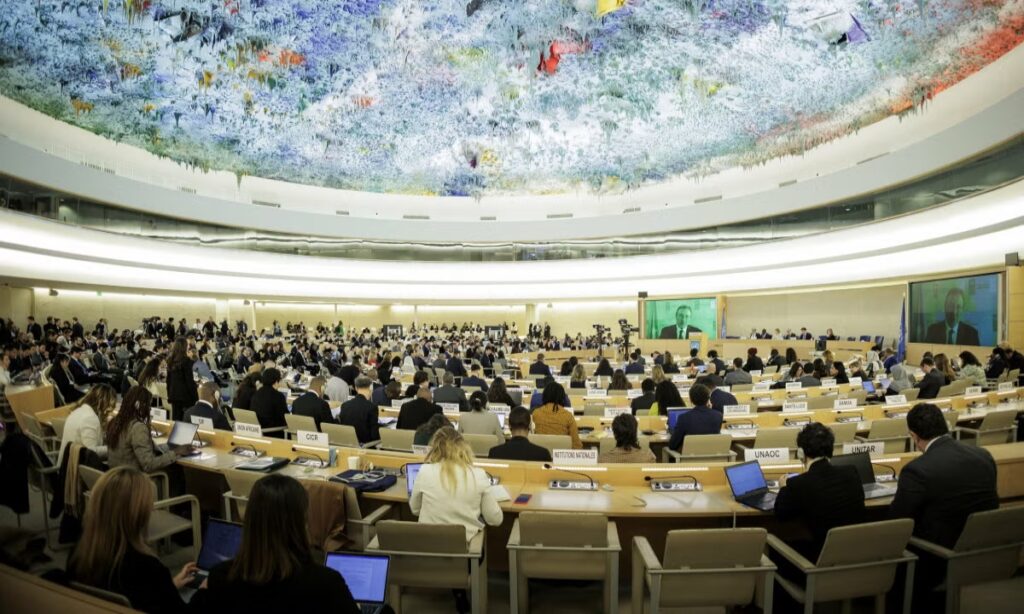
Burundi is set to retain a seat on the United Nations Human Rights Council despite persistent allegations of serious human rights violations, prompting renewed questions about the credibility of the international body responsible for promoting and protecting fundamental freedoms.
Human Rights Watch raised the alarm on October 12, 2026, ahead of a United Nations General Assembly vote, arguing that Burundi’s expected re-election reflects a selection process that offers little meaningful competition. The country is one of four African candidates seeking four available seats, alongside Ghana, Nigeria and Zambia. All four are running unopposed for the African positions, making their election highly likely. <Cite refs={[“turn342664search0″,”turn342664search7”]}/>
The council has 47 members and plays a central role in investigating alleged abuses, appointing independent experts and examining the human rights records of countries around the world. Its credibility depends partly on whether its own members demonstrate a commitment to the standards they are expected to uphold.
Burundi’s candidacy has therefore become a test of how seriously UN member states take those standards when choosing countries to serve on the council.

Allegations of Abuse and Restrictions on Civil Liberties.
Human Rights Watch says serious abuses continue in Burundi, including extrajudicial killings, enforced disappearances, arbitrary arrests and detention. The organisation has also raised concerns about restrictions on freedom of expression, peaceful assembly and association, as well as what it describes as a persistent lack of accountability.
These allegations come against a wider backdrop of political restrictions and concerns about the independence of institutions responsible for protecting citizens’ rights. Human Rights Watch has previously documented intimidation of opposition supporters, pressure on independent journalists and threats against civil society organisations.
The Burundian government’s human rights record has also been the subject of scrutiny through UN mechanisms. On October 6, Burundi’s delegation opposed the renewal of the mandate of the UN special rapporteur on the country. The resolution was nevertheless adopted by the Human Rights Council, with 22 votes in favour, seven against and 17 abstentions. <Cite refs={[“turn342664search0″,”turn342664search5”]}/>
The disagreement highlights a central challenge for international human rights institutions: governments accused of abuses are also participants in the political processes that determine how those abuses are investigated and addressed.
An Election Without Competition.
Under the system governing Human Rights Council membership, the UN General Assembly elects countries by secret ballot. Candidates need a simple majority to secure a seat, while regional groups generally determine how many positions are available to each region.
In Burundi’s case, the absence of competing candidates for Africa’s four seats significantly reduces the uncertainty surrounding the outcome. Human Rights Watch argues that uncontested regional lists make it difficult for UN members to reject candidates whose records fall short of the council’s expectations.
The organisation has called on governments to insist on competitive elections and to consider candidates’ human rights records before casting their votes. The principle is important because the council’s founding resolution calls on member states to take candidates’ contributions to the promotion and protection of human rights into account.
The controversy is not limited to Burundi. Other candidates and existing members have also faced criticism over alleged abuses, illustrating the difficulty of ensuring that the council’s membership consistently reflects its stated mission.
What Another Term Could Mean.
If Burundi secures another term, its membership will continue to raise questions about cooperation with independent UN investigators and the country’s willingness to address longstanding concerns. Human Rights Watch has urged the government to cooperate with UN mechanisms and take meaningful steps towards accountability.
For the wider international community, the issue extends beyond one country. The council investigates alleged violations across regions and can establish inquiries that preserve evidence, document abuses and provide a basis for future accountability. Its work can be especially important where domestic institutions are unable or unwilling to investigate allegations independently.
However, the council’s influence depends on more than the resolutions it adopts. Its members must also be prepared to accept scrutiny, cooperate with investigators and demonstrate that human rights standards apply to governments regardless of their political influence.
Burundi’s candidacy places that principle under renewed examination. The outcome of the vote will determine its representation on the council, but it will not resolve the allegations against its government.
Ultimately, the credibility of the UN Human Rights Council will depend on whether its members use their positions to strengthen accountability or allow political arrangements to weaken the standards they have pledged to defend.

Comments (0)
No comments yet — be the first to share your thoughts.