
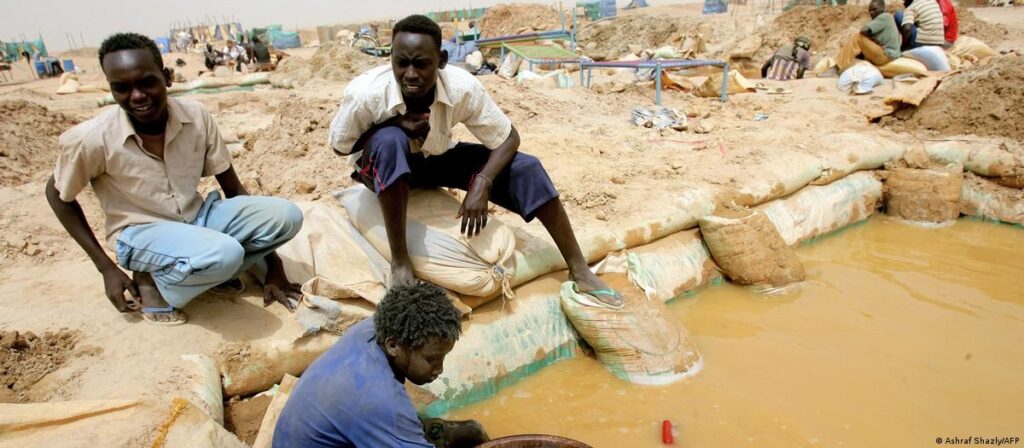
At least 72 gold miners have reportedly been killed in air strikes on a remote mining area near the Sudan–Egypt border, according to the Sudanese rights organisation Emergency Lawyers. The group has accused the Egyptian air force of carrying out the attack, which reportedly occurred on October 10, 2026, amid growing tensions over informal gold mining and control of the resource-rich border region. The allegations have not been independently verified, and Egypt had not issued an official response at the time of reporting. <Entity value=”Al Jazeera” category=”organization” disambig=”international news organisation”/> and other international media have reported the incident. <Cite refs={[“turn716754search0″,”turn716754search1”]}/>
The reported death toll has drawn attention to the dangerous intersection of Sudan’s devastating civil war, the struggle for control of natural resources and the growing number of people turning to artisanal mining to survive economic hardship. For the miners working in the isolated, mountainous region, gold has become a source of income in a country where conflict has disrupted businesses, displaced millions and weakened traditional livelihoods.
The incident also raises serious questions about civilian protection, the use of military force against informal mining operations and the longstanding territorial dispute between Sudan and Egypt.
Disputed Territory and Competing Accounts.
Emergency Lawyers said the attack targeted civilian miners in the northern Wadi area, which the organisation considers part of Sudanese territory. It accused Egyptian military aircraft of carrying out the strikes and condemned the reported deaths as a violation of civilians’ right to life.

However, responsibility for the attack remains unconfirmed. The Sudan Doctors Network initially reported at least 13 deaths and 28 injuries, warning that casualties could increase because of the severity of some injuries and the difficulty of accessing medical assistance. Emergency Lawyers subsequently reported a death toll of 72. The figures remain preliminary, and independent verification has been difficult because of the area’s remoteness. <Cite refs={[“turn716754search0″,”turn716754news22”]}/>
The location lies within a wider border region affected by competing territorial claims and security concerns. Egypt and Sudan have a longstanding dispute over the Halaib Triangle, an area of strategic importance because of its location and natural resources.
Egypt previously announced a large-scale operation against illegal gold mining and arms smuggling in its southern border region. In June 2026, Egyptian authorities said hundreds of people had been detained during operations targeting such activities. Earlier air strikes at a mining site reportedly killed 23 workers, according to accounts cited by international media. <Cite refs={[“turn716754search1″,”turn716754search0”]}/>
Sudan’s Gold Rush Amid Civil War.
The reported attack comes as Sudan’s gold sector has become increasingly important to people trying to survive the war that began in April 2023 between the Sudanese Armed Forces and the paramilitary Rapid Support Forces.
The conflict has devastated communities, displaced millions and damaged economic activity across the country. As formal employment and other sources of income have disappeared, more people have turned to artisanal gold mining, often in remote areas where safety regulations, healthcare and government oversight are limited.
Gold is also strategically important because it generates revenue and provides access to foreign currency. The trade has been linked to smuggling networks and competing interests seeking to profit from Sudan’s mineral wealth. Weak oversight and the difficulty of monitoring remote mining sites make it challenging to distinguish legitimate livelihoods from illegal extraction and trafficking.
For many miners, however, the immediate motivation is survival. The work can offer income when few alternatives remain, but it also exposes workers to dangerous conditions, exploitation and violence.
Civilian Protection Under Scrutiny.
The reported deaths have renewed concerns about the protection of civilians in border areas where security operations intersect with informal economic activity. Even when authorities target illegal mining or smuggling, operations must distinguish between criminal activity and civilians whose presence does not make them legitimate military targets.
International humanitarian law places restrictions on attacks and requires parties to distinguish between civilians and combatants. Whether a particular strike violated those rules depends on the facts, including the target, the circumstances and the precautions taken. Those details have not been independently established in this case.
An effective investigation would need to establish the precise location of the attack, identify the aircraft involved, verify the number and identities of the victims and determine the circumstances under which the strike occurred. Public statements from the relevant authorities would also be important in clarifying the competing accounts.
Without credible investigations, the families of those killed may be left without answers, while further violence could deepen tensions between neighbouring countries.
The Wider Cost of Sudan’s Struggle for Gold.
The tragedy illustrates how Sudan’s war is reshaping the country’s economy and exposing vulnerable civilians to new risks. As livelihoods disappear, more people enter dangerous informal industries, while gold becomes increasingly valuable to individuals and networks seeking income or financing.
Addressing the problem will require more than security operations. Authorities must strengthen civilian protection, improve oversight of mineral extraction and investigate alleged abuses. Regional cooperation is also necessary to address smuggling networks and reduce tensions around disputed borders.
For Sudan’s gold miners, the immediate concern is the reported loss of dozens of lives in a region where access to emergency medical care is limited. The wider question is whether the pursuit of mineral wealth will continue to expose civilians to violence without adequate protection or accountability.
The reported air strikes are a reminder that natural resources can become a source of opportunity and danger at the same time. Until Sudan’s conflict is brought under control and civilian protection is strengthened, people seeking a livelihood from the country’s mineral wealth may remain vulnerable to the very instability that has driven them into mining.

Comments (0)
No comments yet — be the first to share your thoughts.