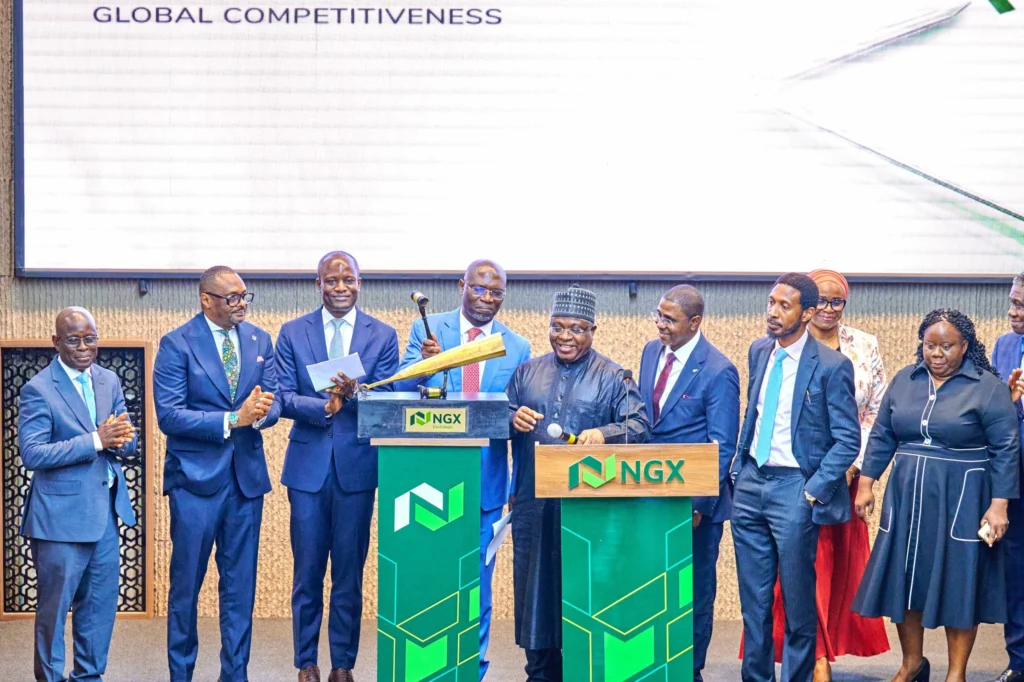
The Nigerian Exchange Group (NGX Group) is calling for stronger collaboration across the country’s capital-market ecosystem to help mobilise investment, expand business financing and support long-term economic growth. The appeal highlights the importance of building a financial system capable of connecting companies seeking capital with investors looking for opportunities beyond traditional savings and lending.
Nigeria faces significant financing demands as businesses seek to expand operations, create jobs and improve productivity. Infrastructure gaps, high operating costs and limited access to affordable credit have made financing a major concern for companies, particularly small and medium-sized enterprises. A more effective capital market could help address some of these challenges by providing businesses with additional ways to raise funds.
The initiative also comes as policymakers and financial institutions consider how domestic investment can play a larger role in supporting economic development amid currency pressures and changing global financing conditions.
Why Capital Markets Matter for Nigeria.
Capital markets allow companies and governments to raise money by issuing shares, bonds and other financial instruments. Unlike conventional bank loans, equity financing can provide businesses with capital without requiring fixed loan repayments, although shareholders gain an ownership stake and expect returns.

A well-functioning market can also help investors diversify their portfolios and direct savings towards productive activities. Companies that meet listing requirements may benefit from greater visibility, improved governance standards and access to a wider pool of investors.
For Nigeria, strengthening the capital market could reduce some businesses’ dependence on bank lending. This is particularly relevant when interest rates are high and commercial borrowing becomes expensive. Businesses with viable growth plans may be able to use equity or bond markets to finance expansion, acquire equipment or invest in new technology.
However, access remains uneven. Larger companies are generally better positioned to meet listing requirements and absorb the costs of issuing securities, while smaller businesses often struggle with compliance, reporting and investor awareness.
The Case for Stronger Collaboration.
The NGX Group’s call reflects the fact that capital-market development requires more than a stock exchange. Regulators, investment banks, brokers, pension-fund managers, insurers, listed companies and government agencies all influence how effectively the system operates.
Better coordination can help simplify processes, strengthen investor protection and improve the quality of information available to the market. It can also encourage companies to consider public fundraising earlier in their development rather than relying exclusively on retained earnings or expensive loans.
Institutional investors could play an important role by directing more long-term savings towards productive investments, provided that suitable safeguards and investment opportunities exist. At the same time, companies must demonstrate credible business models, transparent reporting and responsible management to earn investor confidence.
Collaboration must therefore be accompanied by reforms that make participation practical and attractive for both businesses and investors.
Challenges Facing Nigeria’s Investment Environment.
Nigeria’s capital market operates within a wider economic environment shaped by inflation, exchange-rate movements, interest rates and investor confidence. These factors can influence the value of listed shares, the cost of issuing securities and the willingness of domestic and foreign investors to commit funds.
Market participation is another challenge. Many Nigerians remain unfamiliar with investing in shares and bonds, while concerns about financial losses and past market experiences can discourage participation. Improving financial literacy and ensuring that investors understand the risks of different products will be important for broadening the market.
Businesses also need confidence that listing or issuing securities will provide lasting benefits. Simplifying market access for suitable companies, improving corporate governance and maintaining predictable regulations could help encourage more firms to seek capital through the exchange.
Can Capital-Market Growth Deliver Wider Economic Benefits?
A stronger capital market could help Nigeria mobilise domestic savings, support private-sector expansion and reduce some pressure on conventional bank financing. It could also create opportunities for pension funds and other long-term investors to participate in productive economic activity.
Nevertheless, market expansion is not an end in itself. The real test is whether capital reaches companies capable of creating jobs, improving productivity and delivering sustainable returns. Investors must be protected against fraud and misleading disclosures, while businesses must be held to high standards of accountability.
The NGX Group’s call for closer collaboration points to an important part of Nigeria’s economic challenge: mobilising available capital and directing it towards productive use. If market institutions can work together to improve access, transparency and confidence, Nigeria’s capital market could become a more effective engine of business growth and national development.

Comments (0)
No comments yet — be the first to share your thoughts.