

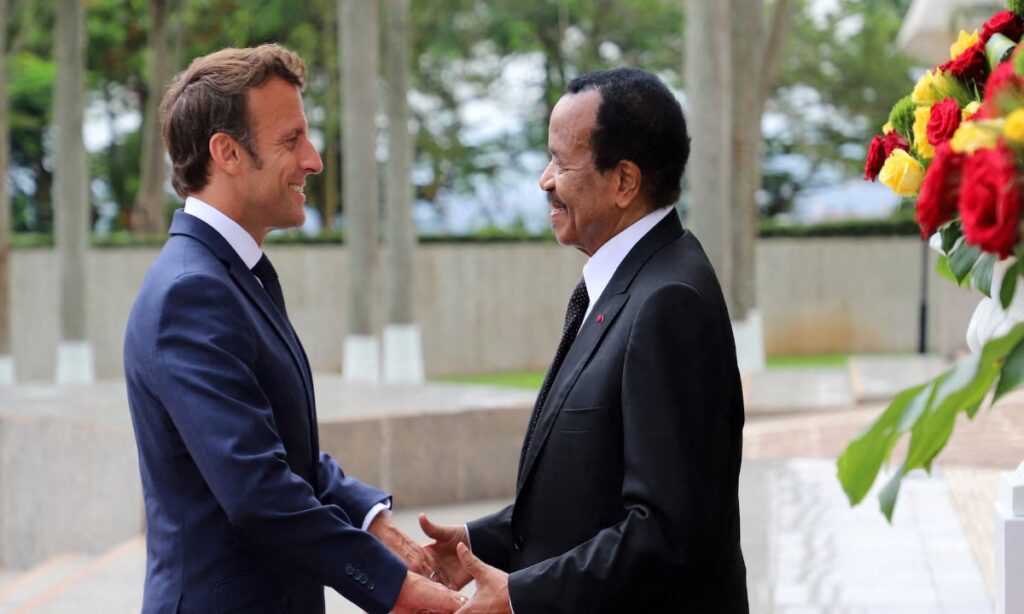
Cameroon, France and the European Union are deepening coordination around infrastructure, energy, transport, digital development and investment as Yaoundé prepares the next phase of its cooperation with European partners. The latest discussions took place in Yaoundé on September 18 during a meeting of the Global Gateway Interministerial Committee.
The meeting was co-chaired by Cameroon’s Economy Minister Alamine Ousmane Mey and EU Ambassador Veronika Bošković Pohar, while Jérémie Pellet, Director General of Expertise France, was also in Cameroon for discussions on the future of technical cooperation.
The talks are intended to connect Cameroon’s development priorities with European financing, French technical expertise and private-sector investment.
Energy Is At The Centre Of The Discussions.
Energy emerged as one of the strategic areas identified by the Cameroonian government.

MINEPAT said the discussions examined the need to strengthen measures in the energy sector while improving connectivity around major infrastructure projects. The government also highlighted urban development, waste management and the development of domestic value chains as areas requiring faster implementation.
The focus comes as Cameroon works on several major energy projects, including the development of additional hydropower capacity and efforts to improve electricity supply.
Infrastructure And Transport Are Also Being Prioritised.
The cooperation discussions extend beyond electricity.
Cameroon and its European partners are looking at transport infrastructure and connectivity as part of a broader approach to economic development. The objective is to ensure that major projects are connected to the roads, digital systems, energy networks and other infrastructure needed to make them economically viable.
That approach is central to the Global Gateway framework, which combines public investment, development finance, technical assistance and private capital.
France Is Bringing Technical Expertise.
France’s role is not limited to providing financial support.
Through Expertise France, the French government is involved in technical cooperation with Cameroon across areas including public-sector governance, health, sustainable development and urban transitions. The September meetings reviewed existing cooperation and discussed the next European programming period covering 2028 to 2034.
Expertise France currently has several projects operating in Cameroon and regional programmes based in Yaoundé, with the agency reporting an ongoing national project portfolio valued at about €10.4 million and a wider regional volume of around €53 million.
Cameroon Wants Projects To Move Faster.
One of the strongest messages from the Cameroonian side was the need to move from planning and financing toward actual implementation.
Alamine Ousmane Mey said the country needs to accelerate the execution of strategic projects and improve their preparation so that available resources produce greater results. The government is particularly focused on improving the maturity and implementation of projects rather than simply securing funding for them.
That issue is important because large infrastructure projects can take years to move from feasibility studies and financing discussions to construction and operation.
The Next EU Funding Cycle Is Already Being Prepared.
The September meeting also looked ahead to the European Union’s 2028–2034 programming period.
European officials want the next phase of cooperation to align more closely with Cameroon’s national priorities while also improving the mobilisation of private investment.
The discussions therefore connect current projects with a longer-term financing strategy. Instead of treating energy, transport, digital infrastructure and value chains as separate projects, the partners are looking at how they can reinforce one another.
What This Means For Cameroon.
For Yaoundé, the objective is to use European cooperation to accelerate projects that support the country’s National Development Strategy 2020–2030.
For France and the European Union, the approach provides a framework for combining technical expertise, public financing and private investment around projects with wider economic impact.
The immediate challenge will be implementation. Cameroon has no shortage of infrastructure projects under discussion, but the economic value of these partnerships will ultimately depend on how quickly projects move from agreements and feasibility studies to construction and operation.
The September discussions therefore mark another step in Cameroon’s effort to align French technical expertise, European financing and national development priorities around energy, transport, digital infrastructure and broader economic transformation.

Comments (0)
No comments yet — be the first to share your thoughts.