
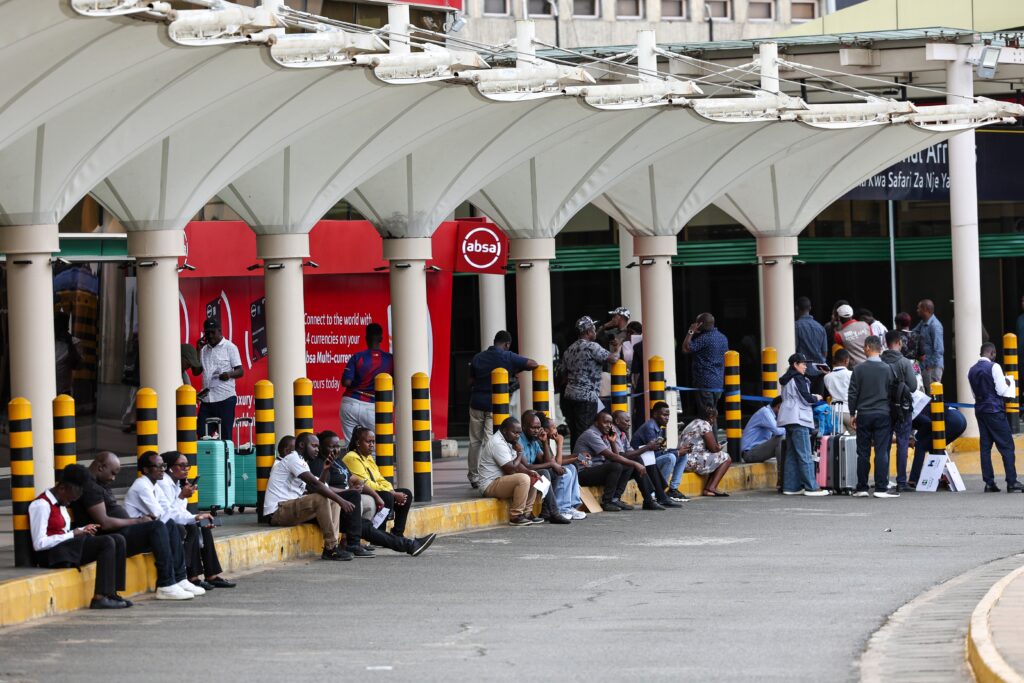
Aviation Workers Enter Second Day of Industrial Action.
Kenya’s aviation sector is facing major disruption after workers at Jomo Kenyatta International Airport (JKIA) in Nairobi and other airports resumed strike action, leaving thousands of passengers facing lengthy delays, cancellations and uncertainty over their flights. The industrial action entered its second day on Monday, August 31.
The Kenya Aviation Workers Union (KAWU) says the strike is driven by unresolved labour grievances, including the failure to conclude a collective bargaining agreement with the Kenya Civil Aviation Authority, as well as what the union describes as insufficient cooperation from the Kenya Airports Authority and Kenya Airways subsidiary Jambojet.
Travellers Forced to Spend the Night at the Airport.
The disruption has had an immediate impact on travellers. Hundreds of passengers were left stranded at JKIA overnight, with several airlines beginning to arrange hotel accommodation for passengers whose journeys were disrupted.
Kenya Airways reported significant delays, while other airlines cancelled or rescheduled flights as the backlog grew. Some passengers reportedly spent more than 12 hours waiting for information about their departures.

The disruption has also affected Moi International Airport in Mombasa, with airport operations across the country experiencing delays as workers continue their industrial action.
Failed Agreement Triggers Fresh Strike.
The latest action follows a government-brokered agreement reached in July that had temporarily suspended an earlier strike threat. KAWU says the agreement failed to resolve its concerns, prompting workers to resume industrial action.
Among the union’s complaints are employment conditions, remuneration, career progression, job security and the implementation of previously agreed commitments. KAWU has indicated that workers will remain on strike while the outstanding issues remain unresolved.
Government officials and union representatives held discussions on Sunday, but the talks failed to immediately end the dispute. Further negotiations were expected to continue on Monday.
Kenya’s Tourism and Business Sector at Risk.
The disruption comes at a sensitive time for Kenya, where JKIA serves as a major regional aviation hub connecting East Africa with Europe, Asia and other parts of the continent.
A prolonged strike could create wider consequences for tourism, business travel and cargo operations, particularly if airlines are forced to cancel more flights or divert aircraft to other regional airports.
For passengers, however, the immediate concern remains getting home or reaching their destinations.
Kenya’s airport strike has quickly become more than a labour dispute. With thousands of travellers affected and negotiations yet to produce a settlement, the government faces growing pressure to resolve the disagreement before disruptions at one of East Africa’s most important aviation hubs become a wider economic problem.

Comments (0)
No comments yet — be the first to share your thoughts.