

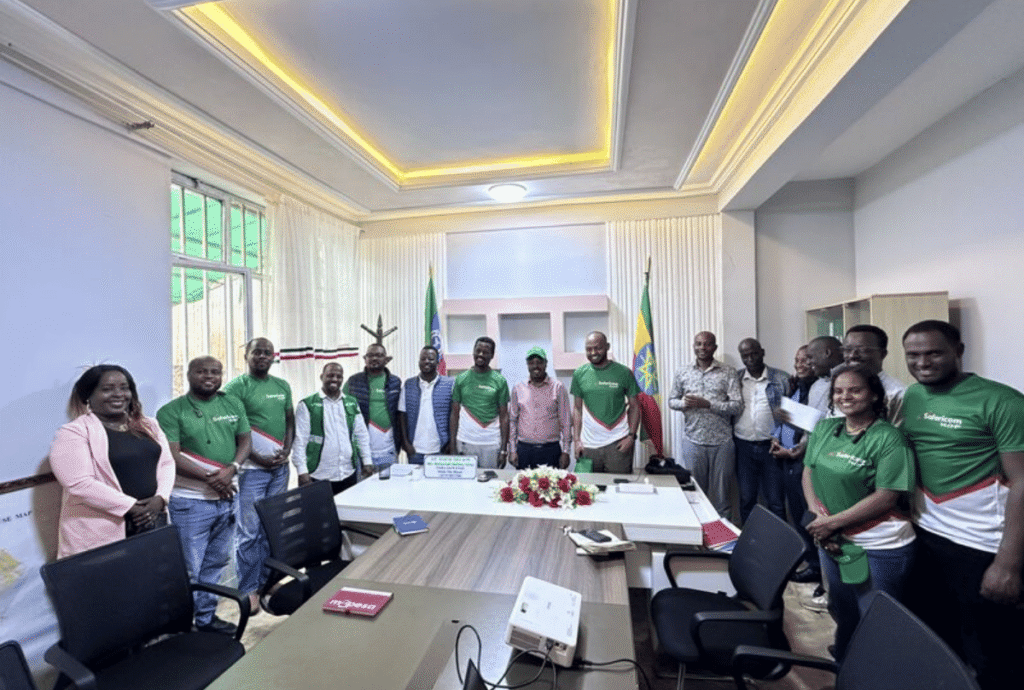
Operator Extends Mobile Connectivity Across Southern Ethiopia.
Safaricom Ethiopia has expanded its 4G network to six additional towns in southern Ethiopia, extending mobile connectivity to communities that have previously had limited access to high-speed telecommunications services. The expansion, reported on 18 August 2026, forms part of the operator’s wider effort to increase its network footprint and support Ethiopia’s rapidly developing digital economy.
The latest expansion covers Sawla, Selam Ber, Basketo, Leha, Beto and surrounding communities, bringing more residents and businesses into Safaricom’s growing mobile network. The company says the new coverage will allow customers in these areas to access faster internet services, digital payments, mobile communications and other technology-enabled services.
Connectivity Becomes Central to Ethiopia’s Digital Economy.
The expansion comes as Ethiopia continues to accelerate the development of its telecommunications sector following the opening of the market to private operators. Safaricom Ethiopia entered the market as the country’s first major private telecom competitor to state-owned Ethio Telecom, introducing competition into a sector that had previously been dominated by a single operator.
Since beginning commercial operations, Safaricom has invested heavily in expanding its network infrastructure. The company’s strategy has focused not only on Ethiopia’s major urban centres but increasingly on secondary cities and rural communities where reliable mobile internet remains an important development challenge.

The latest rollout is significant because access to mobile broadband can influence much more than communication. In communities where fixed broadband infrastructure is limited, mobile networks provide the primary gateway to online education, digital financial services, e-commerce, government services and employment opportunities.
Southern Ethiopia Offers Significant Growth Potential.
Southern Ethiopia contains a large and diverse population spread across towns and rural communities, making network expansion both commercially attractive and technically challenging. Extending 4G infrastructure into these areas allows telecom operators to reach new customers while supporting businesses that increasingly depend on digital connectivity.
For small businesses, improved internet access can facilitate digital payments, online marketing and communication with suppliers and customers. Farmers and agricultural enterprises can also benefit from easier access to market information, weather updates and digital financial services.
The expansion could therefore have implications beyond Safaricom’s subscriber numbers. Better connectivity can contribute to broader economic participation by reducing the geographical barriers that prevent people in less-connected communities from accessing digital services.
Competition Is Reshaping Ethiopia’s Telecom Market.
Safaricom’s continued expansion is also part of a broader transformation in Ethiopia’s telecommunications industry. The government has been attempting to attract investment and introduce greater competition as part of its economic reform programme.
For consumers, competition can create incentives for operators to improve network quality, expand coverage and introduce new services. It can also encourage companies to compete through pricing and customer experience.
However, Ethiopia remains one of Africa’s most challenging telecommunications markets because of its enormous geographic size, infrastructure requirements and significant differences in connectivity between urban and rural areas.
The ability to reach underserved communities will therefore remain an important measure of whether the liberalisation of the telecommunications market is delivering broader social and economic benefits.
Digital Finance Could Be a Major Beneficiary.
One area where expanded mobile connectivity could have particularly strong implications is digital finance. Ethiopia has been working to increase financial inclusion, and mobile-based services offer a way of reaching people who may not have easy access to conventional banking infrastructure.
Safaricom’s presence in the Ethiopian market has also brought M-Pesa, its mobile financial-services platform, into one of Africa’s largest and most potentially significant consumer markets.
As more towns receive reliable 4G connectivity, digital financial services can become easier to use, particularly for people who depend on mobile phones as their main connection to the formal economy.
Infrastructure Expansion Remains a Long-Term Challenge.
Despite the progress, Ethiopia’s connectivity gap remains substantial. Network expansion requires significant investment in towers, fibre infrastructure, electricity and backhaul capacity, particularly in remote locations.
Telecommunications companies must also operate within a regulatory environment that continues to evolve as the Ethiopian government reforms the sector.
For Safaricom, the challenge will be maintaining the pace of expansion while ensuring that new infrastructure delivers reliable service and commercially sustainable operations.
The company will also have to compete with Ethio Telecom, which continues to have an enormous established customer base and extensive infrastructure across the country.
A Wider African Connectivity Story.
Safaricom Ethiopia’s latest rollout reflects a broader trend across Africa: telecommunications companies are increasingly moving beyond major capitals and commercial centres to bring broadband connectivity to smaller towns.
The expansion of mobile internet has become one of the continent’s most important technological transformations. Africa has often leapfrogged traditional infrastructure by moving directly from limited fixed-line systems to mobile communications.
The next phase of that transformation is increasingly centred on high-speed mobile internet. As 4G and 5G networks expand, connectivity is becoming a foundation for digital businesses, financial technology, online education and digital public services.
For southern Ethiopia, the arrival of Safaricom’s 4G service in additional towns could therefore represent more than a network expansion. It is another step towards integrating communities outside the country’s largest urban centres into Ethiopia’s growing digital economy.
Safaricom’s latest rollout highlights a simple reality: in an increasingly digital Africa, expanding mobile connectivity is no longer only a telecommunications strategy. It is an economic development strategy.

Comments (0)
No comments yet — be the first to share your thoughts.