

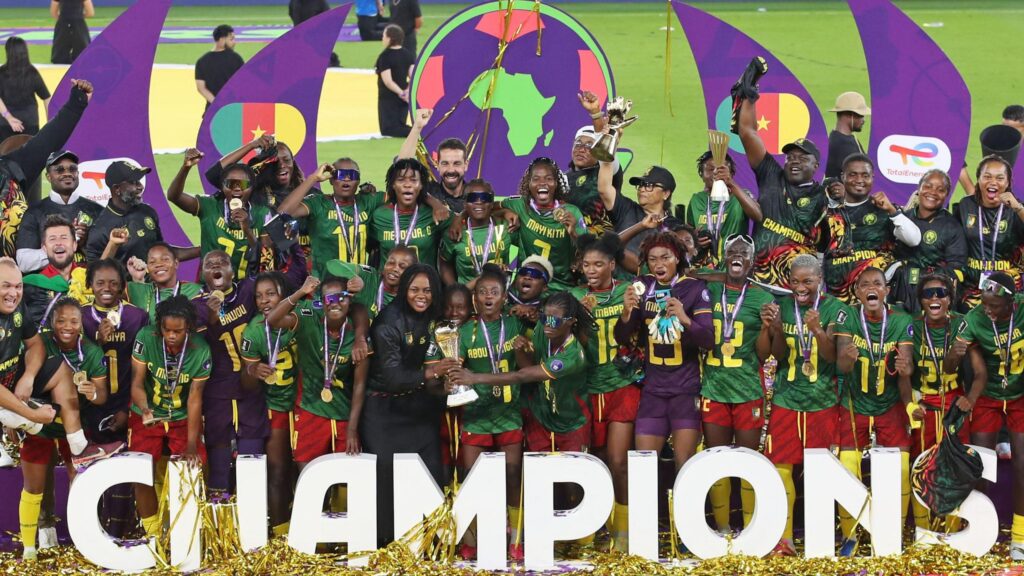
Cameroon have finally conquered Africa.
The Indomitable Lionesses defeated Malawi 3–0 in the 2026 Women’s Africa Cup of Nations final at the Moulay El Hassan Stadium in Rabat on August 16, ending a long wait for their first WAFCON title. The victory was particularly significant for a Cameroon side that had previously lost three finals, in 2004, 2014 and 2016.
The final was effectively decided before half-time. Cameroon scored three times in the opening 45 minutes through Marie Ngah Manga, who scored twice, and Naomi Eto, leaving Malawi with an almost impossible task after the interval.
A Final Cameroon Controlled From the Start.
The match began with Cameroon immediately looking to impose themselves. The Lionesses were quicker to attack the spaces around Malawi’s defence and repeatedly pushed the Scorchers towards their own penalty area.

Acha Toko Njoya had an early opportunity inside the box, signalling Cameroon’s attacking intent, although her effort was comfortably dealt with by the Malawi goalkeeper. The early pressure eventually translated into goals.
Cameroon’s movement in the final third created problems for a Malawi defence that had performed impressively throughout the tournament. Once the first goal arrived, however, the balance of the match changed dramatically.
Ngah Manga Changes the Game.
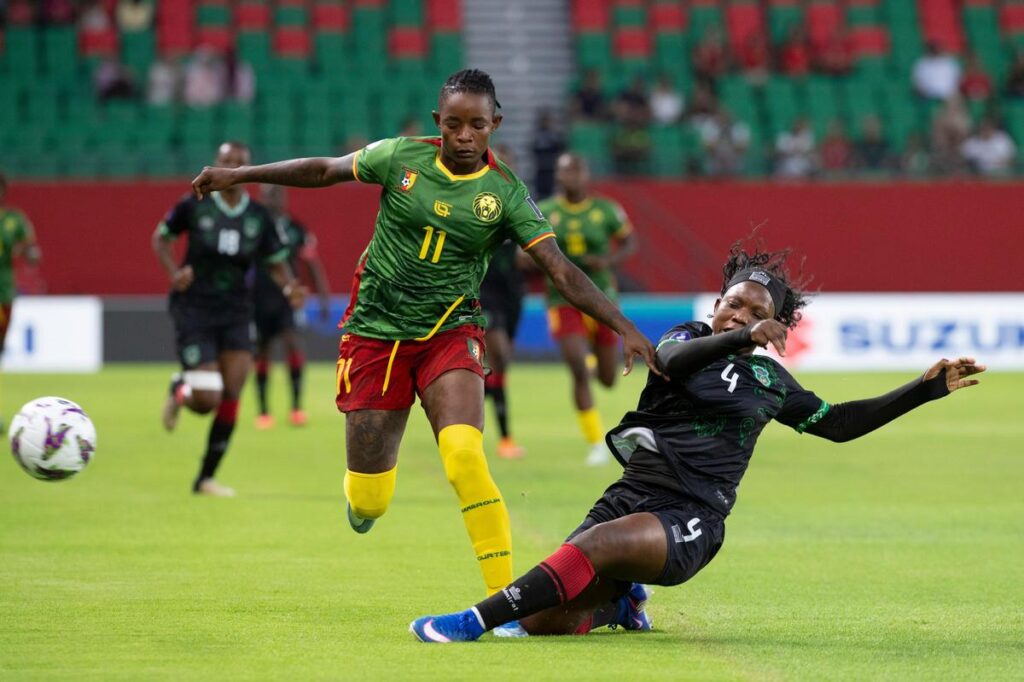
Marie Ngah Manga became the decisive attacking figure of the final. Her first goal gave Cameroon the breakthrough and immediately placed Malawi under greater pressure. Instead of allowing the Scorchers to settle, Cameroon continued attacking and quickly increased the advantage.
Ngah Manga then completed her brace, giving Cameroon a commanding lead before the interval. Her performance was an example of the difference between the two sides in the final: Cameroon were clinical when opportunities appeared, while Malawi struggled to recover after conceding.
Naomi Eto Adds the Third.
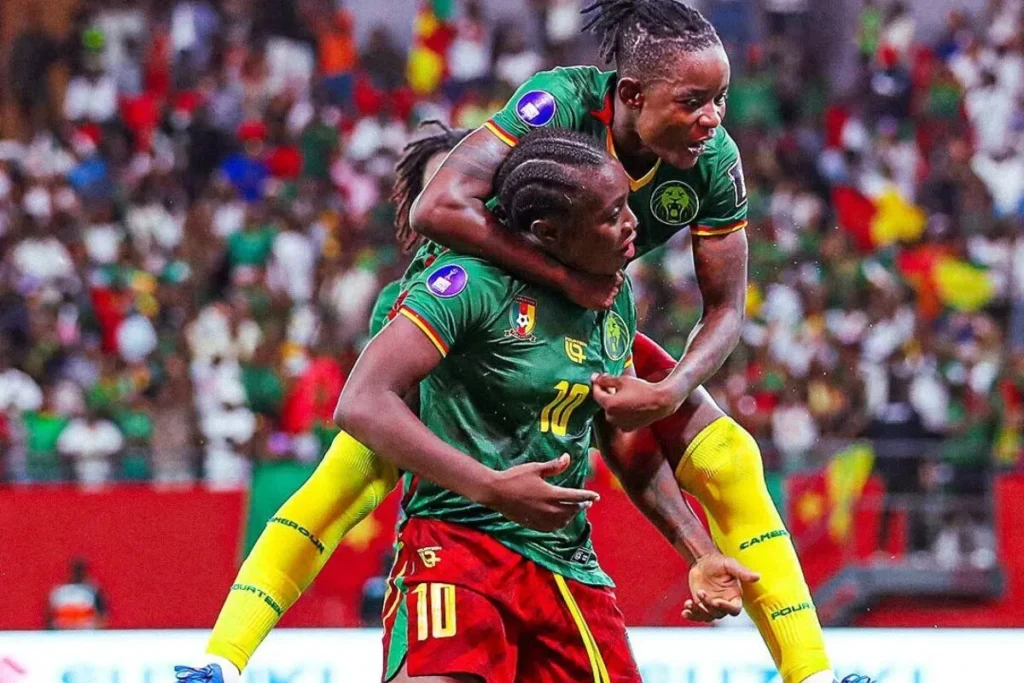
The third goal effectively settled the contest before half-time.
Naomi Eto, who plays for Paris Saint-Germain, found the net to give Cameroon a 3–0 advantage and send the Lionesses into the dressing room with complete control of the final.
For Malawi, the three-goal deficit was particularly damaging because their route to the final had been built on resilience and the ability to respond to difficult situations. Against Cameroon, however, they were unable to find the response required.
Cameroon’s Defensive Discipline.
While the three goals understandably dominated the headlines, Cameroon’s defensive organisation was equally important.
The Lionesses did not allow Malawi to turn the second half into a comeback opportunity. With a three-goal cushion, Cameroon managed the game more conservatively, protecting their advantage while limiting the spaces available to the Chawinga sisters and Malawi’s attacking players.
That game management was one of the clearest differences between the two teams. Cameroon understood that they did not need to continue playing at the same attacking intensity after establishing a commanding lead. Their priority became maintaining structure, controlling possession when necessary and preventing Malawi from building momentum.
Malawi’s Historic Campaign Ends in Defeat.
The result should not overshadow what Malawi achieved in Morocco. The Scorchers were appearing at their first-ever WAFCON, having entered the tournament as outsiders. They began their campaign with a stunning 3–2 victory over defending champions Nigeria, with Temwa Chawinga scoring twice and Tabitha Chawinga also finding the net.
Malawi subsequently defeated Egypt 3–1, finished top of their group despite losing 2–1 to Zambia, defeated Ghana 2–1 in the quarter-finals and overcame Algeria 3–1 in the semi-finals. Their run also secured qualification for the 2027 FIFA Women’s World Cup, another historic achievement for the country. The final was therefore a disappointing ending to an extraordinary tournament for the Scorchers.
Cameroon’s Road to the Final Made the Victory Even Bigger.
Cameroon’s championship cannot be judged only by the final score. The Lionesses had to overcome some of the strongest teams in the tournament during the knockout rounds.
They defeated Nigeria 1–0 in the quarter-finals, eliminating the defending champions. They then faced hosts Morocco in the semi-finals, where the match remained goalless after 120 minutes before Cameroon prevailed in the penalty shootout.
Goalkeeper Michaely Bihina became the hero of that semi-final, saving three Moroccan penalties as Cameroon won the shootout 3–1.
That victory demonstrated Cameroon’s ability to succeed in different circumstances: they could win a tight defensive contest against Nigeria, survive the pressure of playing the hosts and then produce an emphatic attacking performance in the final.
The Tactical Difference.
The final also demonstrated the importance of efficiency. Malawi had produced some of the tournament’s most exciting attacking football, particularly through Temwa and Tabitha Chawinga. Their strength had been their ability to transition quickly and punish opponents in open space.
Cameroon largely prevented that from becoming a factor.
By taking control early and forcing Malawi to defend deeper, the Lionesses reduced the opportunities for Malawi’s forwards to attack space. Once Cameroon established a three-goal advantage, the tactical objective became even clearer: protect the lead and force Malawi to take risks. That combination of early aggression and second-half control proved decisive.
A Historic First for Cameroon.
The victory gives Cameroon their first WAFCON title after three previous defeats in the final. Their previous appearances in the championship match had ended in disappointment, making the 2026 triumph particularly significant. The achievement also completes a remarkable transformation.
Cameroon had not originally qualified for the tournament through the conventional route but were among the teams brought into the expanded 16-team competition based on FIFA rankings after CAF expanded the finals. They then went on to eliminate Nigeria and Morocco before defeating Malawi in the final.
A Tournament That Changed Cameroon’s Status.
Before the tournament, Cameroon were respected as one of Africa’s traditional women’s football powers, but their lack of a WAFCON title remained a significant omission.
That is no longer the case. The Lionesses have now added the continental championship to their achievements and secured qualification for the 2027 FIFA Women’s World Cup.
More importantly, the tournament has introduced a new generation of players to the continental stage and demonstrated that Cameroon can combine experienced leadership with emerging talent.
The Final Verdict.
The 3–0 scoreline tells only part of the story.
Cameroon were superior in the final because they combined early attacking efficiency, defensive organisation and effective game management. Malawi arrived with the momentum of a historic debut campaign, but Cameroon’s quality and experience proved decisive when the biggest prize was at stake.
For Malawi, the tournament remains a landmark achievement despite the final defeat. For Cameroon, it represents something much bigger. After three lost finals, years of waiting and a remarkable knockout campaign, the Indomitable Lionesses have finally become African champions.
Cameroon 3–0 Malawi: a historic final, a first WAFCON title, and the completion of one of the most remarkable campaigns in the history of African women’s football.

Comments (0)
No comments yet — be the first to share your thoughts.