

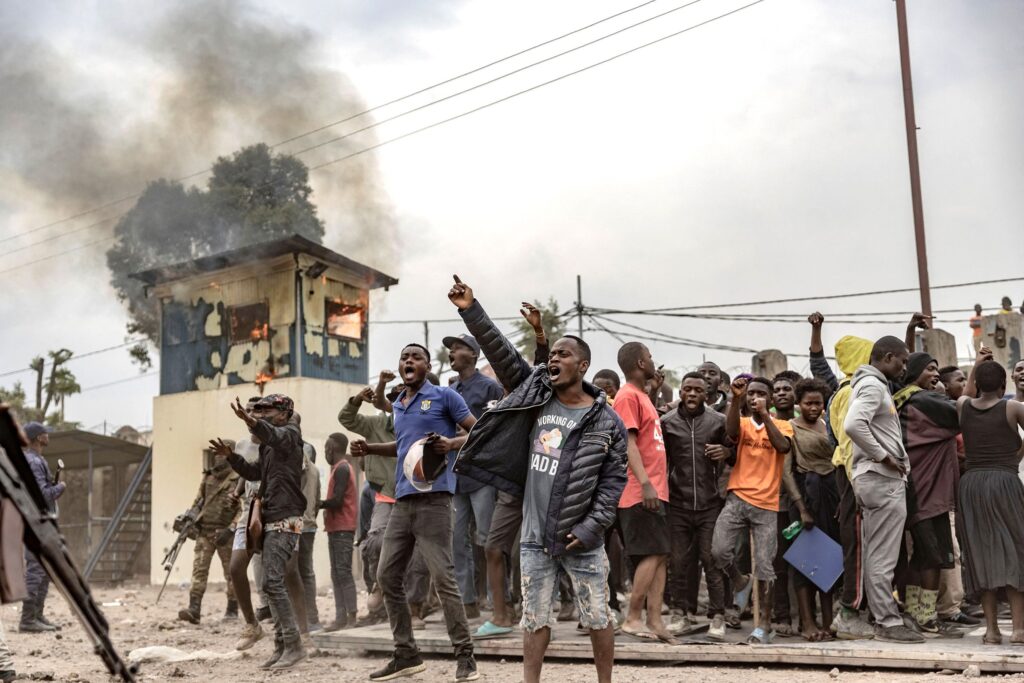
The security situation in eastern Democratic Republic of the Congo (DRC) continues to deteriorate as armed groups intensify attacks on civilians, forcing thousands of people from their homes and complicating efforts to restore stability in one of Africa’s longest-running conflicts.
The latest wave of violence comes despite ongoing military operations by Congolese forces and regional peace initiatives aimed at ending years of fighting in North Kivu, South Kivu, and Ituri provinces. Humanitarian organisations warn that civilians remain the primary victims, with communities facing repeated attacks, displacement, food shortages, and limited access to healthcare.
Armed Groups Continue to Terrorise Communities
Eastern DR Congo remains home to more than 100 armed groups competing for territory, natural resources, and political influence.
Among the most active are the Allied Democratic Forces (ADF), an armed group affiliated with the Islamic State, and the AFC/M23 rebel alliance, which has expanded its control over large parts of North Kivu in recent months.

The ADF has continued to carry out attacks on villages, often targeting civilians with killings, kidnappings, and the destruction of homes. Meanwhile, the advance of M23 has displaced hundreds of thousands of people and altered the security landscape across the region.
Humanitarian Crisis Worsens
The renewed violence has deepened one of the world’s largest humanitarian emergencies.
Millions of people have been displaced across eastern Congo, many of them forced to flee multiple times as fighting spreads from one community to another. Displaced families are living in overcrowded camps or temporary shelters where access to clean water, food, education, and medical care remains severely limited.
Aid agencies continue to warn that insecurity is making it increasingly difficult to deliver humanitarian assistance to affected communities.
Justice Efforts Gain Momentum
As violence continues, the Congolese government has announced new measures aimed at improving accountability for atrocities committed during decades of conflict.
This week, authorities established the Council for the Examination of Atrocities in the DRC, an advisory body bringing together Congolese and international experts to document war crimes, support victims, and strengthen efforts to pursue justice.
Officials say the initiative is intended to complement the country’s broader campaign for international recognition of crimes committed during conflicts that have claimed millions of lives since the late 1990s.
Health Crisis Adds to the Challenges
The conflict is unfolding alongside a rapidly expanding Ebola outbreak in eastern Congo.
Health officials say insecurity continues to hinder surveillance, contact tracing, and treatment efforts in several affected areas. The World Health Organization has warned that many new infections are emerging from unknown chains of transmission, making containment increasingly difficult.
The combination of armed conflict and a growing public health emergency has placed enormous pressure on local healthcare systems and humanitarian responders.
Regional Tensions Remain High
The conflict has also strained relations between the DRC and neighbouring Rwanda.
Kinshasa continues to accuse Rwanda of supporting the M23 rebellion, allegations that Kigali denies. The dispute has increased diplomatic tensions within the Great Lakes region and prompted renewed international efforts to encourage dialogue between the two countries.
Regional organisations and international partners continue to push for a negotiated settlement while calling on all parties to protect civilians and respect international humanitarian law.
Hope for Peace Remains Fragile
Despite ongoing diplomatic initiatives, analysts say achieving lasting peace will require more than military operations alone.
Experts argue that strengthening state institutions, improving governance, addressing competition over natural resources, and ensuring justice for victims will all be essential to breaking the cycle of violence.
For millions of Congolese living in the country’s east, the priority remains simple: an end to insecurity and the opportunity to rebuild their lives after decades of conflict.

Comments (0)
No comments yet — be the first to share your thoughts.