
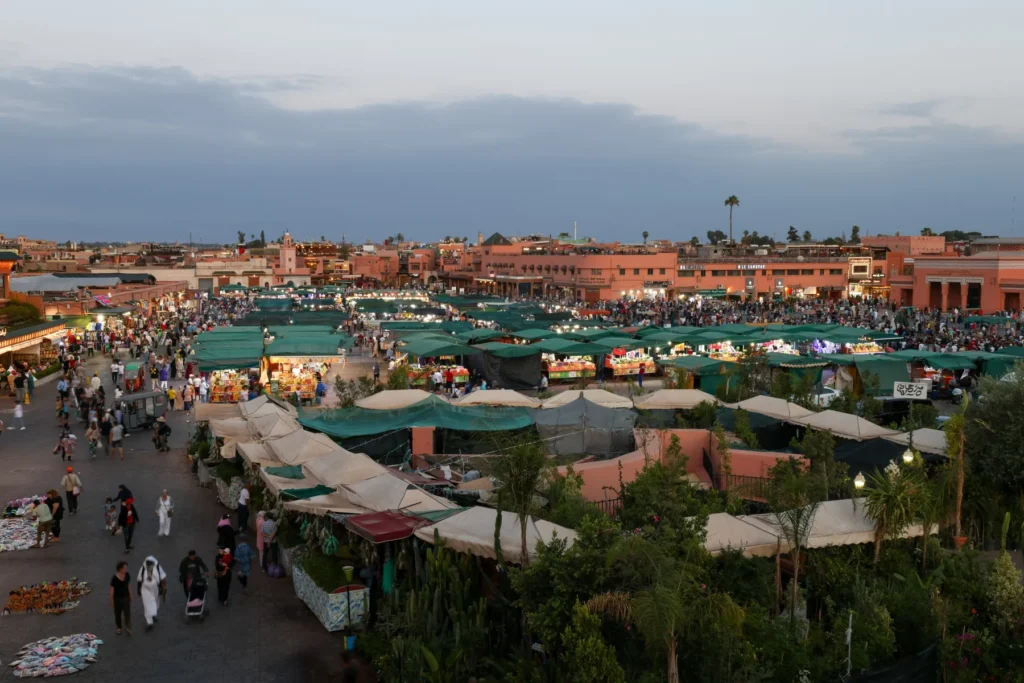
2030 Tournament Becomes a $20 Billion Economic Opportunity
Morocco is turning the 2030 FIFA World Cup into more than a sporting event. The country is using the tournament as a major economic strategy to expand tourism, modernise infrastructure and strengthen its position as one of Africa’s leading investment destinations.
When Morocco hosts the World Cup alongside Spain and Portugal in 2030, it will become only the second African country after South Africa in 2010 to welcome football’s biggest global competition.
For Moroccan authorities, the tournament represents a historic opportunity to accelerate development projects that could benefit the economy long after the final whistle.
Tourism Minister Fatim-Zahra Ammor has described the World Cup as an accelerator for Morocco’s tourism ambitions rather than simply a one month event. The government’s goal is to ensure that the infrastructure, international attention and investment generated by the tournament continue creating value beyond 2030.
A Tourism Sector Preparing for Global Attention
Morocco has experienced strong growth in tourism in recent years.
In 2025, the country welcomed nearly 20 million visitors, making it one of Africa’s most visited destinations. The government now aims to increase this figure to 26 million tourists by 2030.
Tourism has become a major pillar of Morocco’s economy, contributing significantly to national income and supporting hundreds of thousands of jobs in hotels, restaurants, transport, cultural activities and entertainment.
The country’s popularity increased further after the historic performance of the Moroccan national football team at the 2022 FIFA World Cup in Qatar.
Under coach Walid Regragui, Morocco became the first African and Arab nation to reach the World Cup semi finals. The achievement generated global attention and created a new wave of interest in Moroccan culture, tourism and investment opportunities.
Cities such as Marrakech, Casablanca, Rabat and Agadir have since seen increased international visibility.
The Infrastructure Transformation
Preparing for the World Cup requires Morocco to go beyond football stadiums.
The country is investing heavily in airports, roads, rail networks, hotels and urban development projects.
Morocco’s total infrastructure investment linked to the tournament is estimated at around 190 billion Moroccan dirhams, approximately $20 billion.
A major part of the investment is focused on increasing accommodation capacity.
Over recent years, Morocco has added tens of thousands of new hotel beds, bringing total capacity above 300,000 beds nationwide. The country plans to add around 60,000 additional beds before 2030 to meet expected demand from football supporters, tourists and international visitors.
The government is also improving transport connections between major cities.
Rail expansion, airport upgrades and improved road networks are expected to make movement easier for both visitors and businesses.
Moving Tourism Beyond Marrakech
For many international travellers, Morocco has traditionally been associated with Marrakech’s historic markets, luxury resorts and cultural attractions.
However, the government wants tourism growth to reach more regions.
Rabat, Morocco’s capital city, is being positioned as a centre for cultural tourism, international conferences and business events.
Other cities are also receiving investment to diversify Morocco’s tourism offering, including coastal destinations, historical sites and nature based tourism locations.
The strategy is aimed at ensuring that economic benefits from the World Cup are not concentrated in only a few major cities.
The Economic Impact
Morocco expects the World Cup to generate benefits across several areas of the economy.
The tourism industry is expected to benefit from millions of international visitors who will spend money on accommodation, food, transport and entertainment.
Small businesses are also expected to gain opportunities through increased demand for local products, cultural experiences and services.
Construction and infrastructure projects are creating employment opportunities, while long term improvements in transport and connectivity could make it easier for companies to operate across the country.
The tournament is also expected to strengthen Morocco’s global image as an investment destination.
The country has already attracted major investments in sectors such as automotive manufacturing, renewable energy and technology.
The Risk of Expensive Mega Events
Despite the optimism, Morocco faces an important challenge.
History has shown that hosting major sporting events does not automatically guarantee long term economic success.
Countries that host global tournaments must ensure that infrastructure continues to serve citizens after the event ends.
The challenge is avoiding unused facilities and ensuring that investments create lasting economic opportunities.
Morocco’s success will depend on whether the World Cup becomes part of a wider development strategy rather than simply a temporary moment of global attention.
Morocco’s Growing African Influence
The World Cup project fits into Morocco’s broader ambition to increase its influence across Africa.
Over the past decade, Morocco has expanded its economic presence through banking, telecommunications, agriculture, renewable energy and infrastructure investments in several African countries.
The tournament will provide another opportunity to showcase Morocco’s capabilities and strengthen its diplomatic and economic relationships.
Hosting the World Cup also gives Morocco a powerful platform to promote African tourism and demonstrate that the continent can successfully organise global events.
A Possible Model for Africa
Morocco’s approach raises a wider question for other African countries.
Can major international events become engines of economic transformation?
The answer depends on planning, governance and long term vision.
A football tournament alone cannot create development.
But when combined with infrastructure investment, tourism strategy, business growth and human capital development, it can become a powerful economic tool.
The Bigger Picture
For Morocco, the 2030 FIFA World Cup is not only about football.
It is a national development project designed to expand tourism, modernise infrastructure and strengthen the country’s global position.
The true success of the tournament will not only be measured by the matches played in Moroccan stadiums.
It will be measured years later by whether the country created more jobs, attracted more investment and built a stronger economy.
Morocco is betting that football can become a gateway to a bigger economic transformation.
By 2030, the world will discover whether that bet pays off.
Comments (0)
No comments yet — be the first to share your thoughts.