

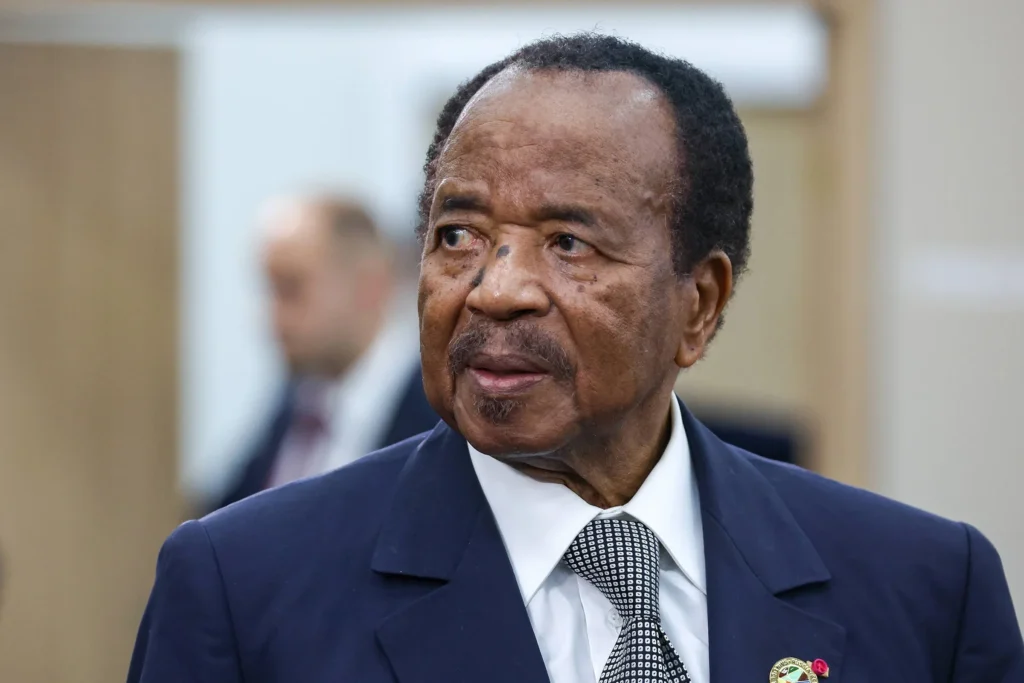
Cameroon’s long-awaited legislative and municipal elections will take place on February 7, 2027, following a presidential decree signed by President Paul Biya on November 9, 2026. The announcement ends months of uncertainty surrounding the renewal of the National Assembly and municipal councils, whose mandates had been extended more than once.
Under Decree No. 2026/345, voters across the country will elect members of the National Assembly and municipal councillors on the same day. Polling stations are scheduled to open at 8:00 a.m. and close at 6:00 p.m., according to the presidential decree.
The announcement gives political parties, prospective candidates and Elections Cameroon (ELECAM) a defined timetable for the next stage of the electoral process. It also sets the country on course for its first legislative and municipal elections since the 2020 double ballot.
Two Years of Extensions Come to an End.
The announcement follows a prolonged period in which elected officials continued in office beyond their original mandates. Members of the National Assembly and municipal councillors were elected in 2020 for five-year terms, meaning their mandates were initially expected to expire in 2025.

However, the government repeatedly extended the mandates, citing electoral scheduling and other constraints. The presidential election of October 2025 and subsequent electoral activities added to the demands on the country’s electoral calendar.
Municipal councillors received another extension in May 2026, moving the end of their mandate to February 28, 2027. The parliamentary mandate was also extended, with the current legislators expected to remain in office until December 2026.
These extensions generated uncertainty over when Cameroonians would next vote for their parliamentary and local representatives. The November 9 decree now establishes February 7 as the date for both elections, providing a clear deadline for political organisations and election administrators.
Political Parties Face a New Electoral Test.
With the date confirmed, political parties are expected to intensify preparations, including candidate selection, constituency-level mobilisation, alliance discussions and the organisation of campaign structures.
The ruling Cameroon People’s Democratic Movement (CPDM), which has dominated the National Assembly for decades, will seek to maintain its parliamentary majority and influence over municipal councils. In the 2020 legislative elections, the party won 152 of the National Assembly’s 180 seats.
Opposition parties will have an opportunity to challenge that dominance, although their ability to translate public support into parliamentary and municipal representation will depend on candidate selection, campaign organisation, voter mobilisation and the broader conditions under which the elections are conducted.
The electoral contest will also unfold against the political backdrop of the October 2025 presidential election, which was followed by protests and disputes over the results. The authorities’ handling of opposition activity and political demonstrations has remained a subject of scrutiny.
For parties seeking to expand their representation, the February elections will therefore be about more than securing individual seats. They will test their organisational strength, their ability to mobilise supporters across constituencies and their capacity to compete in a political environment shaped by longstanding incumbency.
ELECAM’s Role Comes Under Renewed Attention.
The responsibility for organising and supervising the elections rests with Elections Cameroon, the institution mandated to manage the country’s electoral process.
On the same day that he announced the election date, President Biya signed a separate decree renewing the mandates of ELECAM’s Electoral Board leadership and ten other members for another four years. Enow Abrams Egbe was retained as chairperson, while Amugu, née Abena Ekobena Appoline Marie, was renewed as vice-chairperson.
The timing places the institution’s leadership at the centre of preparations for the February vote. ELECAM will be expected to manage the administrative and logistical requirements, including voter registration, candidate applications, the publication of electoral information, polling arrangements and the coordination of results.
The renewal also brings renewed attention to the independence and credibility of the electoral body. Supporters of institutional continuity may regard the decision as providing stability ahead of a major electoral exercise, while critics have long questioned whether the current electoral framework provides sufficient independence from the executive. These concerns are likely to remain part of the wider debate as the election approaches.
February 2027 Will Test More Than Party Popularity.
The legislative and municipal elections will determine the composition of two important levels of political representation in Cameroon. The National Assembly is responsible for passing laws and exercising parliamentary oversight, while municipal councils play a direct role in local governance and the delivery of services.
The outcome will therefore influence both national political representation and the management of communities across the country. For citizens, the elections will provide an opportunity to assess their representatives and decide who should occupy the parliamentary and municipal positions for the next term.
The coming weeks will be important for establishing the practical details of the electoral timetable. Parties must prepare their candidates, while ELECAM and the relevant administrative authorities face the task of ensuring that voters understand the process and can participate.
The February 7 date has settled one major question: when Cameroonians will return to the polls to elect their parliamentarians and municipal councillors. The next challenge will be ensuring that preparations are completed on time and that the electoral process commands public confidence.
After repeated extensions and months of speculation, the political countdown has officially begun.

Comments (0)
No comments yet — be the first to share your thoughts.