
For decades, Africa has faced one of the world’s biggest economic contradictions. The continent is rich in natural resources, has one of the fastest-growing populations on earth and possesses enormous consumer markets, yet many African countries continue to import basic goods that could be produced locally.
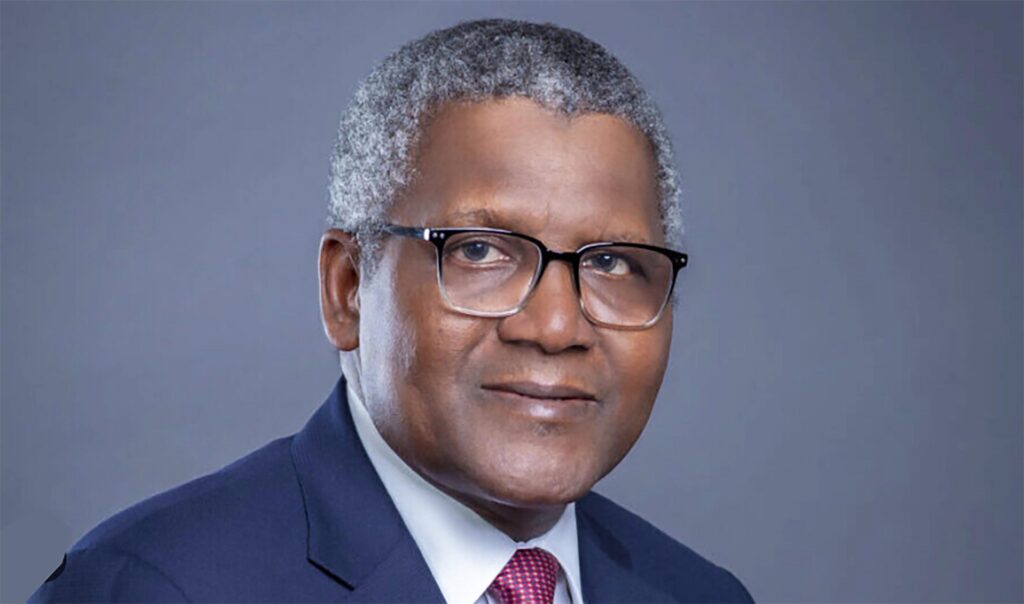
Few individuals have challenged this reality as aggressively as Aliko Dangote, Africa’s richest businessman and one of the continent’s most influential industrialists.
From cement factories across Africa to fertiliser production and the historic Dangote Petroleum Refinery in Nigeria, Dangote has built an empire based on one central idea: Africa must produce more of what it consumes.
But his success also raises a bigger question. Can Africa’s industrial transformation depend on the vision of one businessman, or does the continent need a deeper economic revolution involving governments, institutions and millions of entrepreneurs?

From Trading Business to Industrial Powerhouse
Aliko Dangote began his business journey in 1977 when he established a trading company dealing in commodities such as cement, rice, sugar and other goods.
Over the following decades, he transformed the company into the Dangote Group, one of Africa’s largest industrial conglomerates.
The company’s biggest success story has been cement.
Through Dangote Cement, the group expanded production across countries including Nigeria, Cameroon, Senegal, Ethiopia, Tanzania, Zambia and South Africa. The company became one of Africa’s largest cement producers, reducing dependence on imported cement in several markets.
Dangote’s strategy was different from many traditional African businesses. Instead of focusing only on trading imported products, he invested in factories and production capacity.
His argument was simple: Africa cannot achieve economic independence if it continues buying finished products from other parts of the world.
The Refinery That Could Change Nigeria’s Energy Story
The opening of the Dangote Refinery in Lagos marked one of the most ambitious industrial projects in Africa’s history.
The facility, estimated to cost around $20 billion, is designed to process up to 650,000 barrels of crude oil per day, making it one of the largest oil refineries in the world.
For decades, Nigeria, despite being one of Africa’s largest oil producers, depended heavily on imported refined petroleum products because its government-owned refineries struggled with operational challenges.
The result was a painful contradiction: Nigeria exported crude oil while importing petrol and other refined products.
Dangote’s refinery was designed to change that situation by creating domestic refining capacity, reducing import dependence and potentially turning Nigeria into a major exporter of petroleum products.
Supporters describe the project as a symbol of African industrial ambition.
Critics, however, argue that the country’s economic challenges cannot be solved by one privately owned refinery alone. They say Nigeria still needs broader reforms in energy policy, infrastructure and governance.
The Billionaire Debate
Dangote’s rise has created a debate about the role of billionaires in Africa’s development.
Supporters see him as proof that African entrepreneurs can build globally competitive companies capable of transforming industries.
They argue that his investments have created thousands of jobs, developed local manufacturing capacity and inspired a new generation of African business leaders.
Former Nigerian President Muhammadu Buhari described Dangote’s refinery project as a landmark investment that could strengthen Nigeria’s economy and industrial capacity.
However, critics question whether African economies should rely so heavily on a small number of powerful business figures.
They argue that sustainable development requires strong institutions, competitive markets and opportunities for millions of small and medium-sized businesses, not only large corporations.
The debate is not necessarily about whether Dangote’s achievements are positive. The deeper question is whether his model can be replicated across the continent.
Africa’s Industrial Problem Is Bigger Than Business
Africa’s challenge has never been a lack of resources.
The continent produces valuable commodities including oil, gold, cobalt, lithium and agricultural products. The problem is that much of this wealth leaves Africa in raw form before returning as expensive finished goods.
For example, the Democratic Republic of Congo produces a significant percentage of the world’s cobalt, a mineral essential for electric vehicle batteries. Yet most battery manufacturing takes place outside Africa.
Zimbabwe has become an important lithium producer, but much of the global battery supply chain remains controlled by countries with stronger manufacturing industries.
Dangote’s approach represents an alternative vision: build industries where resources are processed locally and create more value within Africa.
Can Africa Create More Dangotes?
The continent does not need only one Aliko Dangote.
It needs thousands of entrepreneurs building factories, technology companies, logistics businesses, agricultural enterprises and manufacturing industries.
However, creating more industrialists requires more than ambition.
African governments must improve electricity supply, transportation networks, access to finance, education systems and regulatory environments.
A young entrepreneur cannot build a factory without reliable power. A technology company cannot scale without internet infrastructure. A manufacturer cannot compete globally without efficient transport systems.
Industrialisation is not created by entrepreneurs alone. It requires an ecosystem.
The Legacy Question
Aliko Dangote’s greatest contribution may not simply be measured by his wealth.
His biggest impact could be changing the way Africans think about business.
For generations, many African economies rewarded importation and trading more than production. Dangote’s career challenges that model by showing that African companies can build large-scale industries capable of competing globally.
The question now is whether governments and the private sector can build an environment where more entrepreneurs follow that path.
A Symbol of Possibility, But Not the Whole Solution
Aliko Dangote represents both the promise and the complexity of Africa’s economic future.
His factories demonstrate what African capital and ambition can achieve. But his success also highlights the limitations of relying on individual champions to solve continent-wide challenges.
Africa’s economic transformation will not be built by one billionaire.
It will be built when millions of entrepreneurs have the opportunity to create businesses, industries and innovations that contribute to economic growth.
Dangote has shown what is possible.
The challenge for Africa is building a system where his story becomes common rather than exceptional.

Comments (0)
No comments yet — be the first to share your thoughts.