

Nigeria’s Senate has expanded its investigation into the country’s Safe Schools Initiative, broadening the scope of an ongoing probe into how billions of naira allocated for education security and student welfare have been managed. Lawmakers have also granted the Senate’s ad hoc committee an additional three weeks to complete its work after preliminary findings suggested that several government agencies are closely linked to the implementation and funding of the programme.
The decision was taken during plenary on 21 July, following a motion presented by Senator Orji Uzor Kalu, Chairman of the Senate Ad Hoc Committee on the Safe Schools Initiative. Kalu argued that investigating the programme in isolation would leave important gaps because several education and social intervention agencies are involved in funding and implementing projects intended to protect students across Nigeria.
More Agencies Come Under Investigation
With the expanded mandate, the committee will now investigate the activities of the Tertiary Education Trust Fund (TETFund), the Nigerian Education Loan Fund (NELFUND), the Universal Basic Education Commission (UBEC), the Federal Ministry of Humanitarian Affairs and Poverty Alleviation, and the National Social Investment Programme Agency (NSIPA).
According to Senator Kalu, the committee’s preliminary findings showed that these institutions are connected through funding, educational support programmes and humanitarian interventions that directly affect school safety and student welfare. The Senate believes a broader investigation will provide a clearer picture of how public funds have been spent and whether the intended objectives have been achieved.

Questions Over the Safe Schools Initiative
The Safe Schools Initiative was launched in 2014 following the abduction of 276 schoolgirls from Chibok, Borno State, an incident that drew international attention to insecurity in Nigeria’s education sector.
The programme was established through a partnership involving the Nigerian government, international development organisations and private sector partners. Its primary objective was to strengthen school security by improving infrastructure, providing emergency response mechanisms and protecting students and teachers in communities affected by insecurity.
Despite years of funding, attacks on schools and kidnappings of students have continued in several parts of northern Nigeria, raising concerns about whether resources allocated to the programme have been properly utilised.
Billions of Naira Already Under Review
Previous hearings conducted by the Senate committee examined the disbursement of approximately ₦15 billion released for the Safe Schools Initiative in 2023.
Investigators reviewed allocations made to several security agencies, including the Nigeria Police Force, which reportedly received more than ₦6.2 billion, the Nigeria Security and Civil Defence Corps (NSCDC), Defence Headquarters, and the Federal Ministry of Education. Lawmakers also requested detailed records of consultancy payments, contracts and expenditure linked to the programme after raising concerns over financial accountability.
During earlier hearings, officials disclosed that the initiative also received international support from organisations including the African Development Bank, the German Government, the Norwegian Government, UNICEF, USAID, the Qatar Foundation and several United Nations agencies.
Strengthening Oversight of Education Funding
The Senate says expanding the investigation is intended to improve transparency and ensure that education intervention funds are delivering measurable results.
Lawmakers will examine how education loans are being administered through NELFUND, assess infrastructure projects financed by TETFund, review UBEC’s role in improving basic education and evaluate humanitarian programmes supporting displaced learners and vulnerable communities.
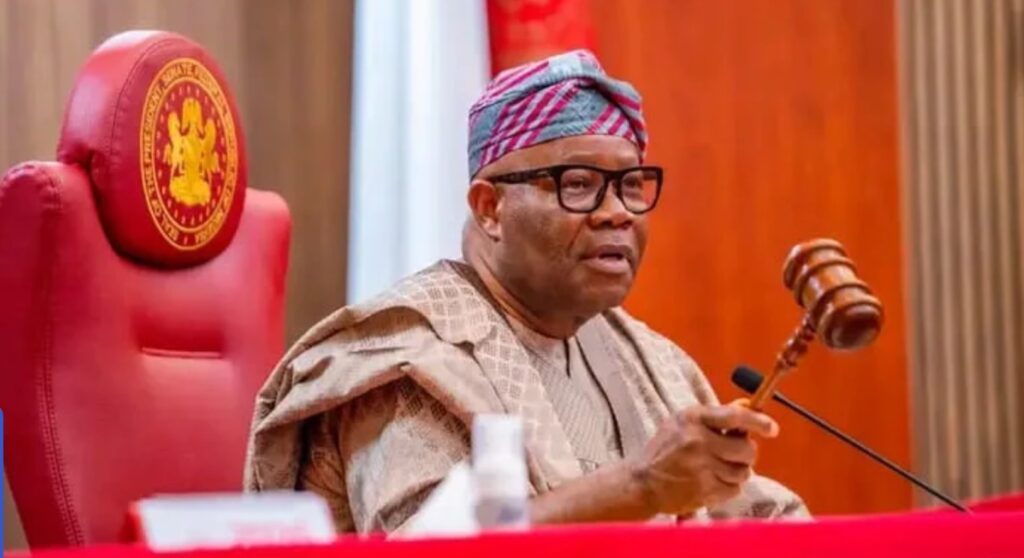
Senate President Godswill Akpabio approved the committee’s request after lawmakers unanimously supported the motion during plenary. The committee is now expected to submit a comprehensive report after completing its expanded investigation.
Education Security Remains a National Concern
The Senate’s decision comes as Nigeria continues to confront serious security challenges affecting schools, particularly in parts of the country’s north where armed groups have repeatedly targeted educational institutions.
Education advocates argue that improving school security requires not only increased funding but also stronger oversight, transparent procurement processes and better coordination among government agencies responsible for implementing intervention programmes.
The outcome of the investigation could influence future education and security policies while shaping how public funds are allocated to protect millions of Nigerian students.

Comments (0)
No comments yet — be the first to share your thoughts.