

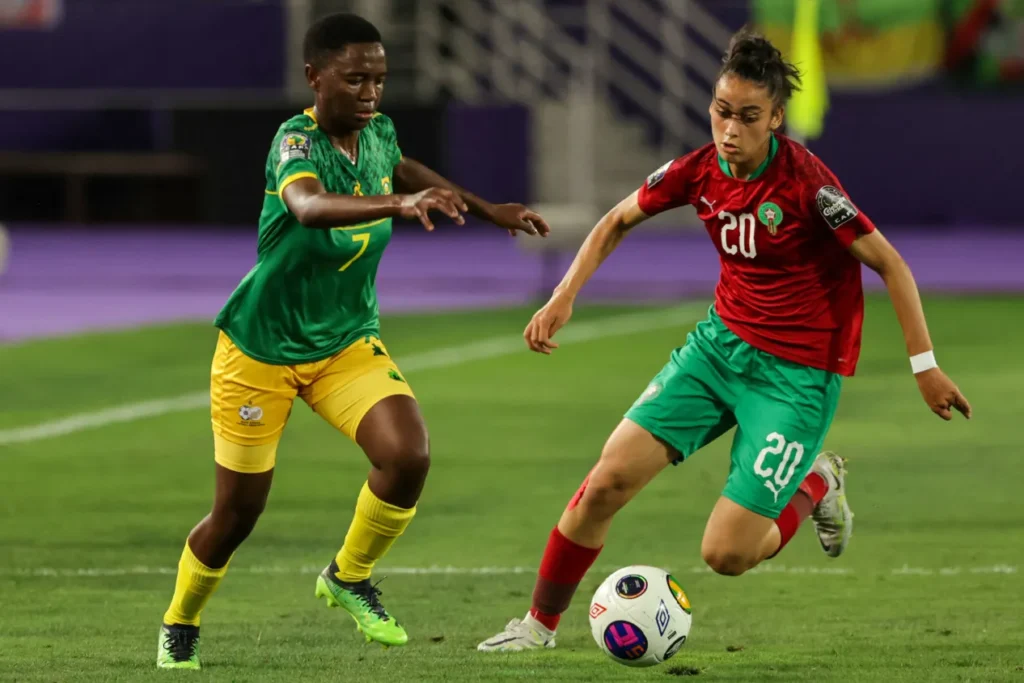
African women’s football is entering one of its most important periods in history as national teams, players and football organisations push for greater recognition, investment and professional opportunities. For decades, women’s football across Africa struggled with limited funding, poor facilities and a lack of visibility compared with the men’s game. Today, a new generation of players is changing that narrative and proving that women’s football can become one of the continent’s biggest sporting opportunities.
The growth of women’s football has been driven by historic performances, increased international attention and a stronger commitment from some football federations to develop the game. From Nigeria’s long tradition of dominance to South Africa’s breakthrough success and Morocco’s emergence as a continental force, African women’s football is moving from the margins toward the global stage.
Nigeria’s Super Falcons Remain Africa’s Football Giants
Nigeria remains the most successful nation in African women’s football history. The Super Falcons have dominated the continent for decades, winning multiple Women’s Africa Cup of Nations titles and producing some of Africa’s most recognised footballers.
Players such as Asisat Oshoala have become global ambassadors for African women’s football. Oshoala, who has played for clubs including Barcelona and won multiple UEFA Women’s Champions League titles, has helped demonstrate that African female players can compete at the highest level of international football.

Her success has inspired thousands of young girls across Nigeria and the wider continent who now see football as a possible professional career.
Nigeria’s strength has traditionally come from its large pool of talent, but the country still faces challenges in providing consistent investment, professional league structures and equal opportunities for female players.
The Super Falcons’ success has often depended more on individual talent than on a fully developed domestic football system.
South Africa’s Historic Breakthrough
South Africa’s women’s national team, Banyana Banyana, represents one of the biggest success stories in African football development.
After years of near success, South Africa finally won its first Women’s Africa Cup of Nations title in 2022 after defeating Morocco in the final. The victory marked a turning point for women’s football in the country.
The team, coached by Desiree Ellis, captured the imagination of South African fans and increased attention from sponsors, broadcasters and government institutions.
Ellis, who had previously been involved with the national team as a player and assistant coach, became one of Africa’s most respected female football figures. Her leadership showed the importance of investing in experienced coaching and long term development.
South Africa’s progress also demonstrated that women’s football can attract commercial interest when teams achieve international success.
Morocco’s Women’s Football Revolution
Morocco has emerged as one of the fastest growing forces in African women’s football.
The country invested heavily in football infrastructure and development programmes as part of a broader national strategy to strengthen the sport.
The biggest breakthrough came during the 2023 FIFA Women’s World Cup, when Morocco’s women’s national team reached the knockout stage in their first ever appearance at the tournament.
The achievement was historic because Morocco became the first Arab and North African women’s team to reach the round of 16 at a FIFA Women’s World Cup.
Players such as Ghizlane Chebbak, the team’s captain, became symbols of a new generation of African female footballers.
Morocco’s progress has been supported by investment in academies, domestic competitions and improved facilities. The country has shown that strategic investment can quickly transform women’s football.
The Importance of the Women’s Africa Cup of Nations
The Women’s Africa Cup of Nations (WAFCON) has become one of the most important platforms for the growth of women’s football on the continent.
The competition has helped increase visibility for female players and provided national teams with more opportunities to compete internationally.
The tournament has also expanded over time as CAF seeks to increase participation and strengthen women’s football structures.
The success of WAFCON shows that African audiences are interested in women’s football when given the opportunity to watch high quality competitions.
However, many players and administrators argue that more needs to be done to create professional pathways beyond international tournaments.
The Professional Football Challenge
Despite the progress, African women’s football continues to face major challenges.
Many female players still struggle with:
- Low salaries.
- Limited training facilities.
- Short professional careers.
- Lack of medical and technical support.
- Unequal treatment compared with men’s teams.
In many African countries, women’s football remains semi professional, with players combining football with education or other jobs.
This makes it difficult for talented athletes to fully develop.
Creating sustainable women’s leagues remains one of the biggest priorities for the future.
Countries such as Morocco and South Africa have made progress in improving domestic competitions, but many other nations still need stronger structures.
A New Generation of African Female Stars
African women’s football is producing a new generation of players who are gaining international recognition.
Beyond Asisat Oshoala, players such as Barbra Banda from Zambia have become global stars. Banda made history as one of the most exciting attacking players in world football and has represented Africa’s growing influence in the international game.
Zambia’s national team has also become one of the continent’s most competitive sides, qualifying for major international tournaments and challenging traditional powers.
The rise of these players is important because visibility creates inspiration.
Young girls who see African women competing internationally are more likely to believe that football can become a realistic career.
The Role of Investment and Private Partnerships
The future of women’s football in Africa will depend heavily on investment.
Football federations alone cannot carry the responsibility.
Private companies, broadcasters, sponsors and development organisations will play an important role in building sustainable systems.
Investment is needed in:
- Youth academies.
- Coaching education.
- Stadium facilities.
- Women’s leagues.
- Digital media coverage.
The commercial potential exists because Africa has a huge young population and millions of passionate football supporters.
The challenge is creating the structures that allow women’s football to become financially sustainable.
Why Women’s Football Matters Beyond Sport
The growth of women’s football is not only about trophies and competitions.
It is also connected to broader issues around opportunity and gender equality.
Sport provides young women with opportunities for education, leadership and economic independence.
Successful female footballers are becoming role models who challenge traditional expectations and encourage more girls to participate in sports.
The development of women’s football reflects a wider transformation happening across Africa, where women are increasingly taking leadership roles in business, politics, entertainment and culture.
The Future of African Women’s Football
African women’s football has reached a moment of opportunity.
The talent has always existed.
The passion has always existed.
The difference today is that more people are beginning to recognise the value of investing in the women’s game.
The next challenge is ensuring that success is not limited to a few national teams or individual stars.
Africa needs stronger domestic leagues, better player development systems and long term investment.
The Bigger Picture
The rise of African women’s football represents one of the most encouraging developments in the continent’s sports industry.
Nigeria’s dominance, South Africa’s breakthrough and Morocco’s rapid progress show that African women can compete with the best in the world.
The future of the game will depend on whether governments, football organisations and businesses are willing to match talent with opportunity.
African women have already proven they belong on the global football stage.
Now the continent must build the systems that allow them to stay there.

Comments (0)
No comments yet — be the first to share your thoughts.