

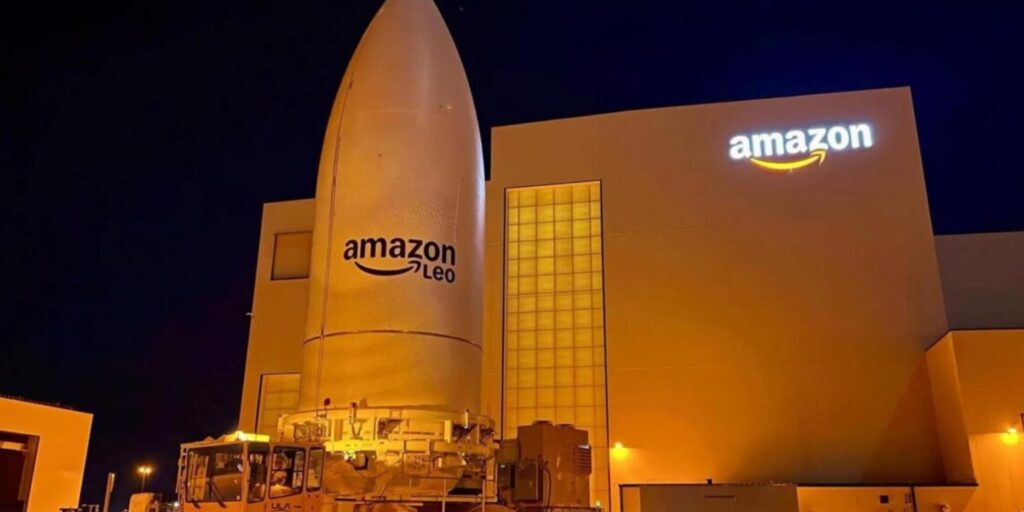
South Africa is set to become the first African market for Amazon Leo, Amazon’s satellite internet network formerly known as Project Kuiper, marking a significant milestone in the race to connect millions of Africans who still lack reliable broadband access.
The technology giant announced that it will launch satellite internet services in South Africa in 2027 through a partnership with Herotel, one of the country’s largest fixed internet providers. The move represents Amazon’s first commercial satellite internet agreement on the African continent and places it in direct competition with other satellite operators eager to tap into Africa’s rapidly growing digital economy.
For Africa, the announcement is about much more than internet access. It reflects the beginning of a new competition between global technology companies seeking to build the infrastructure that will power the continent’s digital future.
Bringing Connectivity to Rural Communities
Although South Africa has one of Africa’s most advanced telecommunications sectors, internet access remains uneven.

Millions of households, particularly in rural communities, remain beyond the reach of fibre networks and traditional broadband infrastructure. Extending fibre to remote areas has often proved too expensive because of difficult terrain and low population density.
Amazon believes satellite technology can help close that gap.
Under the agreement, Herotel will use Amazon Leo’s low Earth orbit satellite network to launch a new broadband service called evry, which will provide internet access to homes and small businesses in underserved communities. Herotel, which already serves more than 350,000 customers across over 550 towns, will manage installation, customer support and local operations.
Unlike traditional communications satellites that orbit far from Earth, low Earth orbit satellites operate much closer to the planet. This allows them to deliver faster internet speeds with significantly lower latency, making activities such as video conferencing, online learning and streaming much more reliable.
A Different Strategy From Starlink
Amazon’s entry into South Africa has also drawn attention because of the approach it has chosen.
Instead of applying for its own telecommunications licence, the company has partnered with an established South African operator that already understands the country’s regulatory environment.
Industry analysts say this strategy allows Amazon to enter the market more quickly while complying with local licensing requirements.
The approach differs from SpaceX’s Starlink, which has yet to launch commercially in South Africa because of ongoing regulatory discussions surrounding ownership and licensing rules for foreign communications companies.
Communications Minister Solly Malatsi, who attended the announcement, described expanded satellite connectivity as an important step toward reducing South Africa’s digital divide and supporting economic development.
Competition Is Good for Africa
Amazon’s arrival is expected to increase competition in Africa’s satellite broadband market.
While Starlink already operates in several African countries, Amazon’s expansion introduces another major player capable of investing billions of dollars in connectivity infrastructure.
Greater competition could ultimately benefit consumers through improved service quality, wider coverage and more competitive pricing.
Technology analysts also expect telecommunications companies across Africa to accelerate partnerships with satellite providers as demand for broadband continues to grow.
The race is no longer simply about internet access. It is increasingly about who builds the digital infrastructure that will support education, healthcare, financial services and artificial intelligence across the continent.
Opportunities Beyond Internet Access
Reliable broadband has become one of the foundations of modern economic development.
Across Africa, millions of entrepreneurs, schools and healthcare providers continue to struggle with unreliable or expensive internet connections.
Improved connectivity could expand access to online education, digital banking, telemedicine, e-commerce and remote employment opportunities.
For small businesses operating outside major cities, satellite broadband may also reduce one of the biggest barriers to participating in the digital economy.
Governments across Africa have increasingly identified universal internet access as a key development priority, recognising that digital inclusion is becoming as important as roads, electricity and water infrastructure.
Challenges Still Remain
Despite growing enthusiasm, satellite internet is not without its challenges.
Affordability remains one of the biggest questions.
Although Amazon has not yet announced pricing for South Africa, satellite broadband equipment typically requires specialised user terminals that can be expensive for lower-income households.
There are also regulatory considerations.
As more international satellite operators seek licences across Africa, governments will need to balance encouraging investment with protecting competition, national regulations and consumer interests.
Industry experts also point out that satellite internet is unlikely to replace fibre networks in densely populated urban areas. Instead, it is expected to complement existing infrastructure by serving locations where conventional broadband remains difficult or uneconomical to deploy.
Why It Matters for Africa
Amazon’s decision to enter South Africa represents an important moment in Africa’s digital transformation.
For years, discussions around connectivity focused primarily on expanding mobile networks and laying fibre optic cables.
Satellite broadband introduces another option that could dramatically improve internet access in remote communities across the continent.
It also signals growing international confidence in Africa’s technology market.
Global companies increasingly recognise that Africa’s young population, expanding digital economy and rising demand for internet services present one of the world’s largest growth opportunities.
As Amazon, Starlink and other satellite providers compete for customers, African consumers may ultimately become the biggest beneficiaries.
For millions of people who remain offline today, the arrival of satellite broadband could mean more than faster internet.
It could provide access to education, healthcare, financial services and economic opportunities that have long remained beyond reach.
Africa’s next digital revolution may not arrive through cables buried underground.
It may come from satellites orbiting high above the continent.

Comments (0)
No comments yet — be the first to share your thoughts.