

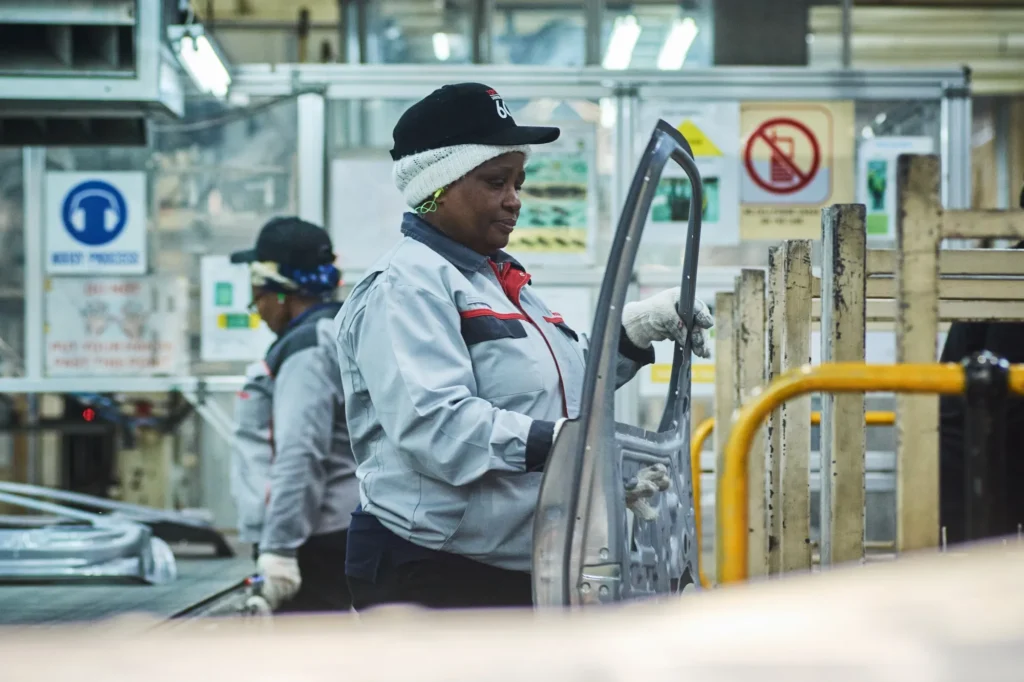
South Africa’s automotive industry has long been one of the country’s greatest industrial success stories. It accounts for thousands of jobs, contributes billions of rand to the economy and supplies vehicles to markets around the world.
Today, however, the industry finds itself navigating a different kind of challenge.
Vehicle manufacturers continue to produce and export cars at impressive levels, but rising interest rates, higher living costs and changing global trade dynamics are putting pressure on domestic sales. While the sector remains one of Africa’s strongest manufacturing industries, companies are being forced to rethink how they operate in an increasingly competitive market.
Recent industry data shows that South Africa’s new vehicle market has remained relatively resilient despite persistent economic headwinds, giving cautious optimism to manufacturers and dealers alike.

Sales Show Signs of Stability
According to the National Association of Automobile Manufacturers of South Africa (NAAMSA), the country’s vehicle market has begun showing encouraging signs after several difficult years.
Passenger vehicle sales have remained steady, while commercial vehicle demand continues to benefit from activity in logistics, mining and agriculture.
Industry executives say easing inflation and the prospect of lower borrowing costs have improved consumer confidence compared with the previous year.
“Although affordability remains a concern, the market has demonstrated remarkable resilience,” NAAMSA Chief Executive Officer Mikel Mabasa said while commenting on recent sales figures.
He noted that improving macroeconomic conditions could help sustain demand during the second half of the year if inflation continues to moderate.
A Major Pillar of the Economy
Few industries are as important to South Africa’s manufacturing sector as automotive production.
The industry contributes approximately 5 percent of South Africa’s Gross Domestic Product, while accounting for more than 20 percent of the country’s manufacturing output.
It directly and indirectly supports more than 100,000 jobs, with additional employment created through component manufacturing, logistics, dealerships and vehicle servicing.
Global manufacturers including Toyota, Volkswagen, Ford, Mercedes-Benz, BMW, Isuzu and Nissan all operate production facilities in South Africa, making the country the continent’s largest automotive manufacturing hub.
Much of that production is destined for export markets across Europe, Africa and Asia.
Export Markets Face Uncertainty
While domestic demand has remained relatively stable, international trade has become more challenging.
South Africa exports hundreds of thousands of vehicles every year, with Europe and the United Kingdom among its largest destinations.
However, changing global trade policies, the transition to electric vehicles and increasing competition from Asian manufacturers are forcing South African producers to adapt.
Industry leaders have also expressed concern about proposed trade measures in some international markets that could affect future exports.
Maintaining competitiveness will require continued investment in technology, skills development and production efficiency.
Electric Vehicles Present Both Opportunity and Challenge
The global shift towards electric mobility is creating both opportunities and risks for South Africa.
Worldwide demand for electric vehicles continues to rise as governments introduce stricter environmental regulations and consumers increasingly embrace cleaner transport.
South Africa has begun introducing incentives to encourage local production of electric and hybrid vehicles.
Manufacturers have welcomed these initiatives but argue that additional investment in charging infrastructure, battery production and supportive industrial policies will be needed if the country is to remain competitive.
Analysts believe South Africa has the industrial experience to participate in the electric vehicle revolution but must move quickly to avoid losing market share.
Consumers Still Feel the Pressure
For many South Africans, buying a new vehicle remains difficult.
High interest rates over the past two years have increased monthly repayment costs, while rising food prices, electricity tariffs and fuel costs have reduced household spending power.
Vehicle finance providers report that many consumers are delaying purchases or opting for smaller, more affordable models.
Dealerships have responded by introducing promotional financing packages and flexible repayment options to stimulate demand.
Industry observers expect stronger consumer activity if borrowing costs continue to decline over the coming months.
Government Support Remains Important
South Africa’s automotive success has been supported for decades by industrial policies designed to encourage investment and exports.
The Automotive Production and Development Programme (APDP) has helped attract billions of rand in investment from international manufacturers while supporting local component suppliers.
Government officials say maintaining policy certainty will be essential as manufacturers make long term investment decisions, particularly regarding electric vehicle production.
Business organisations have also called for improvements to logistics, electricity supply and port efficiency, arguing that these issues directly affect the industry’s global competitiveness.
Why It Matters for Africa
South Africa’s automotive industry extends far beyond its own borders.
Vehicles assembled in the country are exported to dozens of African markets, while suppliers across the continent provide components and raw materials used in manufacturing.
As the African Continental Free Trade Area (AfCFTA) gradually expands, many analysts believe South Africa could become the centre of a larger African automotive value chain.
Countries with growing consumer markets may increasingly source vehicles produced within Africa rather than importing them from overseas.
That would strengthen regional manufacturing, create skilled jobs and reduce dependence on imports.
Looking Ahead
South Africa’s automotive industry has overcome numerous economic cycles over the past three decades.
The current environment presents new challenges, but it also offers significant opportunities.
Manufacturers that successfully adapt to changing technologies, evolving consumer preferences and new export markets are likely to remain competitive.
The industry’s future will depend not only on domestic demand but also on its ability to position South Africa as Africa’s leading producer of next generation vehicles.
For now, the country’s automotive sector remains one of the strongest examples of African industrial success.
Its next challenge is ensuring that success continues in an industry that is changing faster than ever before.

Comments (0)
No comments yet — be the first to share your thoughts.