

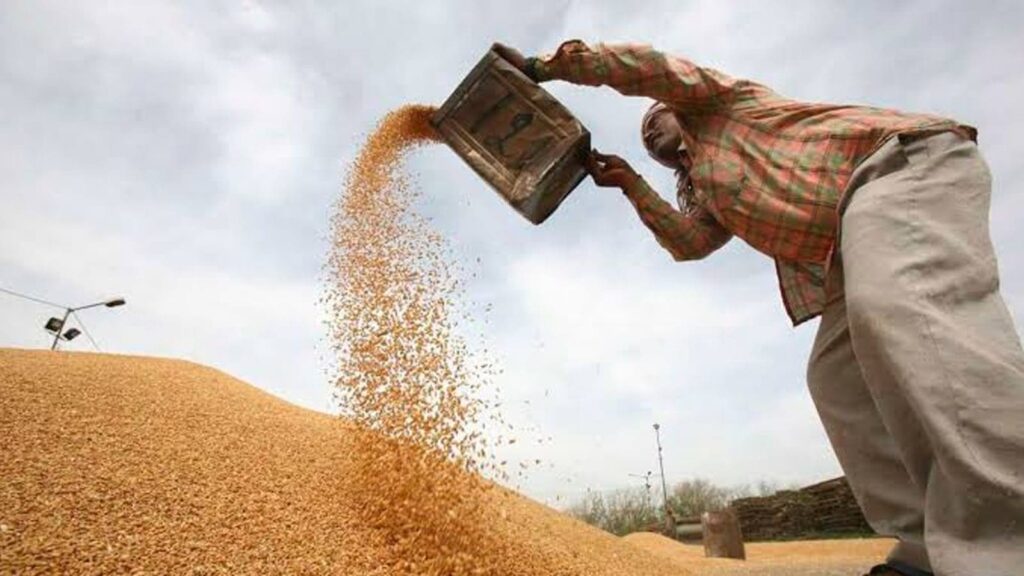
Cameroon is preparing to establish a CFA550 million laboratory dedicated to wheat quality control as the country intensifies efforts to increase domestic wheat production and reduce its dependence on imports.
The facility is expected to strengthen research, testing and quality control while providing farmers and agricultural specialists with better information about locally produced wheat.
The initiative comes as Cameroon faces a broader food-security challenge: how to increase domestic production of strategic crops while reducing the country’s exposure to international prices and disruptions in global supply chains.
Why wheat matters to Cameroon.
Wheat has become deeply embedded in Cameroon’s food economy.

Bread, flour, biscuits, pasta and numerous other products depend on wheat, making the commodity an important part of everyday consumption.
Yet Cameroon remains heavily dependent on imported wheat to meet domestic demand.
That dependence means local consumers and food manufacturers are exposed to international commodity prices, shipping costs, currency movements and disruptions in global markets.
The experience of recent years has shown how quickly international shocks can translate into higher domestic food prices.
The science behind local production.
Increasing wheat production is not simply a matter of encouraging farmers to plant more fields.
The crop needs to perform under Cameroon’s specific climatic and soil conditions. Farmers also need varieties that can produce good yields while meeting the requirements of millers and food processors.
This is where the planned laboratory could become important.
A specialised wheat laboratory can help researchers analyse grain quality, identify suitable varieties and monitor factors that affect production.
It can also provide information needed by farmers, agricultural researchers and processors to improve the domestic value chain.
Why Adamawa is important.
The planned facility is particularly relevant to Adamawa, one of the regions with potential for agricultural expansion.
Cameroon has already identified northern areas as important to efforts aimed at strengthening domestic food production.
Adamawa’s agricultural potential provides an opportunity to develop crops that could contribute to national food security while creating additional income for farming communities.
However, unlocking that potential will require more than laboratory infrastructure.
Farmers will need access to improved seeds, fertiliser, machinery, financing, irrigation and reliable markets.
Reducing import dependence.
Cameroon’s dependence on imported wheat has economic consequences.
When global wheat prices rise, domestic flour and bread producers can face higher operating costs. Those costs can eventually be passed on to consumers.
Import dependence can also place pressure on foreign exchange reserves, particularly when the currency is under pressure or when international shipping costs rise.
Producing more wheat domestically would not eliminate imports overnight, but it could gradually reduce exposure to external shocks.
The government is therefore looking at wheat production as part of a broader effort to strengthen food sovereignty.
The challenge of making local wheat competitive.
One of the biggest obstacles will be the cost of production.
International wheat markets benefit from large-scale farming, advanced logistics and highly developed processing systems.
Cameroonian farmers will need productivity gains if locally produced wheat is to compete effectively with imported grain.
That means agricultural research will have to be closely connected to what happens on farms.
Improved varieties are useful only if farmers can afford them and if they perform well under real field conditions.
Beyond the laboratory.
The CFA550 million laboratory could provide an important scientific foundation, but it cannot solve Cameroon’s wheat-import problem on its own.
The country will need a coordinated strategy linking research, farmers, processors, financiers and government agencies.
Storage facilities will also be important because agricultural production can be undermined if harvested grain cannot be preserved properly.
Reliable transport infrastructure will matter as well, particularly for connecting farmers in production areas with mills and major consumer markets.
A test of Cameroon’s food strategy.
The planned wheat laboratory reflects a broader change in how Cameroon is approaching food security.
Instead of focusing exclusively on importing essential commodities, policymakers are increasingly looking at how domestic research and production can reduce dependence on external markets.
The real measure of success will come later. If the laboratory helps farmers identify better wheat varieties, improve quality and increase yields, it could contribute to a stronger domestic wheat industry.
But if it is not accompanied by investment across the agricultural value chain, its impact will remain limited. For Cameroon, the goal is ultimately bigger than wheat.
It is about building an agricultural system capable of producing more food locally, creating rural jobs and making the country less vulnerable to the price shocks and supply disruptions that come from relying too heavily on imports.

Comments (0)
No comments yet — be the first to share your thoughts.