

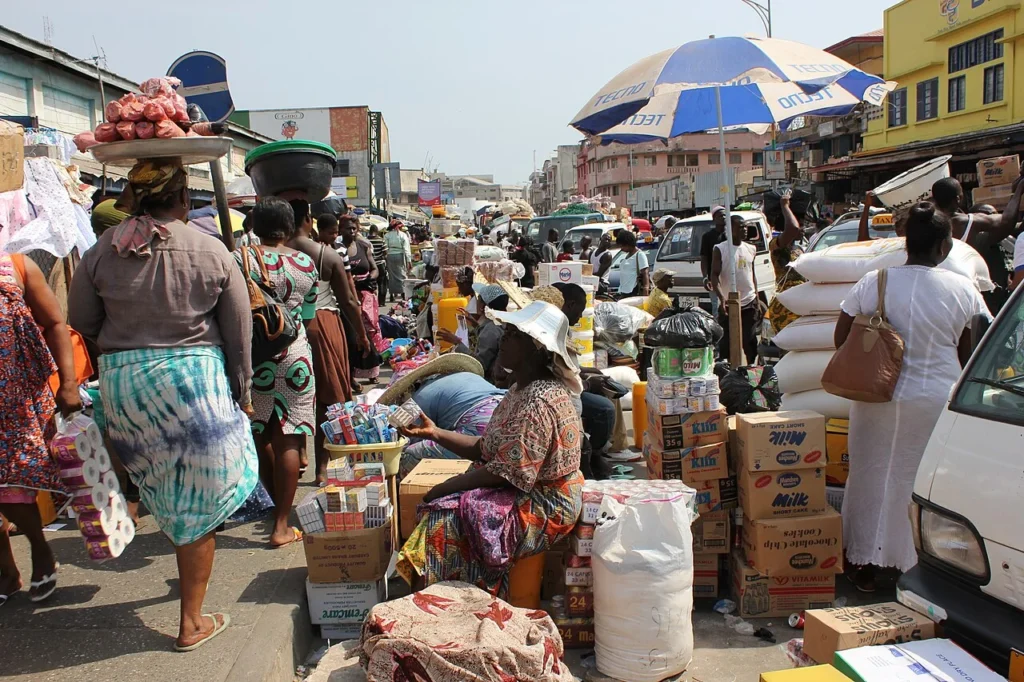
Ghana’s annual consumer inflation rate has risen to 5.2%, marking the second consecutive monthly increase and providing a fresh test for the government’s efforts to maintain economic stability after a difficult period of inflation, debt and currency pressure.
The September figure increased from 5.0% in August. Although the rise is relatively small, the direction is significant because Ghana had spent much of the previous period bringing inflation steadily lower.
The latest numbers suggest that the country’s fight against rising prices is not yet over, even as broader economic conditions continue to improve.
Why the latest increase matters.
Inflation is more than an economic statistic for Ghanaian households.

When the prices of food, transportation, housing and other essential goods rise faster than incomes, families have less money available for savings, education, healthcare and other needs.
The impact is particularly severe for lower-income households, which typically spend a larger proportion of their income on basic necessities.
For businesses, inflation can also increase the cost of raw materials, transportation, electricity and labour. That can make it harder for companies to plan investments and create new jobs.
Ghana has made significant progress.
The latest increase needs to be viewed against the country’s broader economic recovery.
Ghana experienced a severe economic crisis in recent years, with inflation reaching much higher levels and the cedi coming under substantial pressure.
The government was subsequently forced to pursue debt restructuring and a series of economic reforms aimed at restoring financial stability.
The decline in inflation became one of the clearest signs that those efforts were beginning to have an effect.
That is why the renewed increase will attract attention even though inflation remains far below the levels seen during the worst period of the crisis.
What is driving prices.
Inflation can be influenced by several factors, including food prices, transport costs, exchange-rate movements and changes in the cost of imported goods.
Ghana’s dependence on imported inputs means movements in the value of the cedi can quickly affect domestic prices.
Fuel prices are also important because transportation costs influence the price of almost everything that moves around the country.
Food remains particularly sensitive because agricultural production depends on weather conditions, input costs and transportation networks.
The pressure on households remains real.
A lower national inflation rate does not necessarily mean that prices have fallen.
Inflation measures the rate at which prices are increasing. If inflation slows, prices may simply be rising more slowly rather than becoming cheaper.
This distinction is important for Ghanaian households.
Families that experienced major increases in the cost of food and other essentials during the economic crisis may continue to feel financial pressure even as the inflation rate improves.
Wages and household incomes therefore remain an important part of the economic recovery.
What the central bank will be watching.
The Bank of Ghana will have to determine whether the latest increase represents a temporary movement or the beginning of a sustained upward trend.
If inflation remains contained, policymakers may have room to support economic growth and credit conditions.
If price pressures continue to accelerate, however, the central bank could become more cautious about easing monetary policy.
Interest rates influence the cost of borrowing for businesses and consumers, meaning monetary decisions can have a direct impact on investment and household spending.
Recovery still has work to do.
Ghana’s economic recovery has produced important improvements, but the latest inflation figure is a reminder that macroeconomic stability can be fragile.
The government will need to continue managing public finances while protecting economic activity and maintaining confidence in the currency.
At the same time, stronger domestic production could help reduce the country’s exposure to international price shocks.
For Ghana, the ultimate test is not simply whether inflation can be brought down on paper.
It is whether economic stability can translate into lower financial pressure for households, stronger businesses and a recovery that ordinary citizens can actually feel.

Comments (0)
No comments yet — be the first to share your thoughts.