
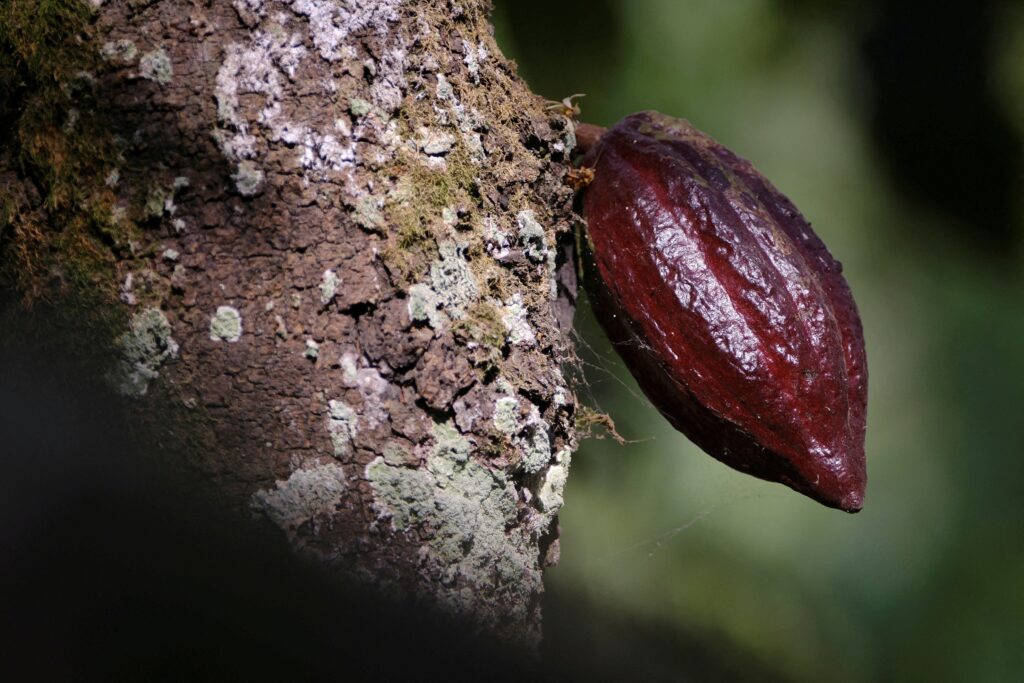
Ghana has raised about $288 million in short-term domestic financing to strengthen cocoa purchases from farmers, giving the country’s struggling cocoa sector a much-needed injection of liquidity as production and financing pressures continue to mount.
The financing, secured by the Ghana Cocoa Board, is intended to support the purchase of cocoa from farmers and improve the flow of funds through the country’s cocoa supply chain.
The move comes at a critical moment for Ghana’s cocoa industry, one of the country’s most important sources of agricultural income and export earnings.
Why Ghana needs the money.
COCOBOD plays a central role in Ghana’s cocoa economy. The organisation finances the purchase of cocoa from farmers and oversees much of the system through which the crop moves from farms to international markets.

That system requires significant amounts of working capital.
When financing becomes difficult or expensive, the consequences can quickly spread to farmers, licensed buying companies, exporters and other businesses connected to the sector.
The new funding is therefore designed to provide COCOBOD with greater liquidity to continue purchasing cocoa while maintaining payments to farmers.
For farming communities, the ability to receive payment on time is particularly important because cocoa production involves substantial costs.
Farmers have to pay for labour, fertiliser, pesticides, transportation and farm maintenance long before they receive income from the next harvest.
Ghana’s cocoa sector is under pressure.
The financing announcement comes against the backdrop of a difficult period for Ghanaian cocoa production.
Farmers have faced challenges ranging from ageing trees and crop diseases to changing weather patterns and rising production costs.
Climate conditions have become increasingly important. Irregular rainfall and higher temperatures can affect flowering, pod development and overall yields.
At the same time, many cocoa farms are ageing, meaning productivity can decline unless trees are rehabilitated or replaced.
These problems have contributed to concerns about Ghana’s ability to maintain its traditional position as one of the world’s leading cocoa producers.
Farmers want more value from cocoa.
Another major issue is the relationship between international cocoa prices and the income received by farmers.
Cocoa prices on international markets can rise substantially, but farmers do not always benefit immediately from those increases because Ghana’s cocoa marketing system involves government regulation, financing costs and other parts of the supply chain.
The government has faced growing pressure to ensure that farmers receive a greater share of the value generated by the commodity.
For many farmers, higher producer prices can make the difference between continuing to maintain a cocoa farm and abandoning it for another economic activity.
The younger generation problem.
Ghana’s cocoa sector is also facing a demographic challenge.
Many cocoa farmers are ageing, while younger people are increasingly attracted to opportunities in cities and other sectors of the economy.
If cocoa farming remains labour-intensive and financially uncertain, attracting a new generation of farmers will become increasingly difficult.
That could eventually create a serious threat to Ghana’s cocoa supply.
Investment in mechanisation, improved seedlings, irrigation, farm rehabilitation and better access to finance will therefore be essential.
Financing is only part of the solution.
The $288 million financing package can provide immediate support, but it does not resolve the structural problems facing Ghana’s cocoa industry.
COCOBOD still needs to address its broader financial position, while farmers need stronger support to increase productivity.
There is also the question of how Ghana can add more value to cocoa domestically.
For decades, much of Africa’s cocoa has been exported in raw or semi-processed form while greater profits are generated further down the international value chain through chocolate manufacturing, branding and retail.
Expanding domestic processing could allow Ghana to capture more of that value.
A critical moment for Ghana’s cocoa economy.
The latest financing demonstrates how important cocoa remains to Ghana’s economy.
Keeping farmers supplied with working capital and ensuring they can sell their harvest are essential for protecting the sector in the short term.
But Ghana’s long-term objective must go beyond financing the next cocoa purchase.
The country needs a more resilient cocoa industry capable of producing efficiently, rewarding farmers fairly and surviving the growing pressures created by climate change and rising production costs.
The $288 million injection may provide breathing room.
What happens next will determine whether that breathing room becomes the foundation for a stronger cocoa industry or simply another temporary solution to a much deeper problem.

Comments (0)
No comments yet — be the first to share your thoughts.