

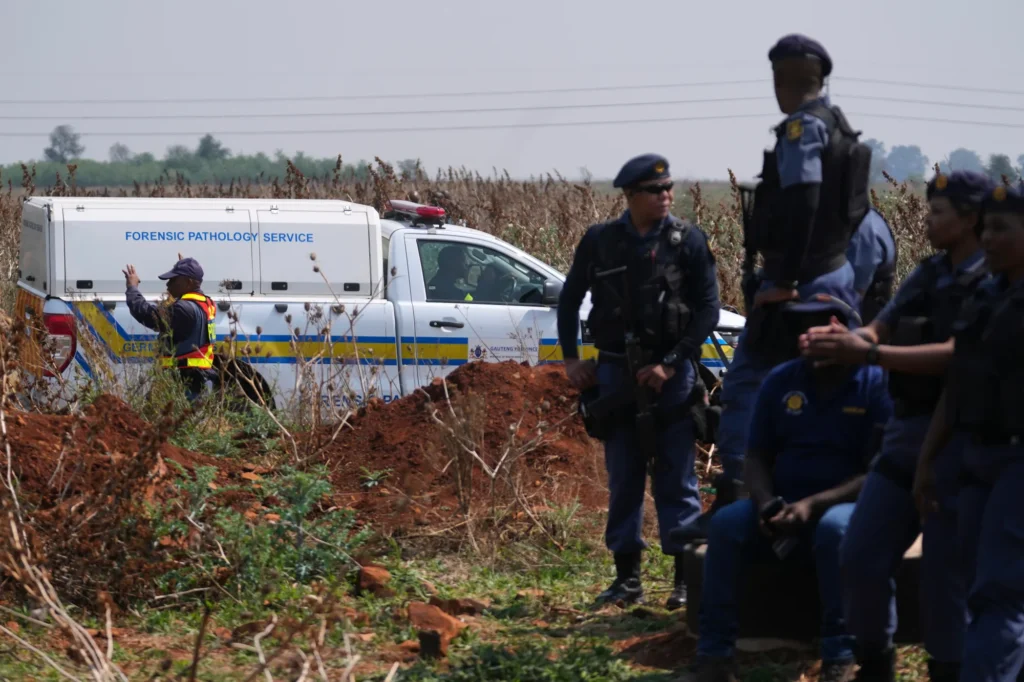
South Africa has launched a new national response to gender-based violence after the bodies of at least 11 women were discovered in Ekurhuleni, east of Johannesburg, since July, triggering widespread fear and renewed scrutiny of the country’s response to violence against women.
The latest deaths have placed Ekurhuleni under heightened security as investigators work to establish what happened to the victims and whether any of the cases are connected. Police have not confirmed that the killings were committed by a single perpetrator, although similarities between some cases have intensified public concern.
President Cyril Ramaphosa announced new measures following the killings, including nationwide safety audits, a review of unresolved gender-based violence cases and additional efforts to address weaknesses in the criminal justice system.
Eleven Women Found Dead.
The investigation began after three women’s bodies were discovered in Ekurhuleni during July and August. Six more bodies were subsequently found within a 10-day period in September, followed by two additional discoveries that brought the number to 11.

Several of the victims were young women, with some bodies found in open areas near roads. Investigators have examined similarities between some of the cases but have not established conclusive evidence that all 11 deaths are connected.
The uncertainty has added to public anxiety in communities around Ekurhuleni, where residents have demanded stronger protection and faster investigations.
Police have made several arrests in connection with individual cases. Authorities have also collected forensic evidence, including DNA, blood samples, clothing, mobile phones and cellphone records, as investigators attempt to establish what happened in each case.
Ramaphosa Orders A National Safety Audit.
In a televised address, Ramaphosa announced that municipalities across South Africa would be required to conduct audits identifying locations where women face heightened safety risks.
The 60-day exercise is expected to examine poorly lit streets, abandoned buildings, unsafe transport routes, poorly secured parks and other locations that could expose people to danger.
Authorities are expected to identify urgent problems and either address them within 90 days or include them in properly funded plans with clear completion dates.
The initiative is intended to move part of the government’s response beyond policing and into the physical environments where crimes occur.
Police And Prosecutors Face New Deadlines.
Ramaphosa also ordered police and justice authorities to review unresolved cases involving murders, attempted murders, rape and other serious gender-based violence offences involving women and children.
Officials have been given 60 days to identify unresolved cases, particularly those delayed by forensic evidence or other outstanding investigative work. Priority and stalled cases are then expected to receive individual recovery plans within 90 days.
The government has also ordered a plan to address forensic backlogs, with urgent evidence from rape and murder cases involving women and children expected to receive particular attention.
The measures are designed to address one of the persistent problems facing South Africa’s criminal justice system: cases can remain unresolved for long periods when investigations are delayed by evidence backlogs, limited resources or other administrative failures.
The Ekurhuleni Investigation Continues.
A specialised investigative team has been assigned to examine the deaths in Ekurhuleni.
Investigators are looking at individual cases separately while also examining whether evidence indicates connections between them. Police have not established that a serial killer is responsible for the deaths, and authorities have continued to investigate multiple possibilities.
That distinction is important as public speculation has intensified.
The discovery of multiple bodies within the same municipality has created understandable fear, but investigators must establish the links through forensic and other evidence before drawing conclusions about whether the cases form part of a single pattern.
South Africa’s Wider Gender-Based Violence Crisis.
The Ekurhuleni killings have reopened a much larger national debate about violence against women in South Africa.
The country has struggled for years with high levels of gender-based violence and homicide. The latest killings have therefore generated anger not only because of the individual cases but also because they have renewed questions about whether existing government interventions are preventing violence effectively.
Ramaphosa acknowledged the scale of the problem during his address, saying the country’s existing efforts had not been sufficient.
The government has increasingly faced pressure to demonstrate that commitments to fighting gender-based violence are followed by measurable improvements in policing, prosecution, forensic capacity and protection for vulnerable women.
The Burden On Women.
The president also highlighted how fear of violence has changed the way many South African women move through public spaces.
Women routinely alter travel routes, avoid certain areas after dark and rely on warnings from friends and relatives about places considered unsafe. The government’s new safety audits are intended in part to identify environmental conditions that contribute to those fears.
The challenge, however, extends beyond street lighting and public spaces. Preventing gender-based violence also requires effective investigations, prosecutions, community intervention and accountability for perpetrators.
That makes the government’s new deadlines significant, because they create measurable points at which progress can be assessed.
What Happens Next.
The immediate focus remains on identifying the victims, determining how they died and establishing whether the cases are connected.
At the national level, the government now faces the task of implementing the measures announced by Ramaphosa. Municipalities have to identify dangerous areas, police and prosecutors must examine unresolved cases, and forensic authorities must address evidence backlogs.
The Ekurhuleni investigation will ultimately depend on evidence rather than speculation. If investigators establish links between the cases, that could fundamentally change the scale and direction of the investigation. If the cases are found to be unrelated, authorities will still have to account for why so many women were killed or found dead in the same region over such a short period.
For South Africa, the killings have once again placed women’s safety and gender-based violence at the centre of the national conversation. The government’s response will now be measured not only by the announcements made, but by whether the promised investigations, safety improvements and justice reforms produce tangible results.

Comments (0)
No comments yet — be the first to share your thoughts.