

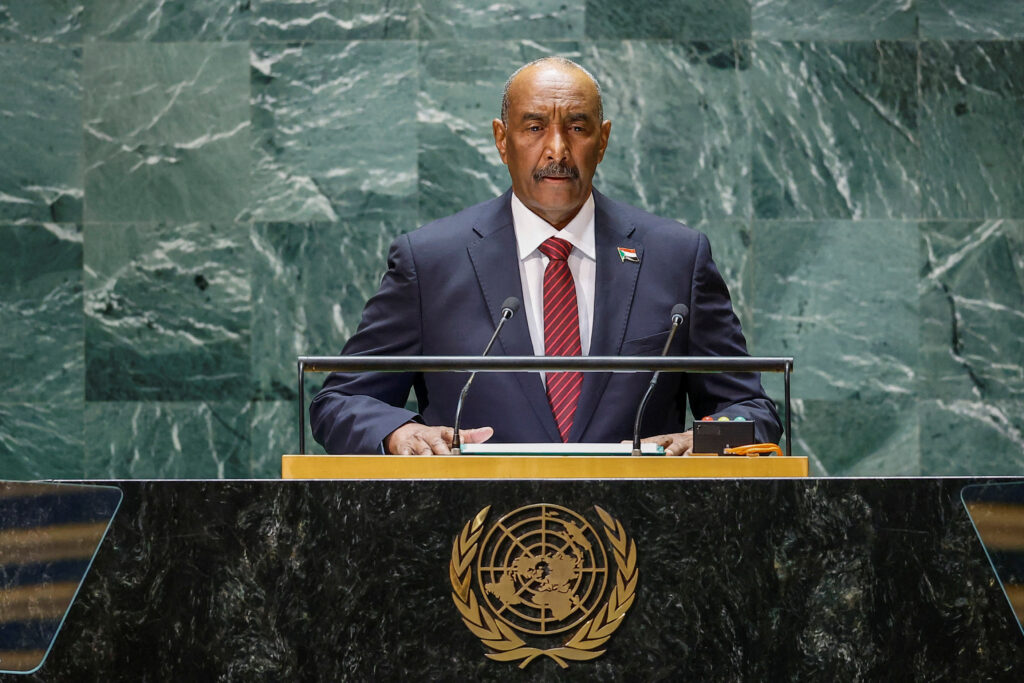
Sudan has raised fresh concerns over a United States-backed ceasefire proposal, with a senior adviser to the country’s army-led authorities warning that the plan, in its current form, could push Sudan toward a political division resembling the situation in Libya.
The warning comes as diplomatic efforts intensify to end Sudan’s devastating civil war, which has been raging since April 2023 between the Sudanese Armed Forces and the paramilitary Rapid Support Forces. The proposed U.S. framework calls for a 90-day ceasefire followed by negotiations aimed at ending the conflict and restarting Sudan’s transition toward civilian rule.
Sudan Raises Concerns Over The Ceasefire Plan.
Amjad Farid, an adviser to army chief General Abdel Fattah al-Burhan on political and international affairs, told Reuters that Sudan’s army-led authorities had proposed changes to the U.S. plan.
The main demand, according to Farid, is for an internationally monitored withdrawal of the Rapid Support Forces, or RSF, from urban areas before or as part of the ceasefire process.

Farid argued that the U.S. approach does not sufficiently address that demand and could leave the RSF with a continuing role in Sudan’s political and territorial structure.
He compared the potential outcome to Libya, where rival administrations have controlled different parts of the country for years.
The Fear Of A Divided Sudan.
The concern over fragmentation has grown as the RSF has attempted to establish a parallel administration in areas under its control, particularly in western Sudan.
The paramilitary group has been fighting the Sudanese army for more than three years, with the conflict producing competing centres of military and political power.
The RSF has established structures in the city of Nyala in Darfur and has sought to build a parallel governing authority. Ministers have reportedly been appointed, while some police structures have also been established.
The emergence of competing authorities has raised fears that Sudan could become divided in practice even if no formal partition is declared.
Washington Wants A Ceasefire First.
The U.S. proposal was put forward by Massad Boulos, the U.S. senior adviser for Arab and African affairs.
The plan envisages a 90-day ceasefire followed by negotiations between the Sudanese parties. The broader objective is to end the war and restart the country’s transition toward civilian government.
The United States has made clear that it does not regard either the Sudanese Armed Forces or the RSF as legitimate constitutional government for the country.
That position puts Washington at odds with both sides of Sudan’s conflict in different ways. The U.S. has accused the RSF of genocide and has also accused the army of serious violations, including alleged war crimes and the use of chemical weapons.
Burhan’s UN Trip Became Part Of The Dispute.
The disagreement over the ceasefire proposal has also affected Sudan’s diplomatic engagement with Washington.
Burhan was expected to attend the United Nations General Assembly in New York, but the United States withheld his visa after he had not accepted the proposed ceasefire framework.
A Sudanese delegation had also been preparing to meet Boulos in Washington to discuss the proposal, but the meeting was cancelled following the visa dispute.
The episode demonstrates how the ceasefire initiative has become intertwined with wider diplomatic pressure on Sudan’s military leadership.
Why Libya Is The Warning Sign.
The reference to Libya carries particular significance because that country has experienced prolonged political fragmentation since the fall of Muammar Gaddafi in 2011.
Libya has continued to operate with rival political and military centres despite repeated international efforts to establish a unified government.
Sudanese officials and analysts have repeatedly warned that a similar situation could emerge if neither side wins decisive control of the country and competing administrations become permanently entrenched.
The RSF’s efforts to create a parallel government have intensified those concerns, particularly in Darfur and other areas under its influence.
The Human Cost Remains The Central Issue.
Beyond the political dispute over the ceasefire framework, Sudan continues to face one of the world’s most severe humanitarian crises.
Millions of Sudanese have been displaced since the war began, while fighting has destroyed homes, hospitals, infrastructure and economic activity across large parts of the country.
The conflict has also created severe food insecurity and restricted humanitarian access in several areas.
A ceasefire could provide an opportunity to expand humanitarian assistance and reduce civilian suffering, but the disagreement over how the two armed sides should be positioned during and after the ceasefire remains a major obstacle.
What Comes Next For Sudan.
The immediate challenge is finding a framework that both sides are prepared to accept while preventing a temporary ceasefire from becoming a mechanism for permanently entrenching rival authorities.
For Sudan’s army-led government, the priority is the withdrawal of RSF forces from urban areas and the preservation of a unified state. For Washington, the objective is a cessation of fighting followed by negotiations and a return to civilian political rule.
The RSF’s position will also be critical, particularly because the group has been building its own governing structures in territories it controls.
Sudan’s war has already divided communities, displaced millions and devastated the country’s institutions. The current diplomatic push therefore faces a difficult balance: stopping the fighting quickly while ensuring that any political settlement does not leave Sudan with two competing centres of power.
For now, the proposed ceasefire remains under negotiation, and the warning about a Libya-style partition represents one side’s concern about where the process could lead if the underlying political and military divisions are not resolved.

Comments (0)
No comments yet — be the first to share your thoughts.