

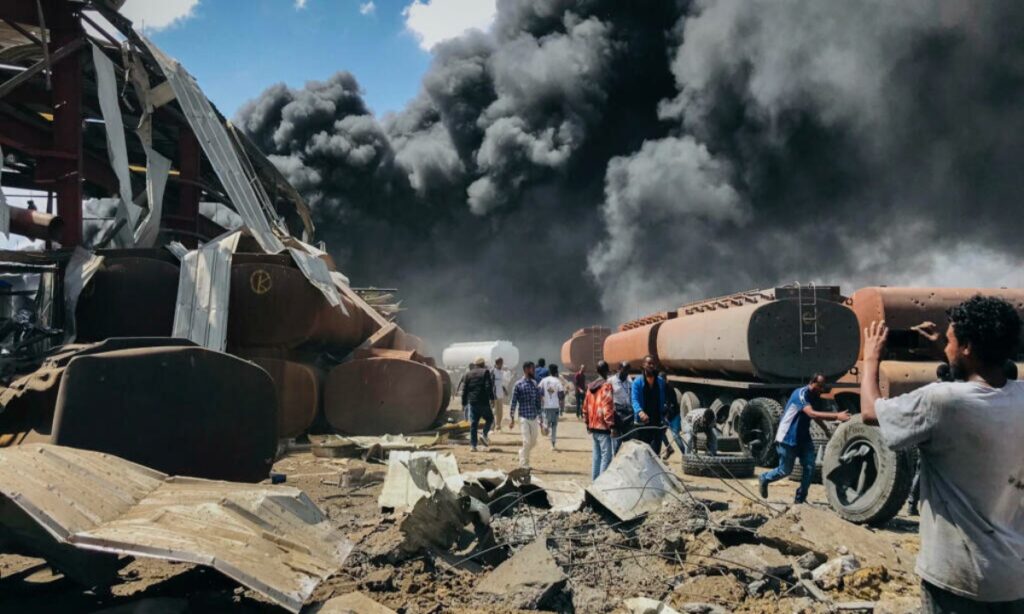
Explosions were heard overnight in Ethiopia’s capital, Addis Ababa, on October 1, raising fresh concerns that the country’s rapidly escalating Tigray conflict could be spreading beyond the northern battlefield. Two diplomatic sources confirmed hearing the explosions to Reuters, while an individual linked to an opposition alliance claimed that drone strikes had been carried out in the capital. That claim, however, could not immediately be independently verified.
The reports come as Ethiopia faces its most serious security escalation since the devastating 2020–2022 Tigray war. Fighting has intensified in northern Ethiopia since September, with Tigrayan forces and allied armed groups confronting federal forces and expanding the geographical scope of the conflict.
What Happened in Addis Ababa.
Details surrounding the explosions remain limited. Reuters reported that two diplomatic sources heard explosions overnight in Addis Ababa, but there was no immediate independent confirmation of their cause, location or whether they caused casualties or significant damage. Ethiopian government, military and Prime Minister Abiy Ahmed’s office had not immediately responded to requests for comment at the time of reporting.
The most significant claim came from a source linked to the opposition alliance fighting federal forces in northern Ethiopia. The source said the alliance had conducted several drone strikes in Addis Ababa. Because the allegation had not been independently verified, it remains unclear whether the explosions were connected to the Tigray conflict.

That distinction is important because Addis Ababa has largely remained removed from the direct battlefield during the latest escalation. Any confirmed attack on the capital would represent a major development in a conflict that has so far been concentrated primarily in northern Ethiopia.
Tigray Conflict Has Already Spread Beyond the Region.
The renewed fighting began in September after months of deteriorating relations between Ethiopia’s federal government and the Tigray People’s Liberation Front, or TPLF. The confrontation has shattered the relative calm established by the 2022 Pretoria peace agreement, which ended the previous two-year war.
Tigrayan forces have seized several airports and launched attacks into neighbouring Afar and Amhara regions, according to Reuters reporting. The escalation has prompted international concern that Ethiopia could once again descend into a prolonged nationwide conflict.
The Ethiopian government and Tigrayan forces have presented sharply different accounts of the fighting. Addis Ababa has accused the TPLF and allied groups of launching a major offensive, while Tigrayan leaders have described their actions as defensive responses to pressure from federal forces.
The dispute has also drawn Eritrea into the wider strategic picture. Ethiopian authorities have accused Eritrea of supporting elements opposed to the federal government, an allegation Eritrea has denied. The relationship between Addis Ababa and Asmara has deteriorated significantly since the end of the previous Tigray war.
Why Addis Ababa Matters.
The capital is the political and diplomatic centre of Ethiopia and hosts the headquarters of the African Union. Any confirmed military action there would therefore carry implications well beyond the immediate conflict.
The renewed war is already affecting transportation, communications and civilian movement. Flights to Lalibela were suspended as fighting expanded, while residents in Tigray have reported shortages, rising prices and growing fear of another prolonged war.
The humanitarian consequences could become particularly serious if the conflict expands. During the 2020–2022 war, Tigray experienced severe restrictions on food, medicine, communications and humanitarian access, while large numbers of civilians were displaced.
The United Nations and European Union have already called for de-escalation and a return to the African Union-led peace process. The renewed violence now places additional pressure on regional diplomatic efforts to prevent Ethiopia’s internal conflict from becoming a wider Horn of Africa crisis.
A Conflict Entering a More Dangerous Stage.
The explosions reported in Addis Ababa do not yet establish that the capital has become a new battlefield. What they do demonstrate is how closely the country is now being watched as fighting intensifies across northern Ethiopia.
For the moment, key questions remain unanswered: what caused the explosions, whether they were connected to the Tigray conflict, whether there were casualties, and whether further incidents occurred in the capital.
Those questions will determine whether the overnight explosions were an isolated security incident or an indication that Ethiopia’s renewed conflict is beginning to reach areas far beyond Tigray.

Comments (0)
No comments yet — be the first to share your thoughts.