

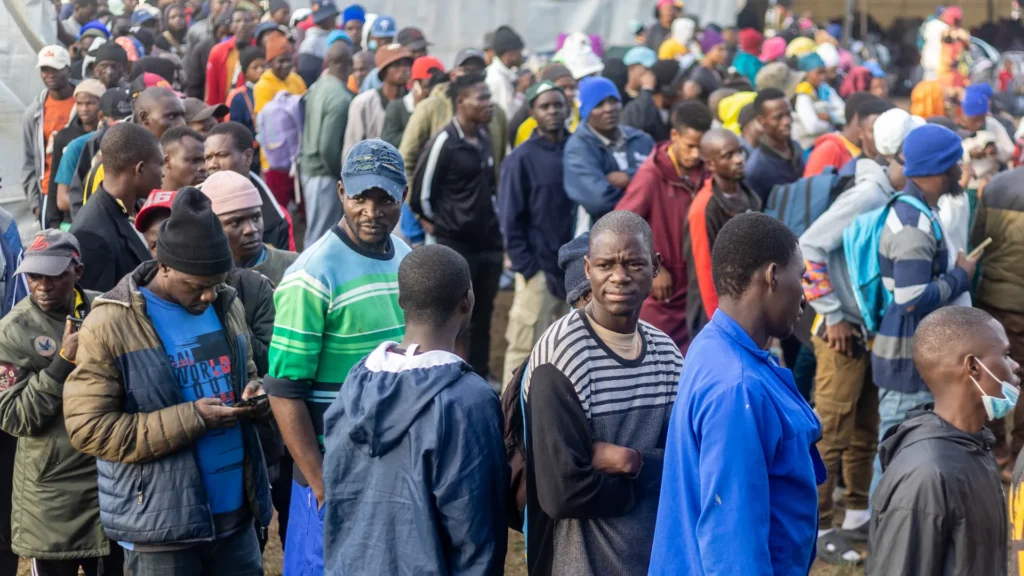
South Africa is calling for a continent wide conversation on migration as the country faces renewed tensions over undocumented migrants, anti immigration protests and growing diplomatic pressure from neighbouring African nations.
The government says the migration challenge cannot be solved by South Africa alone and requires a coordinated African response that addresses the deeper causes behind migration, including economic inequality, unemployment, conflict and limited opportunities across the continent.
A Crisis Beyond South Africa’s Borders
The debate comes after a wave of anti migrant protests and reported attacks targeting foreign nationals in South Africa.
Migrants from countries including Malawi, Zimbabwe and Mozambique have been among those affected, with thousands leaving the country amid rising fears and pressure. Reports indicate that at least 68,000 people have been involved in repatriation efforts linked to the recent tensions.

South African authorities argue that the issue is not only about illegal immigration but also about the broader movement of people across Africa and the economic conditions that force many citizens to seek opportunities elsewhere.
Government Calls for Continental Solution
South Africa’s officials want migration discussions involving all African Union member states, arguing that African countries must work together instead of placing responsibility on individual nations.
The government believes a continental approach should examine why people migrate, how borders are managed and how African economies can create more opportunities for citizens at home.
South Africa has also argued that migration should be treated as an issue linked to economic development, regional integration, peace and governance, rather than only as a security problem.
The Political Pressure Inside South Africa
Migration has become one of South Africa’s most sensitive political issues.
Many citizens who support stricter immigration controls argue that undocumented migrants increase pressure on jobs, housing, healthcare and public services.
However, human rights organisations and migrant advocates argue that foreigners are often blamed unfairly for problems caused by deeper economic challenges such as unemployment, inequality and weak governance.
President Cyril Ramaphosa has previously warned against violence and vigilantism, saying immigration laws must be enforced by government institutions and not by individuals or groups taking the law into their own hands.
A Test for African Unity
The migration debate has created a difficult challenge for South Africa, a country that has historically promoted African unity and regional cooperation.
Neighbouring countries depend heavily on South Africa for employment opportunities, trade and remittances, while South Africa itself benefits from regional economic connections.
The current crisis raises a larger question for Africa: how can countries promote free movement and economic integration while addressing citizens’ concerns about jobs, security and resources?
The Road Ahead
South Africa’s push for Africa wide migration talks shows that the issue has moved beyond national politics.
The challenge now is finding a balance between protecting citizens, respecting the rights of migrants and creating economic conditions that reduce forced migration.
For many African leaders, the solution will not come from closing borders but from building stronger economies where people have more reasons to stay and succeed at home.

Comments (0)
No comments yet — be the first to share your thoughts.