

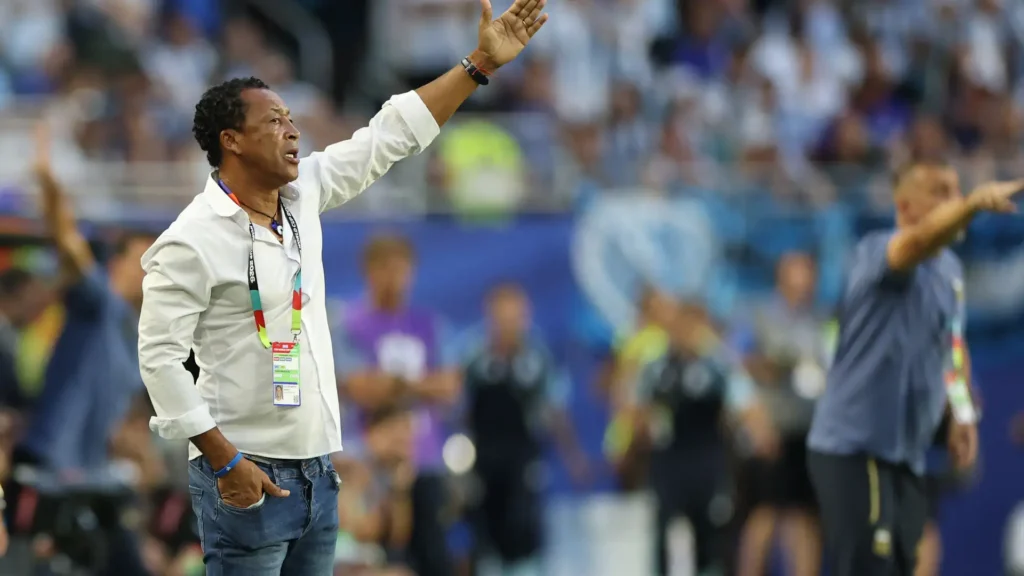
Cape Verde’s national football team has entered a new chapter after head coach Pedro “Bubista” Brito stepped down from his position to take up a new coaching opportunity in Morocco.
The decision marks the end of a successful period for the Cape Verde football programme, with Bubista playing a key role in transforming the Blue Sharks into one of Africa’s most competitive national teams.
A Successful Era for Cape Verde
Bubista became one of the most influential figures in Cape Verde football after taking charge of the national team in 2020.
Under his leadership, Cape Verde achieved several important milestones, including strong performances at the Africa Cup of Nations (AFCON).

The coach guided the Blue Sharks to the quarterfinals of the 2023 AFCON tournament held in Côte d’Ivoire, matching one of the best performances in the country’s history.
His tactical organisation, defensive discipline and ability to develop local and international talent helped Cape Verde compete against much larger football nations.
A New Challenge in Morocco
Bubista’s next chapter will take him to Morocco, where he has agreed to a two year coaching deal.
The move reflects the growing reputation of Cape Verdean football professionals, as coaches from smaller African football nations continue to gain recognition internationally.
Morocco has invested heavily in football development in recent years, building strong domestic structures, improving facilities and strengthening its professional league.
Impact on Cape Verde Football
Bubista’s departure creates an important transition period for Cape Verde.
The national team has built a strong identity based on teamwork, organisation and player development. The next coach will be expected to maintain that progress while preparing the team for future continental competitions.
Cape Verde has traditionally operated with limited resources compared with African football giants such as Nigeria, Cameroon, Egypt and Morocco, but the country has consistently exceeded expectations.
A Rising Reputation for African Coaches
Bubista’s move also highlights a wider trend in African football, where coaches from the continent are increasingly earning opportunities beyond their home countries.
For years, many African national teams relied heavily on foreign coaches. However, the success of locally developed coaches is changing perceptions about African football expertise.
Cape Verde’s journey shows that strong football systems can emerge from smaller nations when investment, leadership and development programmes are combined.
The Road Ahead
For Cape Verde, the challenge now is ensuring that Bubista’s legacy continues while preparing for the next generation of players.
For Bubista, the move to Morocco represents a new opportunity to test himself in a different football environment and continue building his reputation.
His departure closes one chapter in Cape Verde football, but it also demonstrates how far the island nation has come on the African football stage.

Comments (0)
No comments yet — be the first to share your thoughts.