
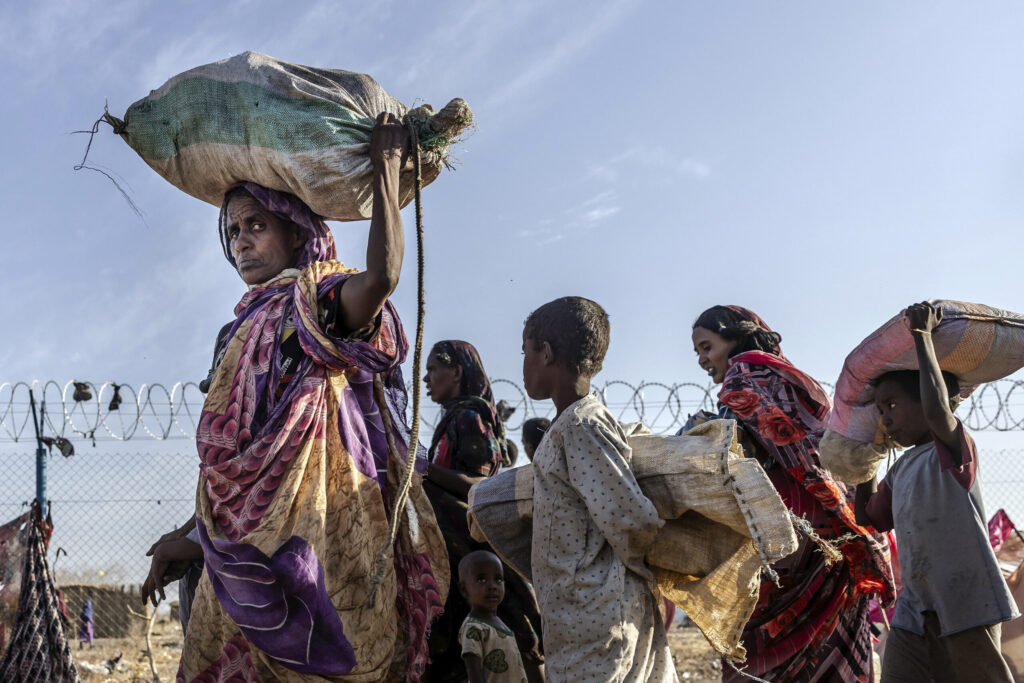
Sudan’s war has become one of Africa’s most devastating crises, transforming from a domestic power struggle into a complex conflict involving regional interests, international competition and a battle over who will determine the country’s future.
Since fighting broke out in April 2023, Sudan has been trapped in a brutal confrontation between the Sudanese Armed Forces (SAF) led by General Abdel Fattah al Burhan and the Rapid Support Forces (RSF) commanded by General Mohamed Hamdan Dagalo, commonly known as Hemedti.
What began as a dispute over political transition and the integration of armed forces has developed into a nationwide war that has killed thousands of people, displaced millions and pushed the country into one of the world’s worst humanitarian emergencies.
The biggest question now is no longer only who wins the battlefield. It is who controls the path toward peace.

A War Born From a Failed Political Transition
Sudan’s current crisis emerged after years of political instability following the removal of long time president Omar al Bashir in 2019.
After Bashir’s fall, Sudan entered a fragile transition involving civilian political groups and military leaders. The country was expected to move toward democratic elections, but tensions between military factions continued to grow.
General Burhan, who leads the SAF, and General Hemedti, who controls the RSF, became the two most powerful figures in the transition.
The disagreement over how and when the RSF would be integrated into the national army became one of the final triggers for open conflict.
The result was a war between two powerful armed groups, leaving civilians caught in the middle.
The Battle for Sudan’s Resources and Strategic Position
Sudan’s importance goes beyond its borders.
The country has significant gold resources, fertile agricultural land and a strategic location along the Red Sea, making it important to regional and global powers.
These factors have increased international interest in the conflict.
Several countries have been accused of supporting different sides of the war through political relationships, economic interests or alleged military assistance. Many of these accusations have been denied by the countries involved.
However, analysts argue that foreign influence has complicated peace efforts because different external actors may have different interests in Sudan’s future.
Are Outside Powers Helping or Extending the War?
One of the biggest debates surrounding Sudan is whether foreign involvement is contributing to peace or making the conflict longer.
Supporters of international involvement argue that diplomacy, humanitarian assistance and pressure on the warring parties are necessary to stop the violence.
Critics, however, warn that external competition can prolong conflicts by allowing armed groups to continue receiving resources and political support.
In Sudan’s case, the presence of competing regional interests has raised concerns that the country could become another arena for wider geopolitical struggles.
The longer the conflict continues, the more difficult it becomes to rebuild a united political system.
Millions of Civilians Pay the Price
While military leaders compete for power, ordinary Sudanese people continue to face the greatest suffering.
The war has created one of the largest displacement crises in the world, forcing millions of people to flee their homes.
Cities have been destroyed, hospitals damaged and essential services disrupted.
The United Nations and humanitarian organisations have repeatedly warned about food shortages, disease outbreaks and the growing difficulty of delivering aid to communities affected by fighting.
For many Sudanese citizens, the political arguments between armed leaders are distant compared with the daily struggle for survival.
Can Sudanese People Control Their Own Future?
A major concern among Sudanese civilians and African observers is whether the country’s future will be decided by its people or shaped by external interests.
Many Sudanese activists argue that any lasting peace agreement must put civilians at the centre of negotiations.
They believe Sudan cannot achieve stability through military victory alone. A sustainable solution will require rebuilding democratic institutions, protecting human rights and creating a political system that represents the population.
Africa’s Ability to Resolve Its Own Conflicts
Sudan’s crisis has also raised questions about Africa’s ability to manage major conflicts through its own institutions.
The African Union (AU) and regional organisations have called for dialogue and peaceful negotiations, but efforts have struggled to produce a lasting ceasefire.
The challenge is balancing international support with African leadership while ensuring that Sudanese voices remain the most important part of the peace process.
For many observers, Sudan represents a test of whether Africa can develop stronger mechanisms for preventing and resolving conflicts.
Peace Requires More Than Ending the Fighting
A ceasefire would be an important first step, but it would not solve Sudan’s deeper problems.
The country will need to rebuild institutions, restore public trust, address economic collapse and create a political system where armed groups no longer dominate national decisions.
Sudan’s war is ultimately a struggle over sovereignty, power and the right of citizens to determine their own future.
The road to peace will depend not only on stopping the guns but also on ensuring that Sudan belongs to the people who have suffered through the conflict.
The question facing Sudan is clear:
Will the country’s future be decided by those fighting for power, or by the millions of Sudanese citizens who have spent years waiting for peace?

Comments (0)
No comments yet — be the first to share your thoughts.