
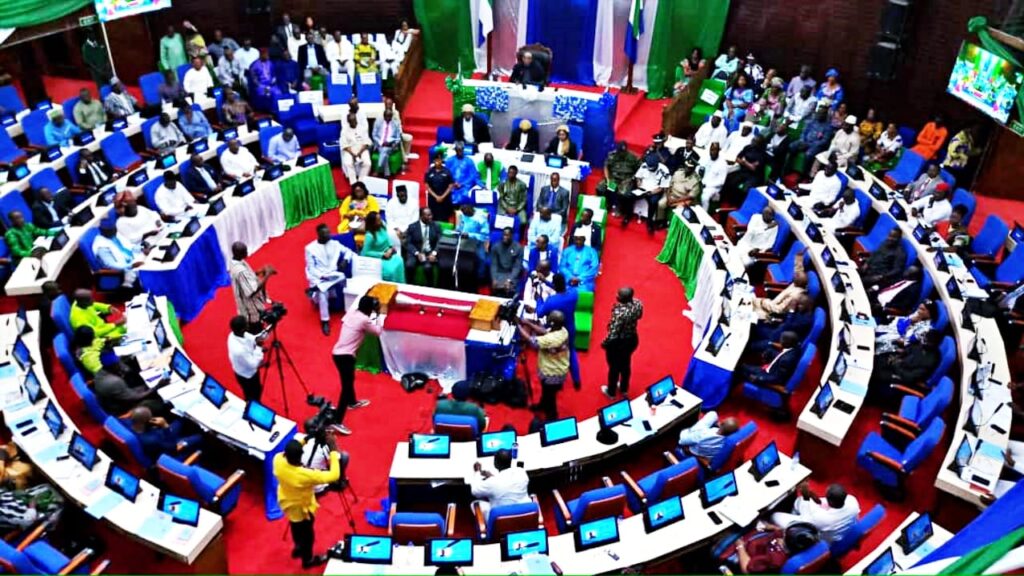
Sierra Leone is facing one of the most important political debates in recent years as Parliament prepares to decide on a proposed Constitutional Amendment Bill that could reshape the country’s electoral system and democratic structure.
The proposed reforms have triggered intense national debate, with supporters arguing that constitutional changes are necessary to modernise governance, while critics warn that some provisions could weaken democratic accountability and create political tensions ahead of future elections.
A Battle Over How Sierra Leone Chooses Its Leaders
One of the most controversial parts of the proposed amendment concerns changes to the electoral system.
Critics of the bill argue that moving away from the current First Past The Post (FPTP) system could reduce the direct relationship between citizens and their elected representatives. They believe voters should continue choosing individual representatives who are directly accountable to their communities.

Freetown Mayor Yvonne Aki-Sawyerr has been one of the strongest voices opposing parts of the proposed reforms. She has urged Members of Parliament to reject provisions she believes could negatively affect democratic representation.
According to Aki-Sawyerr, maintaining a system where citizens directly choose their representatives is important because communities need leaders they can easily hold accountable.
Concerns Over Presidential Election Rules
Another major area of concern is the proposed change to the presidential election threshold.
Opponents argue that introducing district based requirements for presidential candidates could create political divisions and encourage competition based on regional identity rather than national support.
Aki-Sawyerr warned that such provisions could create incentives for politicians to target minority communities during election periods, potentially increasing tensions.
Supporters of reform, however, argue that constitutional amendments are part of strengthening Sierra Leone’s political system and ensuring that governance structures reflect the country’s current realities.
A History of Political Reform
Sierra Leone’s constitutional debate comes after years of efforts to strengthen democracy following decades of political instability, including civil conflict and periods of military intervention.
The country has often been praised for its peaceful elections and democratic progress since the end of its civil war, but challenges remain around electoral trust, political competition and institutional independence.
The debate over constitutional reform is therefore not only about changing legal documents. It is about deciding how power should be shared and how citizens should participate in shaping their government.
Government and Opposition Under Pressure
The issue has also highlighted broader political divisions between the ruling Sierra Leone People’s Party (SLPP) government of President Julius Maada Bio and opposition groups.
Sierra Leone’s opposition All People’s Congress (APC) previously raised concerns about electoral reforms and governance issues, including confidence in institutions ahead of future elections. The party had earlier boycotted parliamentary and council activities before returning following mediation involving regional and international partners including ECOWAS, the United Nations Office for West Africa and the Sahel (UNOWAS), and the Commonwealth Secretariat.
Why This Matters Beyond Sierra Leone
The outcome of this constitutional debate will be watched closely across West Africa.
Many African countries continue to face questions about electoral systems, presidential powers, constitutional amendments and the balance between political stability and democratic accountability.
For Sierra Leone, the challenge is finding reforms that strengthen democracy rather than create deeper political divisions.
A constitution is not simply a document that defines government structures. It represents the agreement between citizens and those who hold power.
As Parliament prepares to make its decision, the biggest question is whether these reforms will bring Sierra Leone closer to a stronger democracy or create new challenges for political trust and stability.

Comments (0)
No comments yet — be the first to share your thoughts.