

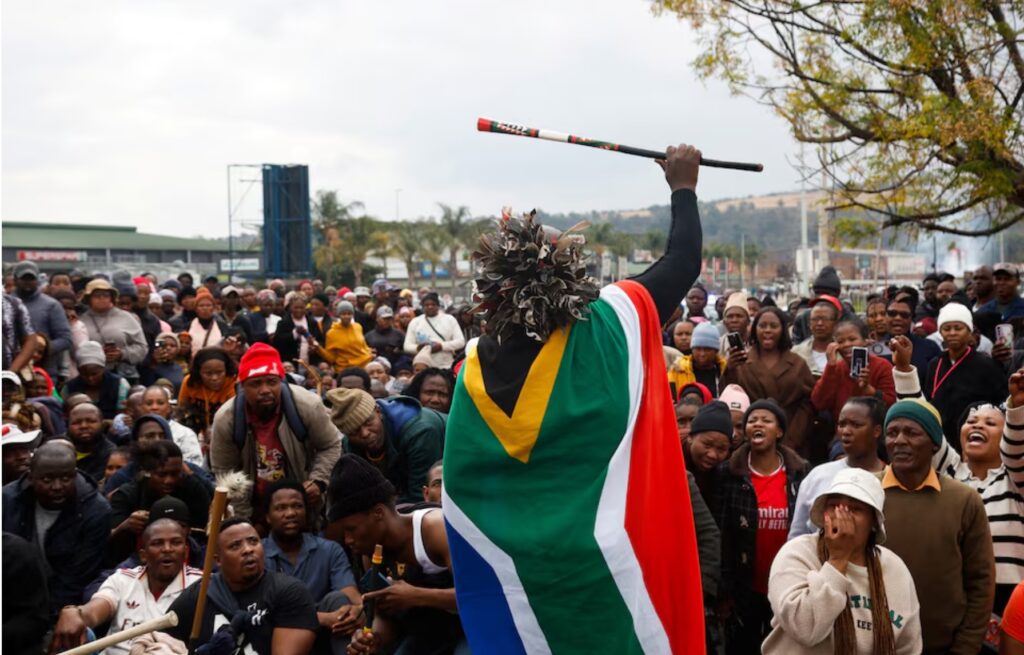
South Africa is facing one of its most difficult social debates as tensions around immigration continue to rise. Across many communities, frustration over unemployment, crime, poverty and pressure on public services has increased anger toward foreign nationals living in the country.
But a deeper question remains: who really benefits from turning Africans against each other?
The reality is that xenophobia has not solved South Africa’s biggest problems. Instead, it has created fear, damaged communities, weakened relationships with neighbouring countries and shifted attention away from the deeper economic and political challenges facing the nation.
A Country Under Pressure
South Africa remains one of Africa’s most advanced economies, attracting migrants from countries including Zimbabwe, Mozambique, Malawi, Nigeria, Ghana, Ethiopia, Somalia and the Democratic Republic of Congo.

Many migrants come seeking employment, education, safety and better economic opportunities. Some establish businesses, create jobs and contribute to local economies. Others enter the country without legal documentation, creating legitimate concerns about immigration control and government capacity.
For many South Africans, however, the frustration is real. The country continues to experience unemployment levels above 30 percent, widespread inequality, crime concerns and dissatisfaction with public services. In communities where opportunities are limited, some citizens believe migrants are competing for jobs, housing and government resources.
These concerns cannot simply be ignored. A government has a responsibility to manage immigration effectively and protect the interests of its citizens.
But blaming every foreign national for South Africa’s challenges is a dangerous and inaccurate response.
The Politics of Blame
When societies face economic hardship, there is often a temptation to search for simple explanations and easy targets.
Foreign nationals have increasingly become part of South Africa’s political debate, with groups such as Operation Dudula gaining attention by campaigning against undocumented immigration. Supporters argue that they are defending South African jobs and demanding stronger border control.
Critics, however, argue that such movements risk promoting xenophobia by creating the impression that foreigners are responsible for the country’s economic struggles.
The danger is that legitimate concerns about immigration can become mixed with hatred, leading to attacks against people based on nationality rather than individual actions.
Government’s Response
South African President Cyril Ramaphosa has condemned xenophobic violence and maintained that immigration enforcement must remain the responsibility of the government and law enforcement agencies.
He has argued that South Africa must strengthen border management while ensuring that criminals, whether South African or foreign, are dealt with through the justice system.
International Relations Minister Ronald Lamola has also rejected attacks against foreign nationals, stressing that South Africa remains committed to cooperation with other African countries.
The government’s challenge is balancing two realities: responding to citizens’ concerns about illegal immigration while protecting the rights and safety of migrants.
Diplomatic Tensions Across Africa
The impact of xenophobia extends beyond South Africa’s borders.
Countries across Africa have expressed concern whenever their citizens become victims of violence. Nigeria, one of South Africa’s largest African partners, has repeatedly raised concerns about attacks against Nigerians living in South Africa.
Nigeria’s Minister of State for Foreign Affairs, Sola Enikanolaiye, called for stronger protection of Nigerian citizens while emphasising that anyone accused of crimes should face legal action rather than mob justice.
Nigeria has also evacuated citizens following recent tensions, highlighting the seriousness of the situation.
For many African governments, the issue is not about defending criminal activity. It is about ensuring that every African citizen receives protection under the law.
The Forgotten History of African Solidarity
One of the most painful parts of the xenophobia debate is the history behind it.
During apartheid, South Africa was not alone in its struggle for freedom. Countries across Africa supported the anti apartheid movement despite facing economic and political consequences.
Nigeria provided diplomatic and financial support. Zambia hosted liberation movements. Tanzania became a centre for African liberation activities. Mozambique, Zimbabwe and other countries supported South Africa’s journey toward democracy.
Many Africans therefore struggle to understand how a continent that once united against oppression can now see citizens attacking each other because of nationality.
The Real Winners of Division
The biggest question is who benefits when ordinary Africans fight each other.
Xenophobia does not create jobs. It does not reduce inequality. It does not fix corruption. It does not improve healthcare or education.
Instead, it creates division while allowing deeper problems to remain unresolved.
The real solutions to South Africa’s challenges require economic reforms, investment, job creation, stronger policing, better governance and effective immigration systems.
Foreign nationals should not be used as a distraction from failures that require political solutions.
Building a Better Future
South Africa has the right to control its borders and enforce immigration laws. Citizens have the right to demand jobs, security and better living conditions.
But these goals cannot be achieved through hatred or violence.
Africa’s future depends on cooperation between nations, not hostility between neighbours. South Africa’s strength has always come from its diversity, resilience and ability to overcome difficult moments.
The question facing the country today is not whether it should manage migration. Every nation must do that.
The bigger question is whether South Africa can address its problems without turning fellow Africans into enemies.
Because in the end, xenophobia does not protect South Africa.
It only creates more victims.

Comments (0)
No comments yet — be the first to share your thoughts.