

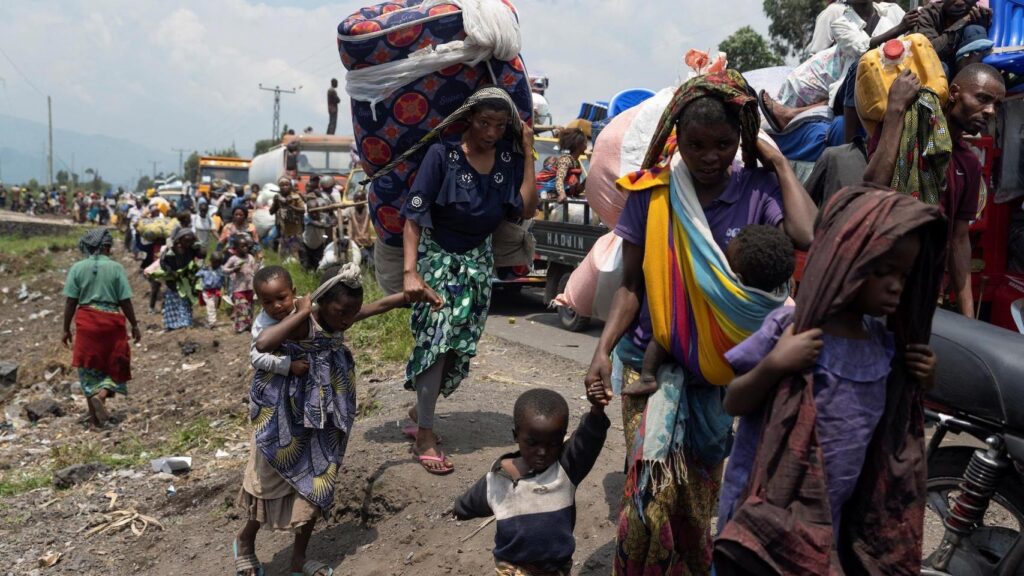
The humanitarian situation in eastern Democratic Republic of the Congo continues to deteriorate as tens of thousands of displaced families in Uvira Territory struggle to survive amid ongoing insecurity, food shortages, and limited humanitarian assistance.
According to the United Nations Office for the Coordination of Humanitarian Affairs (OCHA), more than 33,000 internally displaced people are currently living with host families in Uvira, while nearly 70,000 people who recently returned to their communities are facing severe humanitarian needs after fleeing earlier waves of violence. Aid agencies warn that the region remains under immense pressure as armed conflict continues to disrupt daily life and hinder relief efforts.
Thousands Remain Without Basic Necessities
Many displaced families have found shelter with relatives or host communities after being forced to flee fighting in villages across South Kivu Province.
However, humanitarian organisations say host families are becoming overwhelmed as food supplies diminish and access to clean water, healthcare, and sanitation remains inadequate. Many returnees have gone back to communities only to find their homes destroyed, their belongings looted, and essential services no longer functioning.

Aid workers report that thousands of people urgently need emergency shelter, household items, medical care, and protection services, particularly women, children, and elderly residents.
Conflict Continues to Drive the Crisis
The humanitarian emergency has been fuelled by months of fighting involving the AFC/M23 rebel movement, Congolese government forces, local militias, and allied regional troops.
Although Uvira was retaken by government forces earlier this year after rebels withdrew from the city, insecurity persists in surrounding areas, forcing repeated displacement of civilians. Sporadic clashes continue in parts of South Kivu, preventing many families from returning home safely.
The conflict has also damaged public infrastructure, including schools, health centres, and administrative buildings, slowing efforts to restore normal life.
Humanitarian Agencies Struggle to Respond
The United Nations and humanitarian partners continue to provide emergency assistance, but insecurity and limited funding have complicated relief operations.
UNHCR and partner organisations are distributing emergency shelter materials, blankets, hygiene kits, food assistance, and protection services to vulnerable families. Border monitoring teams are also supporting refugees and returnees crossing from neighbouring Burundi through the Kavimvira border post.
Despite these efforts, aid agencies say available resources remain insufficient to meet the growing needs of displaced communities.
Returnees Face an Uncertain Future
For many families returning to Uvira, rebuilding their lives has proved extremely difficult.
Large numbers of homes were damaged or looted during previous fighting, while many farms remain abandoned because of insecurity. The loss of crops and livestock has left communities increasingly dependent on humanitarian assistance for food and basic necessities.
Children have also been heavily affected, with many unable to return to school after months of displacement.
Calls for Greater International Support
Humanitarian organisations are urging the international community to increase funding for relief operations in eastern Congo, warning that prolonged displacement could deepen poverty and instability across the region.
Aid agencies say immediate support is needed to provide food, shelter, healthcare, education, and protection for displaced families while also helping returnees rebuild their homes and livelihoods.
With conflict continuing in several parts of eastern Congo, humanitarian workers caution that the number of people requiring assistance is likely to increase unless security conditions improve and lasting peace is achieved.

Comments (0)
No comments yet — be the first to share your thoughts.