

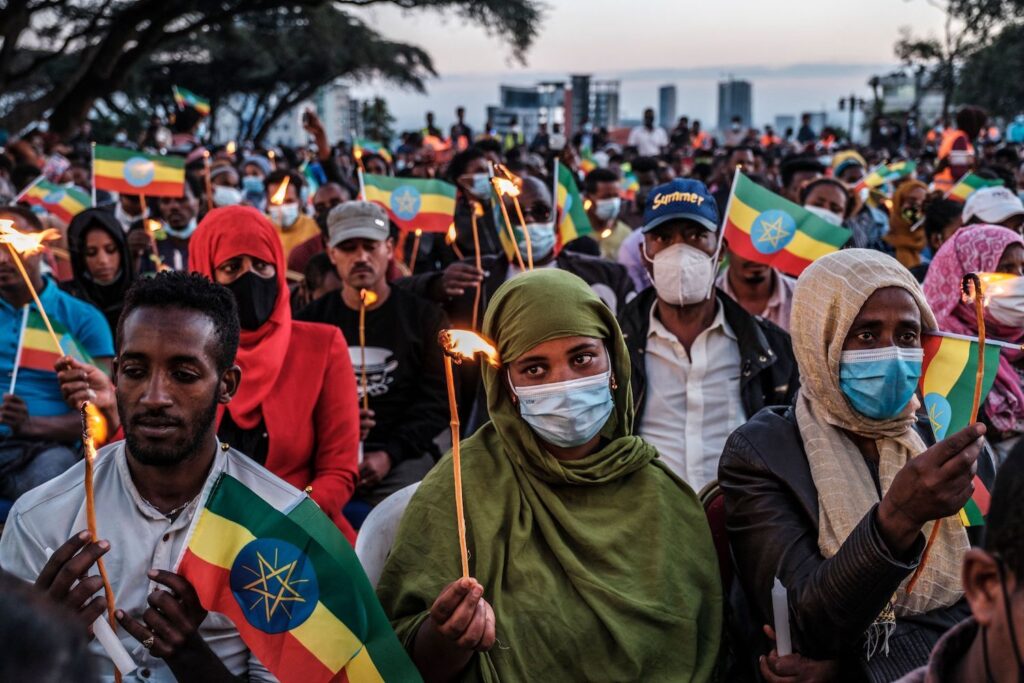
A diplomatic dispute between Ethiopia and Sudan is developing into a potentially dangerous security crisis, with both countries accusing each other of supporting armed groups fighting within their territories. The escalating accusations are raising fears that two devastating internal conflicts could become connected, creating a wider confrontation across the already unstable Horn of Africa.
The latest developments have exposed the growing mistrust between Addis Ababa and Khartoum. Sudan’s military government alleges that Ethiopia is allowing the Rapid Support Forces (RSF), the paramilitary organisation fighting Sudan’s army, to establish military camps, launch drone operations and organise cross-border attacks from Ethiopian territory. Ethiopia, meanwhile, accuses Sudan’s military leadership of supporting armed groups fighting the federal government in its northern Tigray region.
Both governments deny the accusations against them. However, the diplomatic consequences are already visible, with consular closures, expulsions of diplomatic personnel and formal complaints to international institutions adding to the tension.
Sudan Accuses Ethiopia of Providing a Base for the RSF.
Sudan’s conflict began in April 2023 when fighting erupted between the Sudanese Armed Forces and the RSF following a breakdown in relations between their respective leaderships. The war has since developed into one of the world’s most serious humanitarian emergencies, leaving tens of thousands dead and millions displaced.

Sudan’s military authorities now claim that Ethiopia has become an important operational location for the RSF. In early November, the Sudanese government said it had submitted complaints to the United Nations Security Council and the African Union Peace and Security Council, accusing Ethiopia of allowing the paramilitary group to use its territory to launch attacks against Sudan.
The allegations have attracted attention following satellite investigations by Yale University’s Humanitarian Research Lab. Researchers identified an increase in military vehicles and equipment at a military facility in Asosa, an Ethiopian city close to the Sudanese border. The research linked the military buildup to the RSF, raising further questions about the group’s alleged presence in Ethiopia.
Sudan’s accusations are particularly sensitive because the latest fighting has increasingly affected areas near Ethiopia, including Sudan’s Blue Nile region. Any established cross-border military infrastructure could significantly complicate the conflict and create additional routes for fighters, weapons and supplies.
However, Ethiopia has rejected claims that it is supporting the RSF, and the allegations have not been independently established in their entirety.
Ethiopia Points to the Renewed Tigray Conflict.
Ethiopia’s response centres on its own worsening security situation. Fighting returned to the northern Tigray region in September, threatening the peace agreement signed in 2022 after two years of devastating war between federal forces and the Tigray People’s Liberation Front (TPLF).
The renewed clashes have revived fears that Ethiopia could face another prolonged internal conflict. The Tigray crisis is particularly sensitive because of the region’s geographical position and its proximity to Eritrea and Sudan.
Ethiopian military officials have accused Sudan, alongside Eritrea and Egypt, of supporting forces opposed to the federal government. The allegations have been rejected by the countries concerned.
In early November, Ethiopia ordered six Sudanese consular staff members in Asosa to leave the country and closed the Sudanese consulate. Sudan subsequently announced the closure of Ethiopia’s consulate in Gedaref and the expulsion of its diplomatic personnel.
The diplomatic retaliation demonstrates how quickly the security allegations have moved beyond political statements into formal measures affecting relations between the two neighbours.
A Wider Regional Conflict Could Have Serious Consequences.
The possibility of a wider confrontation is particularly concerning because neither country is operating from a position of stability.
Sudan’s military remains heavily engaged in a war that has devastated infrastructure, disrupted economic activity and displaced approximately 13 million people. Estimates cited by conflict-monitoring organisation ACLED put the death toll at at least 59,000, although humanitarian organisations warn that the actual number could be considerably higher.
Ethiopia is also dealing with renewed fighting in Tigray, longstanding tensions with Eritrea and disagreements with Egypt and Sudan over the Grand Ethiopian Renaissance Dam.
Regional alliances add another layer of complexity. Sudan maintains close relations with Egypt and Eritrea, while Ethiopia’s regional partnerships have increasingly become part of the political calculations surrounding the Sudanese conflict. External involvement could make it more difficult for either government to contain the dispute within its borders.
The disputed Al-Fashaga territory is another longstanding source of tension. Both Sudanese and Ethiopian communities have economic and agricultural interests in the fertile border area, while competing territorial claims have repeatedly strained relations between the two governments.
A direct military confrontation would therefore risk opening another front in conflicts that are already placing enormous pressure on the region.
Diplomacy Faces a Critical Test.
Despite the growing accusations, neither government has formally declared war on the other. Sudan has taken its complaints to international institutions, while Ethiopia has responded through diplomatic measures and public accusations.
Analysts warn that the danger lies in the possibility of both countries becoming increasingly involved in each other’s internal conflicts. If armed groups receive support, weapons or logistical assistance across the border, the distinction between the two wars could become increasingly difficult to maintain.
For civilians, the consequences could be severe. Further fighting along the border could trigger new displacement, disrupt trade and create additional humanitarian emergencies in communities already affected by insecurity.
The African Union and the United Nations now face an important diplomatic challenge: preventing the accusations from developing into direct military confrontation. Both countries have significant reasons to avoid another war, but the absence of trust and the involvement of competing regional interests make de-escalation difficult.
The central question is no longer simply whether Ethiopia and Sudan can resolve their diplomatic disagreement. It is whether they can prevent their separate conflicts from becoming a much larger regional crisis.

Comments (0)
No comments yet — be the first to share your thoughts.