

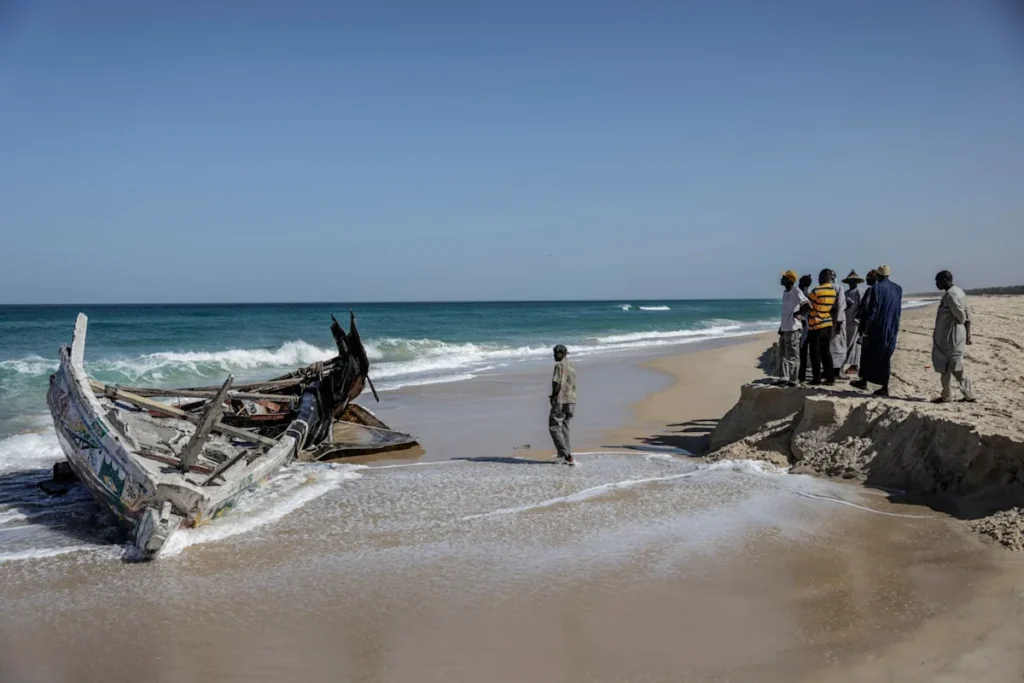
At least 39 people have died after a boat carrying migrants capsized off Senegal’s northern coast, in another deadly tragedy along the Atlantic migration route to Europe. The vessel, which departed from Saint-Louis and was reportedly heading towards Spain, overturned near Kébémer on November 8, 2026. Only one passenger has been rescued alive, while the search for possible missing passengers continued.
The death toll increased from an initial 21 after emergency teams recovered additional bodies. Senegal’s official news agency, APS, initially reported 34 fatalities before the figure rose to 39 on November 9. Authorities have not confirmed how many people were aboard the boat, leaving the full scale of the disaster uncertain.
The incident has once again drawn attention to the dangers faced by thousands of West Africans who attempt the journey to Europe aboard overcrowded and often poorly equipped vessels.
A Journey From Saint-Louis Ends in Tragedy.
The boat reportedly left Saint-Louis in northern Senegal, travelling along the Atlantic coast towards Spain’s Canary Islands. It capsized off the Kébémer area, approximately 180 kilometres north of Dakar.

The Senegalese Ministry of Interior and Public Security confirmed the disaster in a statement on November 8, expressing condolences to the families of those who died. The ministry said government services had been mobilised to continue search operations, assist possible survivors and support affected families.
As recovery operations progressed, the number of confirmed deaths continued to rise. According to the Senegalese Press Agency, some of the bodies recovered were in an advanced state of decomposition, illustrating the difficult conditions confronting rescue and recovery teams.
The identities and nationalities of all the victims had not been established in the initial reports. However, local accounts indicated that several victims came from communities in the Louga region, including Thieppe and Potou.
President Bassirou Diomaye Faye expressed condolences to the victims’ families and pledged to intensify efforts against the networks organising dangerous migrant crossings. He also emphasised the need to create opportunities for young people within Senegal so that irregular migration does not appear to be their only route towards a better future.
The Atlantic Route Continues to Claim Lives.
The journey from West Africa to Spain’s Canary Islands is one of the most dangerous migration routes in the world. Migrants often spend several days at sea in wooden fishing boats, exposed to strong currents, unpredictable weather, food shortages and limited access to medical assistance.
Despite the risks, the route continues to attract people seeking employment, economic security and better living conditions in Europe. Young people from Senegal and neighbouring countries are particularly represented among those attempting the crossing.
Figures from the migrant rights organisation Walking Borders indicate that at least 635 people died attempting to reach the Canary Islands during the first five months of 2026. The organisation’s figures underline the scale of the humanitarian crisis surrounding the Atlantic route.
The latest Senegal disaster also occurred amid increased arrivals in the Canary Islands. Spanish authorities on El Hierro declared an emergency in early November after more than 3,300 migrants arrived aboard approximately 30 boats since the beginning of the month, according to reports.
These developments reveal the difficult position facing governments along the West African coast. Increased maritime surveillance and the interception of migrant boats have not eliminated departures, while criminal smuggling networks continue to exploit people desperate to leave.
Senegal Faces Questions Over Its Migration Response.
Following the disaster, Senegal’s government renewed its commitment to fighting human-smuggling networks and strengthening cooperation with neighbouring countries. Authorities have also called on citizens to recognise the dangers associated with irregular migration.
However, the latest deaths have prompted renewed criticism of the country’s migration policies. Action for Human Rights and Friendship, a Senegalese civil society organisation, called for a parliamentary investigation into the government’s management of irregular migration.
The organisation argued that repeated announcements of enforcement measures and interceptions have not produced lasting results. Its position reflects a wider debate over whether security operations alone can address a crisis driven by unemployment, poverty and limited economic opportunities.
Senegal has previously announced measures aimed at strengthening maritime surveillance and tackling smuggling networks. Yet the continued loss of lives suggests that the underlying pressures encouraging dangerous departures remain significant.
The challenge is not limited to Senegal. Countries across West Africa face similar difficulties as young people attempt to reach Europe through irregular routes, often relying on intermediaries who may expose them to exploitation and life-threatening conditions.
Beyond Border Controls, the Need for Economic Opportunities.
The Kébémer tragedy raises a question that extends beyond maritime security: why do so many people continue to risk their lives in the hope of reaching Europe?
For many migrants, the decision is connected to the search for stable employment, higher incomes and opportunities that they believe are unavailable at home. Others are influenced by family expectations, established migration networks and the perception that reaching Europe offers a better chance of financial security.
Addressing these pressures requires more than preventing boats from leaving the coast. Governments must also confront unemployment, improve access to skills training, support entrepreneurship and create economic opportunities capable of retaining young people.
The responsibility also extends to international partners, particularly European countries whose migration policies influence the routes and conditions under which people attempt to travel. Cooperation must include safer migration pathways, stronger action against trafficking networks and support for development in countries of origin.
For the families affected by the Kébémer disaster, these broader policy debates offer little immediate comfort. Thirty-nine people have lost their lives, and only one survivor has been reported rescued.
As Senegal continues its search and recovery operations, the tragedy stands as another reminder of the human cost of irregular migration along the Atlantic coast. Until the conditions driving people to undertake these dangerous journeys are addressed, the risk of another disaster will remain.

Comments (0)
No comments yet — be the first to share your thoughts.